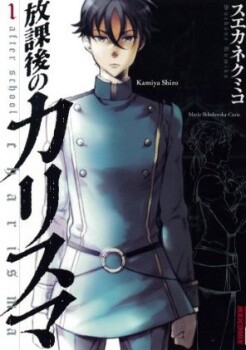
Afterschool Charisma Review: A School Where Greatness Is a Death Sentence
by Kumiko Suekane
Read the first volume. If it doesn't hook you, put it down. It'll hook you.
Buy Afterschool Charisma on Amazon →*Affiliate link — I earn a small commission at no extra cost to you.
When I was a kid hiding in the library at lunch, I used to read those "great lives" biography books for children — Napoleon, Edison, Florence Nightingale, the people whose names you're supposed to grow up wanting to become. I remember closing one of them and feeling worse, not better. The message felt like: here is what greatness looks like, and you are not it.
Afterschool Charisma took that exact feeling and turned it into a whole school. St. Kleio Academy is full of children who literally are the great people from those biography books — their clones — and every single one of them is suffocating under the question of whether they have to die the way the original died. I started it expecting a clever gimmick manga. By the third volume I realized it was the saddest thing I'd read in a while.
Quick Take
- The premise that finally made me care about clone fiction: a school full of cloned historical geniuses, all terrified of inheriting their originals' fates, not just their faces
- Kumiko Suekane refuses the easy version — this isn't "clones are people too," it's "what does it cost a person to be built as someone else's second draft"
- 12 volumes, complete in English from VIZ Media; rated T (Teen), but it goes to dark places — suicide, assassination, a creeping cult
Story Overview
St. Kleio Academy exists to raise the clones of history's most significant people — Napoleon, Mozart, Marie Curie, Sigmund Freud, Florence Nightingale, Queen Elizabeth I, Joan of Arc, Ikkyū, and many more — to study what made them great and, in theory, produce a generation that will save humanity.
Shiro Kamiya is the only ordinary human at the school, the son of one of the project's scientists. Because he carries no famous original on his back, he becomes the one person the clones can actually talk to — the outsider who sees their dread up close without being trapped in it himself.
The story's turning point comes from outside the school walls. St. Kleio's first graduate, the clone of John F. Kennedy, is elected President of the United States — and is assassinated, exactly like the original, by a group declaring its intent to wipe out all clones. That news detonates through the student body. If JFK couldn't escape his ending, can any of them? Marie Curie answers by transferring out to study music instead of chemistry — refusing her fate. A sheep-doll cult, the Almighty Dolly, spreads through the school promising to sever clones from their originals' destinies.
And then the framing device collapses: Shiro learns he is not the ordinary boy he thought he was. He's a clone too — of "Dr. X," the founder of St. Kleio itself — raised outside the academy as a quiet experiment. The series builds across its 12 volumes toward a real-world clone rights crisis, a "Clone Protection Act," a resistance movement the unstable Hitler clone is drawn into, and Shiro trying to lead his classmates out of the cage they were born into.
Characters
Shiro Kamiya — He begins as the reader's safe vantage point: the normal kid among the copies. His arc is the rug being pulled. Discovering he's the clone of the academy's own founder strips away his outsider status and forces him to ask the same question he'd been watching his friends suffer — am I free, or am I just the next iteration of a man I never met? His attempt to lead the others toward freedom drives the back half of the series.
Marie Curie — The clone who acts on the fear instead of drowning in it. Rather than march toward a scientific destiny she never chose, she transfers out to pursue music. She's the series' first proof that the cage might have a door — and the reason her later reappearance matters so much to Shiro.
Joan of Arc — Maybe the most quietly devastating clone. The original burned at sixteen, and this Joan is terrified of inheriting that early death. Instead of her original's Catholic faith, she pours her belief into the Almighty Dolly cult, praying that the sheep doll can cut her loose from a fate that ends in fire. Her devotion is faith built entirely out of fear.
The Hitler clone — Written as a gentle, mild-mannered boy, which is the whole unsettling point: is he the original, or is he the choices nobody let him make yet? His drift toward the resistance and the headlines is the series at its most uncomfortable, asking whether a clone can outrun the worst name in the building.
The clone classmates — Napoleon, Mozart, Freud, Elizabeth, Nightingale and the rest each carry a specific weight. Mozart's is the sharpest: created to be a genius and unable to simply be one on command, he attempts to take his own life — the clearest, bleakest statement of what the premise actually costs.
What I Love About It
What I love is that Suekane never lets cloning be a magic trick. The clones have the faces and the names and the genes — and it isn't enough. Mozart is the proof. You can copy the body that wrote the symphonies and still not get the symphonies, and the boy who is supposed to be Mozart knows it every single day. His suicide attempt isn't shock value; it's the logical floor of the premise. If your entire reason for existing is to reproduce a dead person's genius, and the genius won't come, what are you for?
That's the question the whole manga keeps circling, and it refuses to answer it cheaply. The Almighty Dolly cult is the genius move here — a little stuffed sheep (a nod to Dolly, the first cloned mammal) that the kids treat as a god who can free them from destiny. It's heartbreaking because you understand exactly why a sixteen-year-old who's scared of burning would pray to a sheep doll. Suekane makes faith, fate, and genetics rhyme in a way that stuck with me long after I closed volume 12.
Memorable Scene ⚠️ Spoiler Warning
The JFK clone's assassination is the moment the whole series locks into focus. St. Kleio's proudest success story — the graduate who actually made it, who became President of the United States — is gunned down at the height of his career, in the same shape as the original's death, by people who want every clone dead. It's not a quiet tragedy happening to a side character. It's a public, broadcast execution of the academy's best-case scenario.
And what makes it land is the reaction inside the school. The students don't just mourn him; they do the math. If that clone — the success, the one who escaped the campus and reached the top — still died exactly like the man he was copied from, then "succeeding" was never escaping at all. That single news report is what radicalizes Marie Curie into leaving, what swells the Dolly cult, and what turns the back half of the series from a strange boarding-school drama into a fight over whether clones get to live at all. I can't think of a cleaner example of a manga using one event to retroactively darken everything that came before it.
Pros & Cons
Pros
- A genuinely original premise that uses cloning to ask hard questions instead of for spectacle
- Each clone is a specific person with a specific dread, not a costume
- The JFK turning point reframes the entire series and earns its darkness
- Complete in 12 volumes, so the conspiracy actually resolves
Cons
- The middle volumes slow down as the larger conspiracy unspools
- The depiction of real historical figures (especially Hitler) as sympathetic clones makes some readers deeply uncomfortable
- A number of English readers feel the finale rushes its payoff after such a careful build
- It's a heavy, melancholy read — if you want clone fiction that's fun, this won't work for you.
Is Afterschool Charisma Worth Reading?
Yes, if you want sci-fi that uses its premise to dig into identity, free will, and inherited fate rather than to stage cool clone fights. It's original, sincere, and genuinely sad, with a setup — children doomed to repeat dead geniuses' lives — that pays off in real questions. Just go in knowing the ending divides people and the tone is bleak.
Similar Manga
| Title | Its Approach | How Afterschool Charisma Differs |
|---|---|---|
| Bokurano | Children handed a purpose they never chose, with death attached | Afterschool Charisma makes the chosen purpose being someone else, not piloting for them |
| From the New World | A benign-seeming institution hiding an ugly truth about its own kids | Afterschool Charisma puts the ugly truth in the children's own DNA and names |
| Pluto | Asks whether an artificial being can transcend what it was built to be | Afterschool Charisma asks it of human clones of real historical people |
Official English Translation Status
VIZ Media published the complete 12-volume run under its VIZ Signature imprint. All volumes are available in print and digitally.
Where to Buy
Read the first volume. If it doesn't hook you, put it down. It'll hook you.
This post contains affiliate links. If you purchase through these links, I may earn a small commission at no extra cost to you. As an Amazon Associate, I earn from qualifying purchases.
*Affiliate link — I earn a small commission at no extra cost to you.
More Manga You Might Like
Sci-Fi / Drama
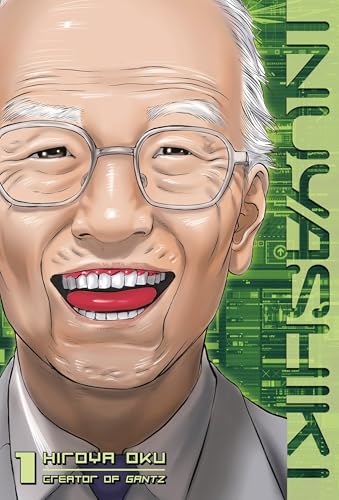
Inuyashiki
Yu's review of Inuyashiki — two people are accidentally destroyed and rebuilt as machines by aliens; a 58-year-old man no one noticed becomes a hero; a teenage boy whom everyone admired becomes a mass murderer; the series asks what the inside of a person determines when they are given absolute power.
Sci-Fi / Drama
Galaxy Express 999
Galaxy Express 999 follows Tetsuro Hoshino, a young boy who boards the legendary space train 999 toward a planet where he can receive a free mechanical body — accompanied by the mysterious Maetel — and encounters, on each planet the train stops at, a different meditation on what it means to be human and whether eternity is worth what it costs.

Sci-Fi / Drama
Hyakuoku no Hiru to Senoku no Yoru
Hyakuoku no Hiru to Senoku no Yoru is Moto Hagio's manga adaptation of Ryu Mitsuse's celebrated science fiction novel — following the collapse of civilizations across billions of years, centered on figures from different historical periods who are drawn toward a single question: what is the nature of creation, and who is responsible for it?
Sci-Fi / Drama
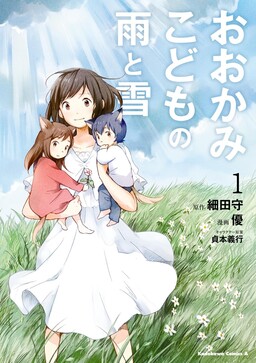
Wolf Children
Yu's review of Wolf Children — Hana falls in love with a man who is the last wolf-human; they have two children, Ame and Yuki, who can transform between human and wolf form; when their father dies suddenly, Hana must raise two wolf-children alone in a society that cannot know what they are.
Sci-Fi / Psychological
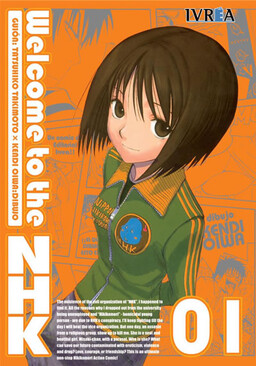
Welcome to the NHK
Yu's review of Welcome to the NHK — Tatsuhiro Sato has been a hikikomori (shut-in) for four years, convinced that Japan's public broadcaster NHK is running a conspiracy to create hikikomori; a mysterious girl named Misaki begins visiting him and offers to help him rejoin society, for reasons he cannot understand.
Sci-Fi / Drama
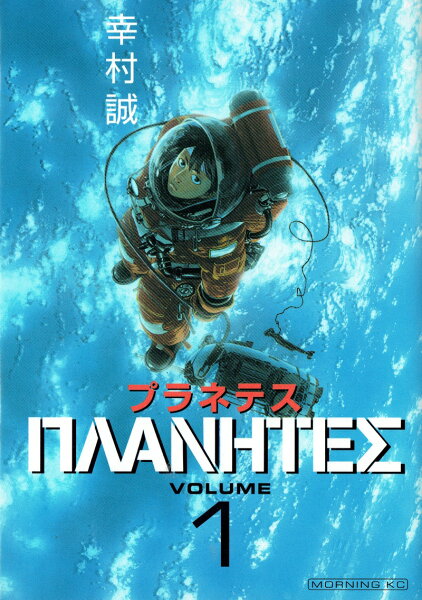
Planetes
Yu's review of Planetes — a crew of space debris collectors in the near future of 2075, where someone wants to be the first human to Jupiter and someone else just wants to survive the shift.
Written by
Yu
Manga Enthusiast from Japan
I grew up in Japan and manga literally saved me during a tough time in elementary school. My English isn't perfect, but my love for manga is real — and I want to share it with you.
Disclosure: This post contains affiliate links. As an Amazon Associate, I earn from qualifying purchases at no extra cost to you.