
Abara Review: The 200-Page Nightmare That Secretly Built Chainsaw Man
by Tsutomu Nihei
Read the first volume. If it doesn't hook you, put it down. It'll hook you.
Buy Abara on Amazon →*Affiliate link — I earn a small commission at no extra cost to you.
I came to Abara backwards. I read Chainsaw Man first — like a lot of people my age — and somewhere around the third time Denji sprouted blades out of his own body, I went looking for what Tatsuki Fujimoto said inspired him. He's mentioned it more than once: when Chainsaw Man hit three million copies, he called his own manga "a pop Abara." A pop version. Which means the original is the un-pop one. The heavy one. The one without the jokes.
So I tracked down Tsutomu Nihei's two-volume thing from 2005, sat down expecting another Blame!-style slog through a kilometers-tall megastructure, and instead got hit by something faster and meaner and more biological than I was ready for. Abara is short — you can read it in one sitting — but it does not feel short while you're inside it. It feels like being chewed.
Quick Take
- This is the missing link between Nihei's cold architecture and Fujimoto's chainsaw chaos — bone armor erupting out of human bodies, two decades before Pochita
- Only two volumes (collected as a single VIZ deluxe hardcover), but it's some of Nihei's densest, goriest, most disorienting work
- M rating — there's cannibalism, body horror, and gore on nearly every spread; this is not a starter manga
Story Overview
The world of Abara is a ruined far future where humanity huddles in cities strung together by a single highway and a tangle of tubes, all under the shadow of impossibly huge ancient mausoleum-structures called the Kōsa-byō. Into this, an old horror returns: the White Gauna (白奇居子, Shiro-Gauna) — creatures that eat humans, grow as they feed, and eventually move to devour the mausoleums themselves.
The only thing that can fight them is their mirror image. Black Gauna (黒奇居子, Kuro-Gauna) are engineered counter-weapons: people who can transform, growing a black skeletal exoskeleton where ribs literally fan out from the spine to armor and arm the body. That bone armor — abara means "ribs" in Japanese — is the whole title.
The protagonist is Kudou Denji (駆動電次), a quiet young man working a grim job at a "main-oil aquaculture" facility. He's recruited because he's a secret weapon: he can become a Black Gauna. From there the story turns into a chase. An investigator named Sakishima digs into the killings, reaches the ancient corporation Daiyonki-ren and its scripture The Book of the Other Phase (異相の書), and learns that this exact catastrophe already happened roughly six hundred years ago — White Gauna rose, Black Gauna were made to stop them, and now the cycle is repeating. Nihei tells almost none of this cleanly. Plot arrives in fragments between full-page eruptions of violence, and the truth is closer to a sensation than an explanation — fitting, since Nihei himself has joked that he can barely remember the setting he built.
Characters
Kudou Denji — The reluctant center of it. He isn't a hero who wants to fight; he's a tool that gets pointed at the White Gauna and fired. His transformation into the bone-skeletal Black Gauna is the visual spine of the book, and his detachment — doing monstrous things without seeming to want anything — is exactly the dead-eyed quality Fujimoto would later warm up and humanize in Chainsaw Man.
Tadohime — Daughter of the head of the Ken'gan-ryō, the organization that wants to control and weaponize Denji. She's the institutional pressure on him, the reason he can't simply walk away from what he is.
Nayuta (那由多) — A second person who can transform into a Black Gauna, a female fighter who exists as Denji's parallel. The fact that he isn't unique reframes everything: he's not the chosen one, he's a model number.
Ayuta (阿由多) — Nayuta's older sister, a wheelchair user, and the emotional tether of that pair. Where most of Abara is cold metal and white meat, the Nayuta/Ayuta relationship is the closest the book comes to tenderness.
Sakishima — The hot-blooded investigator from the Keihei-bushō (the enforcement bureau) whose digging surfaces the six-hundred-year cycle. He's the closest thing to a reader-surrogate: a human trying to understand a system built out of things that eat people.
What I Love About It
The single best idea in Abara is the rib transformation, and it's worth slowing down on, because it's the thing Fujimoto carried forward whole. When a Black Gauna activates, the human silhouette doesn't get a robot suit bolted onto it — the body opens. The spine becomes an axis and the ribs sweep out and around, knitting into a black skeletal shell, and then weapons grow out of that. It's armor that is also a wound. You're watching a person turn inside out into the shape of a weapon, and Nihei draws it with so much anatomical confidence that it reads as horrifyingly plausible rather than cool.
That's the panel that made the Chainsaw Man connection click for me. Pochita, Denji's chainsaw form, the blades-from-the-body grammar of that whole series — fans and Fujimoto both point straight back here, to the Black Gauna. Reading Abara after Chainsaw Man is like finding the bone X-ray under a finished painting. Fujimoto added warmth and stupidity and heart. Nihei gave him the skeleton, literally. And there's something I genuinely love about a two-volume oddity from 2005 quietly seeding one of the biggest manga of the 2020s.
Memorable Scene ⚠️ Spoiler Warning
The image that won't leave me is the White Gauna feeding and scaling up. These aren't fixed monsters — they eat, and what they eat becomes them, so an early threat that's bad enough at human-eating scale keeps escalating until the things are large enough to start consuming the Kōsa-byō, the mausoleum-mountains that define the entire skyline. Nihei stages it so the architecture you spent the book reading as permanent, geological, eternal becomes food. The most solid thing in the world turns out to be just more meat for the white things. That collapse of scale — from "monster eats a person" to "monster eats the world's tombs" — is the single image that justifies the whole nightmare for me. It's pure Nihei: the horror isn't a jump scare, it's a realization about size.
Pros & Cons
Pros
- The bone-armor transformation is one of the great body-horror designs in manga — and demonstrably influential
- Dense, fast, complete; no filler, no decade-long wait
- The VIZ deluxe hardcover is gorgeous and includes the bonus short story "Digimortal"
- Essential reading if you love Chainsaw Man and want to see its DNA
Cons
- The plot is deliberately fragmented and hard to follow — even Nihei downplays the setting
- Gore and cannibalism are constant and explicit
- Short enough that readers wanting a long arc will feel it end abruptly — that opacity is either the appeal or a dealbreaker, and only you know which one you are
Is Abara Worth Reading?
Yes — especially if Chainsaw Man sent you looking. It's a short, brutal, visually staggering body-horror nightmare whose central transformation directly shaped one of the most popular manga of the decade. Go in for the art and the ideas, not for a clean story, and it more than earns its two volumes.
Similar Manga
| Title | Its Approach | How Abara Differs |
|---|---|---|
| Blame! | Nihei's silent epic through an endless megastructure | Abara is faster, gorier, and far more biological than architectural |
| Biomega | Nihei's motorcycle-and-virus action horror | Abara is shorter and more abstract, less of a road-movie chase |
| Chainsaw Man | Fujimoto's warm, chaotic "pop Abara" | Abara is the cold original — same bone-weapon body horror, none of the jokes |
Where to Buy
Read the first volume. If it doesn't hook you, put it down. It'll hook you.
Start with the Complete Deluxe Edition →
This post contains affiliate links. If you purchase through these links, I may earn a small commission at no extra cost to you. As an Amazon Associate, I earn from qualifying purchases.
*Affiliate link — I earn a small commission at no extra cost to you.
More Manga You Might Like
Sci-Fi / Action
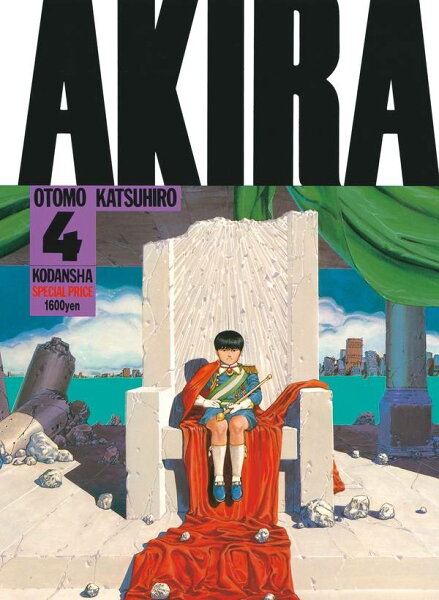
Akira
Yu's review of Akira — Katsuhiro Otomo's six-volume monster, serialized 1982–1990. Set in 2019 Neo-Tokyo, a teenage biker tries to save the best friend who suddenly has the power to end the world. The manga that dragged Japanese comics onto the world stage.

Sci-Fi / Action
Magical Girl Spec-Ops Asuka
Yu's review of Magical Girl Spec-Ops Asuka — three years after magical girls saved the world from an invasion of magical creatures, Asuka Otori is trying to live a normal high school life; she has PTSD; her allies need her back; she doesn't want to go back.
Sci-Fi / Mecha
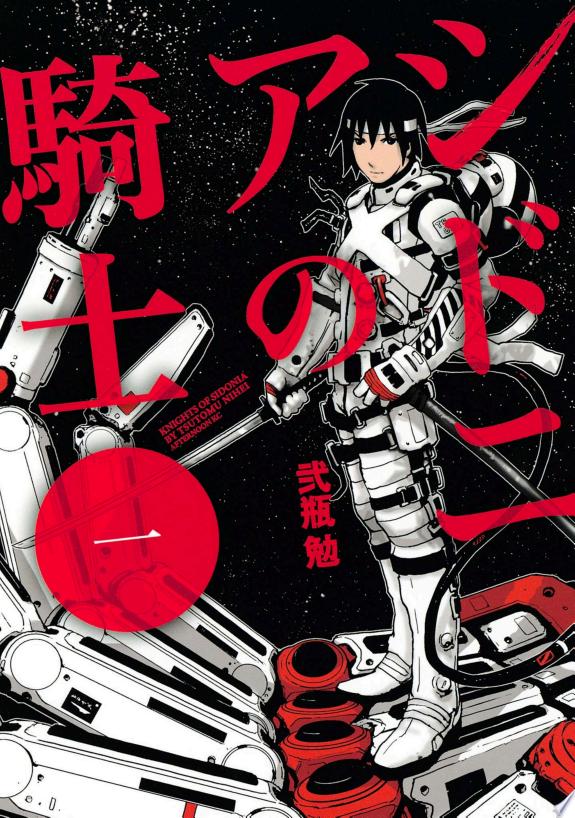
Knights of Sidonia
Yu's review of Knights of Sidonia — a thousand years after Earth is destroyed, the last humans travel space in a massive seed ship, fighting shapeshifting beings called Gauna with mecha called Gardes.
Sci-Fi / Action
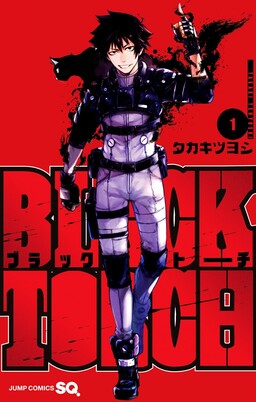
Black Torch
Yu's review of Black Torch — Jiro Azuma is a ninja-trained kid bullied for talking to animals, until he rescues a black cat who turns out to be the immortal mononoke Rago. When Jiro is killed protecting him, Rago fuses with him to bring him back, and the two are dragged into the Bureau of Espionage's war against demonic spirits.
Sci-Fi / Horror
Alien Nine
Yu's review of Alien Nine — Yuri Otani, a frightened sixth-grader, is elected to her school's Alien Party and forced to fight the aliens that fall on the school grounds while wearing a symbiotic creature called a Borg on her head. Drawn in a soft, cute style that makes the body horror underneath it so much worse.
Sci-Fi / Action
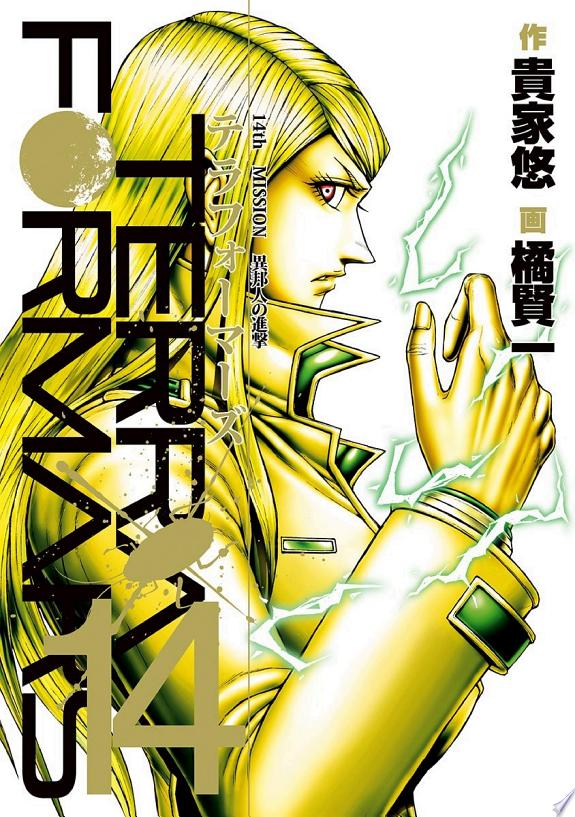
Terra Formars
Yu's review of Terra Formars — humanity seeded Mars with cockroaches to begin terraforming; centuries later, the cockroaches have evolved into humanoid giants with extreme strength, and human soldiers with insect-based genetic modifications are sent to exterminate them.
Written by
Yu
Manga Enthusiast from Japan
I grew up in Japan and manga literally saved me during a tough time in elementary school. My English isn't perfect, but my love for manga is real — and I want to share it with you.
Disclosure: This post contains affiliate links. As an Amazon Associate, I earn from qualifying purchases at no extra cost to you.