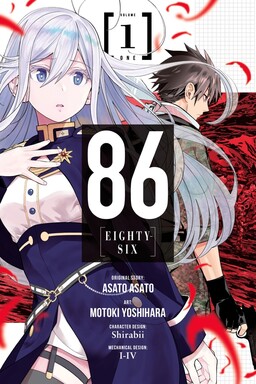
86—EIGHTY-SIX Review — A Republic Says It Has No Casualties Because It Has Decided the Dead Are Not People
by Asato Asato (Story) / Motoki Yoshihara (Art)
Read the first volume. If it doesn't hook you, put it down. It'll hook you.
Buy 86—EIGHTY-SIX on Amazon →*Affiliate link — I earn a small commission at no extra cost to you.
My uncle on my father's side was in the Self-Defense Forces. He never saw combat — Japan's constitution doesn't allow it — but he spent thirty years training for combat that never came. When I asked him once what the work was actually like, he told me the worst part wasn't preparing to fight. It was preparing to be expendable.
I thought about him a lot while reading 86.
Quick Take
- A military sci-fi premise so politically pointed it reads like a novel of ideas: the Republic that won't admit its drones have pilots, and the children dying in them
- One of the great character pairs in recent manga: Lena, the Handler who refuses to lie, and Shin, the squadron leader who has accepted he will die
- Age rating: T (Teen) — war violence, death of child soldiers, themes of state-sponsored ethnic cleansing handled with seriousness
What Is the Age Rating for 86—EIGHTY-SIX?
Yen Press rates the English release T (Teen) — 13+. The rating is accurate for the visual content but understates the thematic weight.
Visual content:
- Combat violence — mecha-on-mecha and mecha-on-human, but the on-page deaths are restrained. Most deaths are shown via squadron screens going dark, character names disappearing from rosters
- No graphic gore; some blood. No sexual content. No profanity above mild
- Some emotional intensity — the squadron deaths are mourned, the funerals (such as they are) are depicted
Thematic content (this is the heavier part):
- Systemic ethnic cleansing — the Republic of San Magnolia has stripped an entire ethnic group of citizenship and confined them to camps. The mechanics of this are depicted with clarity
- Child soldiers as state policy — the protagonists are teenagers (some younger) fighting because the Republic forces them to. The series does not flinch from this
- State propaganda and bureaucratic violence — the language the Republic uses to deny its crimes is rendered with precision
- Death of named characters — recurring, sometimes shocking
For most teen readers (13+): the T rating is fine. For sensitive readers, the political themes may be heavier than they expect from a "mecha manga."
The series is in dialogue with real history — the Nuremberg Laws, the Armenian genocide, the dehumanization mechanisms of various 20th-century regimes — without being a one-to-one allegory for any single event.
What Is 86—EIGHTY-SIX About? (Plot Summary)
The Republic of San Magnolia, a small nation surrounded by enemies, has spent nine years at war with the Legion — autonomous mechs deployed by a neighboring empire. The Legion is unmanned, intelligent, relentless, and slowly consuming the Republic's territory.
The Republic announces, repeatedly, that its own war effort is fought by unmanned drones — autonomous mechs that respond to the Legion in kind, with no human pilots, no casualties. A clean war. A war the Republic's citizens — the Alba, the silver-haired ruling ethnic group — can ignore while they enjoy peace inside the protective walls of their capital.
This is the Republic's lie.
The drones — called Juggernauts — have pilots. The pilots are Eighty-Sixers: members of the various ethnic minorities the Republic stripped of citizenship years before the war began. Officially, they are not human. Officially, the Republic's borders contain only Alba citizens. The Eighty-Sixers are confined to a concentration zone — Sector 86, the namesake of the series — and conscripted to fight in Juggernauts with no possibility of discharge except death.
The Republic does not record their names. The Republic does not count their deaths. The Republic insists, in public, that the war is fought without losses.
Vladilena "Lena" Milizé is a young Alba military officer, the daughter of a powerful Republic family. She is assigned as Handler One — a coordinator role — for the Spearhead Squadron, an Eighty-Sixer unit stationed at the front. Previous Handlers have treated the role as administrative fiction, never communicating with the squadron as people. Lena refuses. She talks to them. She learns their names. She treats them as the human beings they are.
Shinei "Shin" Nouzen, the squadron leader, is sixteen. He has fought for years. He is called "the Undertaker" because every squadron he has been in has eventually died around him. He has accepted that he will die. He has been mostly indifferent to Handlers because Handlers are part of the system that kills him. Lena is the first Handler who treats him as a person.
The light novel and manga then track:
- Lena and Shin's relationship across the radio link (called Para-RAID, a neural communication system that lets them talk directly)
- The Spearhead Squadron's missions and gradual decimation
- The Republic's response when Lena tries to push back against the lie from inside
- What happens when the squadron's final mission parameters are revealed
- (Later arcs) Shin's survival, the geopolitical implications of what was uncovered, and the Federation of Giad — a neighboring nation that does not run on the Republic's lies
The manga adaptation by Motoki Yoshihara ran in Young Gangan from February 2018 to June 2021 and was suspended at volume 3 (announced cancellation July 2022) due to the artist's health issues. The 3 manga volumes cover the opening of the Spearhead Squadron arc only. Readers who want the rest of the story should turn to the original light novels (Yen Press has released over a dozen volumes in English) or the A-1 Pictures anime adaptation.
The Title: Why "86"?
The title refers to Sector 86 — the geographical zone the Republic uses to contain the Eighty-Sixers. The number is bureaucratic. The Republic divides its territory into 85 numbered sectors of citizens, plus Sector 86 of "the rest."
The Republic's policy is to refer to Eighty-Sixers as "Eighty-Sixes" or "86s" — using the sector number in place of personhood. The protagonists wear the number as identity. The English title's dash — 86—EIGHTY-SIX — visually represents both the number and the name simultaneously, the way the series asks readers to hold both meanings at once.
Who Is This Manga For?
- Military sci-fi readers who want their genre with real political weight
- Mecha fans willing to accept that the mecha matter less than the people in them
- Readers of dystopian fiction (1984, We, The Handmaid's Tale tradition) — 86 belongs on this shelf
- Anime watchers who liked the 2021–2022 Studio A-1 anime adaptation and want the source material
- Light novel curious readers — the LN is the original; the manga is a strong adaptation
Content Warnings & Age Rating
Age Rating: T (Teen) — 13+ Content Warnings: War violence (frequent, restrained on-page); deaths of named child characters; systemic ethnic cleansing as central premise; depictions of state propaganda and bureaucratic dehumanization; themes of survivor guilt, suicidal ideation among soldiers, child soldier psychology
Story Overview: The Arcs
Spearhead Squadron arc (the manga's 3 volumes) — Yoshihara's adaptation covers the opening of this arc: Lena's assignment to the squadron, the establishment of the radio relationship, the early Spearhead missions. The full climax of the arc — the Special Reconnaissance Mission, the squadron's final assignment, and what the squadron chooses to do with it — is in the light novels (volumes 1–3 in English) and in the A-1 Pictures anime.
Federation arc (LN volumes 4+, anime season 1 part 2) — The continuation after Spearhead. Without spoiling: the Federation of Giad is a different kind of nation than the Republic, and Shin and the squadron survivors discover what it's like to fight a war where their countrymen treat them as human beings. This material is not in the manga but is available in the LN and anime.
Characters
Vladilena "Lena" Milizé — Young Alba military officer. Her family is part of the Republic's military establishment. She has access to power her squadron doesn't. The series' central question for Lena is what she can do with that access — whether her individual moral clarity can change a system designed not to listen, and what the cost is of trying. Her conflicts with her family, her superiors, and her own privilege are rendered with care.
Shinei "Shin" Nouzen — Sixteen at the start of the series. Squadron leader. "The Undertaker." Shin has the ability to hear the voices of the Legion — autonomous mechs that turn out to be powered by harvested human consciousness, including the consciousness of his own brother, who became a Legion years before. Shin's specific psychological burden is rare even in mature seinen: he is simultaneously the squadron's best soldier and the person carrying its dead, literally. His relationship with Lena is the series' emotional engine.
The Spearhead Squadron — Each squadron member is developed. Raiden (Shin's closest friend), Kurena (sniper, in love with Shin), Theoto/Theo (mechanic-adjacent, group's heart), Anju (medic, soft-spoken). The series spends real time on each of them. The deaths matter because we knew them.
Captain Owen Karlstadt — Eighty-Sixer officer (rare position) who serves as a mentor figure to Shin in early volumes.
Republic antagonists — Lena's superior officers, her uncle Karlstadt, and various political figures whose response to her efforts ranges from indifference to active hostility. None are caricatured. The Republic is a system, and the people running it are people who chose to be inside the system.
Art Style
Yoshihara's adaptation art is clean, controlled, and handles both the mecha sequences and the emotional content effectively. Juggernaut designs are distinctive — spider-like, agile, fragile by mecha standards. Legion designs are angular and unsettling. The character art is expressive without exaggeration.
The Para-RAID sequences — where Lena and Shin communicate across distance — are visually inventive: Yoshihara uses soft focus, panel composition, and visual cues to render the neural-radio connection as something between conversation and dream.
The manga adaptation hews closely to the LN's content. Some readers prefer the LN's prose for the political/philosophical material; the manga is the better entry point for visual readers and includes most of the LN's most affecting scenes.
Cultural Context
86's allegory is deliberately broad. The Republic of San Magnolia is not specifically Nazi Germany, specifically the Republic of Turkey during the Armenian genocide, specifically apartheid South Africa, or specifically any other historical regime — but it draws mechanisms from all of them. The bureaucratic language ("processing," "maintenance losses," "sector residents"), the legal apparatus (citizenship revocation, sector confinement), and the social complicity (Alba citizens who genuinely believe the war is unmanned) all have multiple historical referents.
Asato Asato has stated in interviews that the series is partly a response to her own thinking about Japanese postwar reckoning — the question of how a society can collectively maintain a lie about its own conduct. The series doesn't make this connection explicit, but readers familiar with Japanese postwar history can hear it.
The work is also in dialogue with Robert Heinlein's Starship Troopers, Joe Haldeman's The Forever War, and Yoshiki Tanaka's Legend of the Galactic Heroes — military sci-fi with political weight. 86 belongs on this shelf.
What I Love About It
The end of the Spearhead Squadron arc.
I'm going to be vague about the specifics because the impact depends on reading the volumes in sequence. What I'll say: the Republic has assigned the squadron its final mission. The squadron has every reason to refuse — they could turn their Juggernauts on the Republic, they could simply not move, they could defect. The Republic expects them to die in the operation. Lena has tried, from inside the system, to prevent the order. She has failed.
What the squadron does is something the series spends seven volumes earning.
They don't refuse. They don't defect. They don't turn around. They go on the mission — but they go on it as themselves, not as the Republic's expendable assets. They name themselves. They take their colors. They go into combat as the people they actually are, not the categories the Republic has assigned them. The dignity is theirs to claim. The Republic cannot take it.
The radio conversation between Lena and Shin during this sequence is one of manga's most affecting sustained dialogues. Lena, knowing the squadron is heading into a death zone, says one specific thing. Shin, knowing the same, says one specific thing back. The series has been building toward this exchange for seven volumes.
I won't write the lines. What I'll say is that the manga, in this sequence, articulates something I have not seen articulated as clearly in any other military fiction: that the political project of denying someone's humanity does not actually erase their humanity. The Republic can call them Eighty-Sixes. The squadron can call themselves anything they want. The squadron does. The Republic loses, even when the squadron dies, because the lie does not survive the death.
That's what makes 86 great. It's not anti-war exactly. It's anti-lie. The war is the apparatus. The lie is what the series prosecutes.
What English-Speaking Fans Say
86 has a substantial English fan base, primarily generated by the 2021–2022 anime adaptation by A-1 Pictures. The anime brought significant readership to both the manga and the original light novel. Yen Press's release of both is well-regarded.
The most common comments:
- The Lena-Shin radio relationship is consistently cited as one of the most emotionally affecting in recent anime/manga
- The end of the Spearhead arc (covered in episodes 10–11 of the anime) is one of the most-discussed sequences in recent anime fan history — this material is past the manga's cutoff point
- The Federation arc (post-Spearhead) divides readers — some prefer the tighter Spearhead focus; others appreciate the wider geopolitical scope
The political/allegorical content is taken seriously in English-language criticism of recent military anime.
Memorable Scene ⚠️ Spoiler Warning
The final radio call from the Spearhead Squadron.
After the Special Reconnaissance Mission has been ongoing for some time, with the squadron's losses mounting and the impossibility of survival becoming clear, Lena tries to call them one final time. She is in the Republic. The squadron is at the front. Para-RAID's range has been pushed beyond its design limits.
Most of the squadron has died. Shin is still alive. Lena gets through.
What she says — what he says back — is the moment 86 stops being a war manga and becomes a love story. Not a romance. A love story. The love is the recognition Lena has insisted on for seven volumes: that the people on the other end of her radio are people, and that she sees them, and that she will keep seeing them after the radio goes silent.
Yoshihara draws the panel of Lena holding the receiver after the call ends with restraint Asato Asato wrote into the LN. There is no dialogue. There is no thought balloon. There is a young woman, alone in a Republic that has spent seven volumes lying to her, who has just finished talking to someone the Republic has spent its entire existence pretending is not real. The panel is the manga's emotional center.
The Federation arc that follows answers a question the Spearhead arc could not: what happens to Shin if he survives. The answer is the rest of the manga. But the panel of Lena alone with the receiver is the scene that makes everything after it matter.
Similar Manga
| Title | Its Approach | How 86 Differs |
|---|---|---|
| Bokurano | Children in mecha facing existential cost | Bokurano is metaphysical; 86 is political |
| Knights of Sidonia | Military sci-fi with serious tone | Sidonia is harder sci-fi; 86 is more character/political |
| Vinland Saga | Violence with moral weight | Vinland is historical; 86 is sci-fi. Same moral seriousness |
| From the New World (Shin Sekai Yori) | Dystopia, systemic control | New World is psychological horror; 86 is military allegory |
Reading Order / Where to Start
Volume 1. The series builds carefully and skipping volumes would gut the Lena-Shin development.
If you're choosing between formats: the light novel is the source and is the most complete experience. The anime adaptation (Studio A-1 Pictures, 2021–2022) is excellent and covers approximately volumes 1–7 of the LN (and roughly the Spearhead Squadron arc of the manga). The manga adaptation is a strong third option, better than most LN→manga adaptations.
Most readers' optimal path: watch the anime first (it's the highest-impact version of the early material), then continue with the LN or manga from where the anime stops.
Official English Translation Status
Yen Press published all 3 manga volumes in English. The manga is suspended (Yoshihara's health) and there is no announced resumption. The original light novel series is published by Yen Press in English with more than a dozen volumes available — this is the way to read the full story. The anime is available on Crunchyroll.
Pros & Cons
Pros
- One of the most politically serious military sci-fi works in any medium
- The Lena-Shin relationship is among manga's most affecting
- The discrimination allegory is handled with rare clarity
- The mecha action serves the story rather than dominating it
- Strong adaptation; manga is a solid alternative to the LN
Cons
- Ongoing — the manga is significantly behind the LN
- The political content is heavy; not casual reading
- The first 1–2 volumes are setup-dense; payoffs are in volumes 4–7
- The radio-relationship-driven structure is an acquired taste. It won't land for everyone, especially readers wanting non-stop action.
Is 86—EIGHTY-SIX Worth Reading?
Yes. Among the most important military sci-fi manga of recent years. The Spearhead Squadron arc alone (volumes 1–7) is worth the price of admission. If you'd prefer one polished, complete experience, the anime is also an excellent choice.
Format Comparison
| Format | Notes |
|---|---|
| Manga (Yen Press) | 7 volumes in English, ongoing |
| Light Novel (Yen Press) | 12 volumes in English; the source text, further ahead |
| Anime (A-1 Pictures) | Two cours, 2021–2022, on Crunchyroll. Covers approximately the first major arc |
| Digital | All formats available digitally |
Where to Buy
Read the first volume. If it doesn't hook you, put it down. It'll hook you.
This post contains affiliate links. If you purchase through these links, I may earn a small commission at no extra cost to you. As an Amazon Associate, I earn from qualifying purchases.
*Affiliate link — I earn a small commission at no extra cost to you.
More Manga You Might Like
Sci-Fi / Military
Mobile Suit Gundam: The Origin
Yu's review of Mobile Suit Gundam: The Origin — Yoshikazu Yasuhiko, the original character designer for the 1979 Gundam anime, re-adapts and expands the One Year War, giving Char Aznable the backstory the original never showed and drawing the Universal Century with 40 years of additional craft.
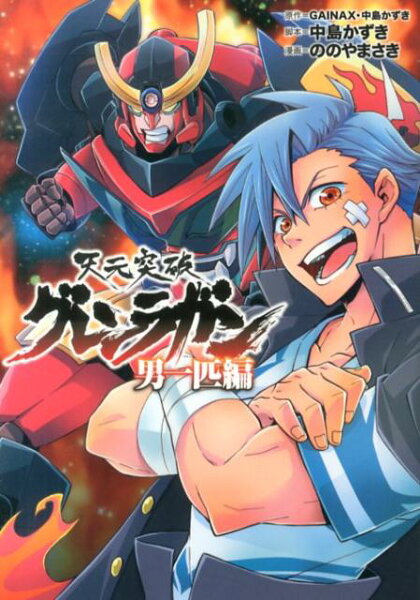
Sci-Fi / Mecha
Gurren Lagann
A review of Gurren Lagann, the hyper-optimistic super robot manga about drilling through despair to reach the stars.
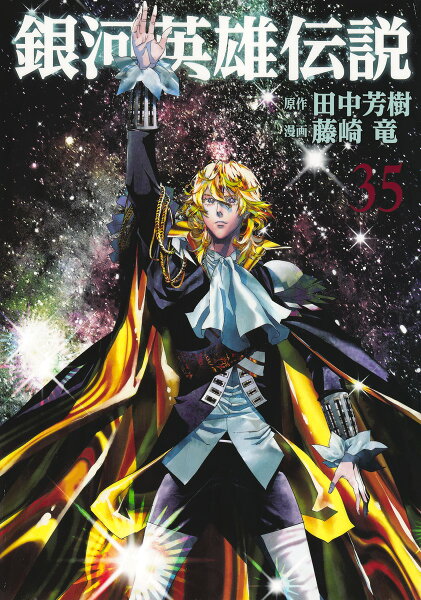
Sci-Fi / Military
Legend of the Galactic Heroes
Yu's review of Legend of the Galactic Heroes — the manga adaptation of the classic novel series following Yang Wen-li of the Free Planets Alliance and Reinhard von Lohengramm of the Galactic Empire across a war that neither believes in the same terms as the people who sent them to fight it.
Sci-Fi / Drama
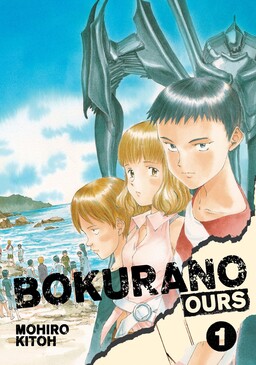
Bokurano
Yu's review of Bokurano by Mohiro Kitoh — fifteen children sign a contract to pilot a giant robot called Zearth, only to learn each victory costs the pilot's life, and that every battle won erases another Earth.
Sci-Fi / Mecha
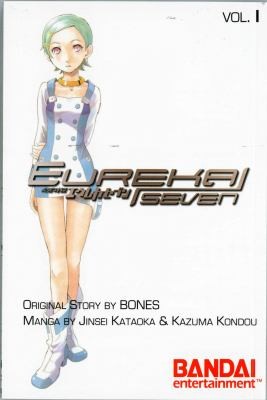
Eureka Seven
A review of Eureka Seven, the manga adaptation of the mecha anime about a boy who joins a band of rebels and falls in love with a mysterious girl who pilots a unique Limit of Questions.
Sci-Fi / Mecha
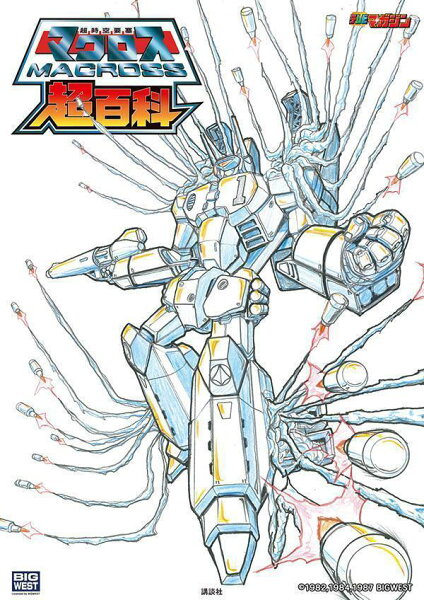
The Super Dimension Fortress Macross
A review of the original Macross manga, the classic that introduced the idea that pop music could end a war between species.
Written by
Yu
Manga Enthusiast from Japan
I grew up in Japan and manga literally saved me during a tough time in elementary school. My English isn't perfect, but my love for manga is real — and I want to share it with you.
Disclosure: This post contains affiliate links. As an Amazon Associate, I earn from qualifying purchases at no extra cost to you.