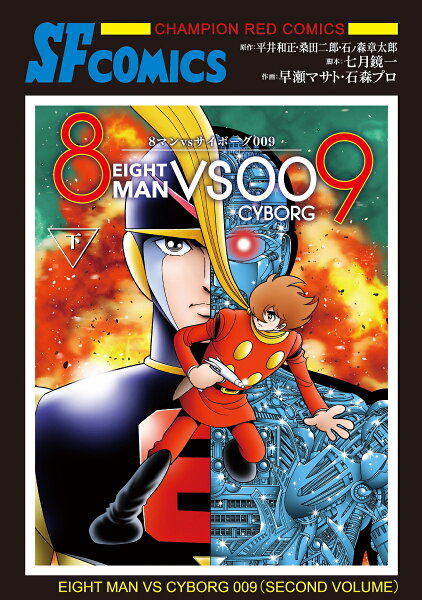
8 Man Review: The Cyborg Who Smokes to Stay Alive
by Kazumasa Hirai (writer) / Jiro Kuwata (artist)
Read the first volume. If it doesn't hook you, put it down. It'll hook you.
Buy 8 Man on Amazon →*Affiliate link — I earn a small commission at no extra cost to you.
The first time I really understood that manga had a history older than me, it was because of a cigarette.
I was a kid flipping through an old reprint that one of my uncles still had on a shelf, and there was this panel of a man in a sharp double-breasted suit, standing still in the middle of an action scene, lighting up. Everyone else in the story was moving. He was just smoking. I didn't get it at all. Why would a hero stop to smoke in the middle of a fight? Years later I learned that the cigarette wasn't a cigarette at all — it was the thing keeping his robot brain from cooking itself. That detail stuck in my head for decades. That's 8 Man. A 1963 manga that turned a hero's weakness into the strangest, most human-feeling part of him.
Quick Take
- One of Japan's earliest cyborg heroes — running in 1963, before Kamen Rider, before most of the genre existed
- The hook isn't the speed (3,000 km/h) — it's that he's a dead detective's mind in a robot body, who has to "smoke" coolant to keep functioning
- Action with a melancholy underneath; rated T (Teen) — violence is present but handled narratively, not graphically
Story Overview
Hachiro Azuma is one of the police force's sharpest detectives. During a confrontation with a vicious criminal, he's shot and killed. That's the end of the man — except it isn't. A scientist named Dr. Tani extracts Azuma's memory and will and pours them into the electronic brain of a super-robot he built. Azuma wakes up as something new: 8 Man, the "eighth" detective of the First Investigation Division, a secret weapon nobody on the force can know about.
By day he goes back to passing as the living Hachiro Azuma — a private detective in a stylish double-breasted suit. When a case turns dangerous, he transforms into 8 Man: a body that runs at 3,000 km/h, packs an atomic reactor, and can reshape its artificial skin and joints to disguise itself as literally anyone. But the same atomic core that makes him unstoppable is also his weakness. His electronic brain overheats. To cool it, he carries cigarette-shaped coolant pellets in his belt buckle and has to "smoke" them periodically — and there are moments where he can't, and the heat starts to win.
The series ran in Weekly Shonen Magazine from 1963 to 1965 across a mix of serialized arcs and standalone cases. It ended abruptly and strangely: artist Jiro Kuwata was arrested for illegal possession of a handgun, and the serialization was cut short. The final installment of the last arc, "Maijin Kozuma," was finished by an assistant ghost-drawing in Kuwata's place. So the ending you read is, fittingly for a story about a man replaced by a machine wearing his face, partly drawn by someone wearing Kuwata's.
Characters
Hachiro Azuma / 8 Man: A detective who dies in the first act and spends the whole rest of the series being someone who is, technically, already dead. His arc is the quiet horror of the premise: he keeps the dead man's name, the dead man's suit, the dead man's job, performing "Hachiro Azuma" for a world that doesn't know Hachiro Azuma is gone. The clever wrinkle the manga builds in — when he stops to smoke his coolant, his old detective instincts and reasoning sharpen. The machine is at its most human exactly when it's keeping itself from breaking down.
Dr. Tani: The scientist who built the robot body and resurrected Azuma inside it. He's the author of 8 Man's existence and the one person who knows what 8 Man really is — which makes their relationship the closest thing 8 Man has to family, and also the source of his condition.
Sachiko and Ichiro: The people in Azuma's everyday civilian life — his secretary and a young assistant — who have no idea the detective they work alongside is a robot. They're the audience 8 Man performs his humanity for, the reason the disguise has to hold.
What I Love About It
I love that the weakness is a cigarette.
Think about how lazy most "robot hero" weaknesses are — a power core that runs low, a battery, a magic crystal. 8 Man's creators did something stranger and better. His vulnerability is that his brain overheats, and the fix is to stop, in the middle of everything, and smoke. And the manga adds a beautiful detail: when he smokes, his human detective reasoning sharpens. So the act that keeps the machine from melting is also the act that makes him most like the man he used to be. The cooling and the thinking are the same gesture.
It's such a specific, almost poetic piece of design for a 1963 action comic aimed at kids. The cultural footprint was real, too — kids who watched the anime adaptation got hooked enough that a tie-in cigarette-shaped solid cocoa candy became a hit. A hero whose defining trait was "stops to smoke" sold cocoa cigarettes to children. The 1960s were a different planet. But strip away the period weirdness and what's left is a genuinely smart idea: a body that betrays you the harder you push it, and a ritual that's part medicine, part habit, part the last thread tying a machine to a dead man.
Memorable Scene ⚠️ Spoiler Warning
The shapeshifting is where the strangeness of 8 Man's body really lands.
His artificial skin and movable joints let him become anyone — the manga describes him super-accelerating to instantly change clothes and shift his face so completely he can pass as a woman. On paper it's a cool spy gadget. But sit with what it means. This is a man who already lost his original body. Now his replacement body isn't even fixed — it's putty. He can wear any face, which is another way of saying he has no face that's truly his. The detective who used to be Hachiro Azuma can look like Hachiro Azuma, or like a stranger, or like a woman on a train, and none of them is more "him" than the others.
That's the panel that stays with me. Not a big action beat — the quiet implication underneath a clever ability. When a hero can become anybody, the story is also telling you he's nobody in particular anymore. For a comic from 1963, reaching that idea almost by accident, through what was supposed to be a fun transformation trick, is the kind of thing that makes me love old manga.
Art Style
Jiro Kuwata's linework is some of the cleanest of the early manga era. His action reads with real kineticism — 8 Man's speed comes through in composition and motion rather than over-explanation — and his quiet, suited civilian scenes have the restraint the melancholy needs. Knowing Kuwata's run ended with his arrest, and that an assistant finished the final chapter, adds a strange weight to looking at the late pages.
Cultural Context
8 Man arrived in 1963, the same era manga and TV anime were both being invented as mass culture. It's recognized as one of Japan's earliest cyborg superheroes, predating Kamen Rider. The anime adaptation, which began airing in 1963, reached English-speaking markets through syndication as 8th Man, with the characters renamed for Western audiences — which is why some older Western viewers know "8th Man" without ever having seen a page of Hirai and Kuwata's manga.
Pros & Cons
Pros
- Historically foundational — a cyborg hero before the genre had a name
- The coolant-cigarette and shapeshifting ideas are genuinely inventive, not just spectacle
- Kuwata's art holds up remarkably well
- Self-contained classic; complete in 5 volumes
Cons
- No licensed English edition of the manga
- Pacing reflects 1960s serialization — modern readers may find it slow
- The ending is abrupt and partly ghost-drawn due to the real-world circumstances of its cancellation
- The smoking-as-heroism framing is very of-its-era — if that pulls you out of it, this won't work for everyone
Is 8 Man Worth Reading?
For sci-fi fans and manga historians, yes — this is a foundational cyborg-hero text, and its best ideas (the cooling cigarettes, the faceless shapeshifter) are smarter than its 1963 date suggests. For general readers, it asks patience with the era's pacing and an abrupt ending. But the melancholy under the action — a dead man performing his own life in a body that can become anyone — still lands.
Who Is This Manga For?
- Manga historians who want to read where the cyborg-hero genre actually started
- Sci-fi fans drawn to the identity question — what's left of a person poured into a machine
- Fans of Jiro Kuwata's art, clean and expressive even sixty years on
- Readers who can read Japanese — there's no licensed English manga edition
Where to Buy
No English release yet. That just means you find it before everyone else does.
There's no licensed English edition of the 8 Man manga — the Japanese print and digital releases are the only legitimate way to read Hirai and Kuwata's original.
This post contains affiliate links. If you purchase through these links, I may earn a small commission at no extra cost to you. As an Amazon Associate, I earn from qualifying purchases.
*Affiliate link — I earn a small commission at no extra cost to you.
More Manga You Might Like

Sci-Fi / Action
Battle Angel Alita
Yu's review of Battle Angel Alita (Gunnm) — a memoryless cyborg pulled from a junkyard fights through bounty hunting, Motorball, and a doomed first love in the brutal world beneath the sky city of Zalem.
Sci-Fi / Action
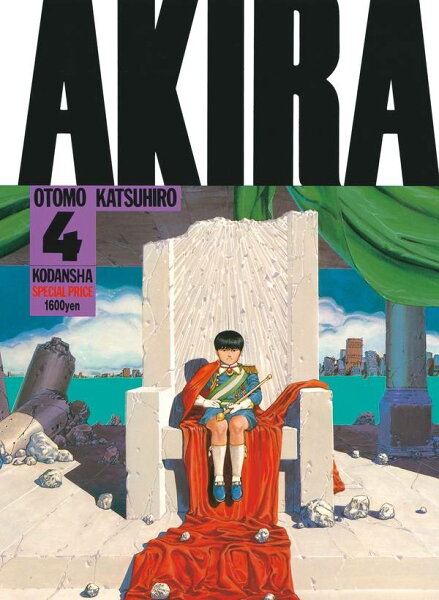
Akira
Yu's review of Akira — Katsuhiro Otomo's six-volume monster, serialized 1982–1990. Set in 2019 Neo-Tokyo, a teenage biker tries to save the best friend who suddenly has the power to end the world. The manga that dragged Japanese comics onto the world stage.
Sci-Fi / Action
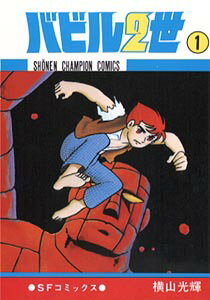
Babel II
A schoolboy named Koichi inherits the legacy of an alien stranded on Earth 5,000 years ago — three superhuman servants and the Tower of Babel — and learns that the same servants will obey his enemy Yomi, a distant relative who wants the world.
Sci-Fi / Action
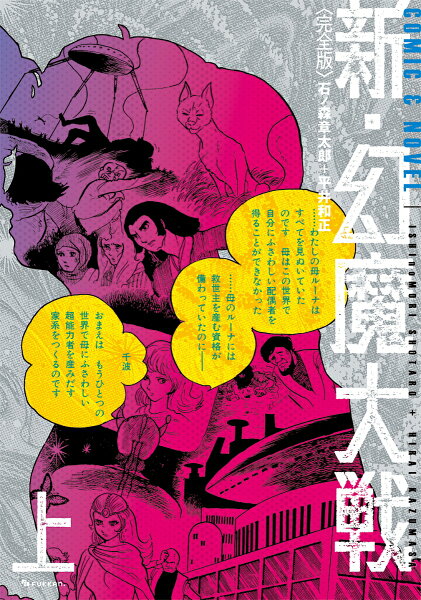
Genma Taisen
Genma Taisen is Shotaro Ishinomori's manga adaptation of Kazumasa Hirai's science fiction series — following a group of psychically gifted young people who must unite to face Genma, a cosmic consciousness that destroys civilizations across the universe, in a battle that is as much spiritual as physical.
Sci-Fi
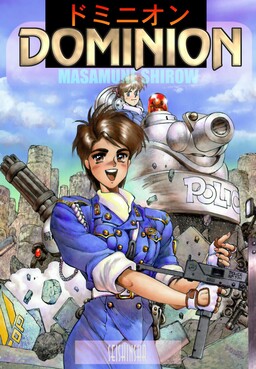
Dominion Tank Police
Yu's review of Dominion Tank Police — in a future city where crime requires a Tank Police division, officer Leona Ozaki is assigned to the unit and falls deeply in love with her miniature tank Bonaparte; Masamune Shirow's comedic sci-fi action, lighter than Ghost in the Shell but with the same worldbuilding attention.
Sci-Fi / Action
Area 88
Yu's review of Area 88 — Shin Kazama, a Japanese airline trainee, is drugged and tricked by his best friend into signing a three-year mercenary contract with the air force of a fictional desert kingdom. Trapped at Area 88, he can only buy his freedom by killing — earning $1.5 million in combat bonuses. Kaoru Shintani's 1979 aviation classic about a good man becoming an ace he never wanted to be.
Written by
Yu
Manga Enthusiast from Japan
I grew up in Japan and manga literally saved me during a tough time in elementary school. My English isn't perfect, but my love for manga is real — and I want to share it with you.
Disclosure: This post contains affiliate links. As an Amazon Associate, I earn from qualifying purchases at no extra cost to you.