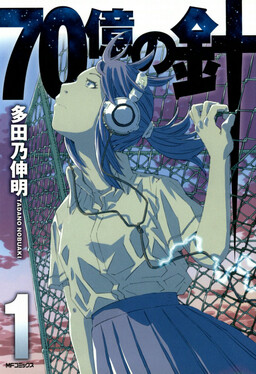
7 Billion Needles Review: The Girl Who Was Already Hiding Before the Alien Moved In
by Nobuaki Tadano
Read the first volume. If it doesn't hook you, put it down. It'll hook you.
Buy 7 Billion Needles on Amazon →*Affiliate link — I earn a small commission at no extra cost to you.
When I was a kid, I used to wear headphones even when nothing was playing. The little foam pads were a wall. If they were on, people understood I wasn't available, and I didn't have to explain why I had no one to sit with. So when I opened the first volume of 7 Billion Needles and met Hikaru Takabe — a high school girl who keeps her headphones clamped on and her classmates at arm's length — I felt something land that I wasn't expecting from a manga about aliens.
Because that's the thing nobody tells you about this series. The cover sells you a sci-fi action premise: a girl fused with an alien, hunting a monster. And that premise is real. But Nobuaki Tadano is far more interested in the girl who was already hiding before the alien showed up. I came for the monster hunt. I stayed because Hikaru reminded me of someone I used to be.
Quick Take
- A quiet, strange sci-fi manga that uses an alien-hunt premise to tell a story about social isolation and learning to reconnect
- Loosely adapts Hal Clement's 1950 novel Needle — the "find the hidden alien among us" core — but transplants it into a Japanese high school and then goes somewhere stranger
- Complete in 4 volumes; rated T+ (Older Teen) for graphic violence, body horror, and dark themes
Story Overview
Hikaru Takabe is on a class trip when a fireball falls out of the sky. It kills her. That's not a spoiler buried late — it's the opening. An alien entity called Horizon revives her body and takes up residence inside it, and now the two of them share one skin.
Horizon isn't here by accident. It's chasing Maelstrom, another alien Horizon describes as purely destructive, and Maelstrom has already landed on Earth and burrowed into one of Hikaru's classmates. Horizon needs a human host to hunt it — and Hikaru, as Anime News Network's House of 1000 Manga column dryly notes, is close to the worst possible candidate: skeptical, unmotivated, and allergic to talking to people. The investigation forces her to do the one thing she's spent years avoiding: actually engage with her classmates to figure out which one isn't human anymore.
What surprised me is that the Maelstrom hunt — the part the back cover sells — is essentially resolved by the end of volume one. The remaining three volumes go somewhere the original novel never went. With the two cosmic forces having suspended their endless game, the aftermath triggers a much larger crisis for life on Earth, and the story turns genuinely surreal: a God-like force arriving to judge the mess humanity is making of the planet, dinosaurs, an evolutionary reckoning. It should fall apart. It mostly doesn't, because Tadano keeps the camera locked on Hikaru the whole time. No matter how cosmic the stakes get, the real question stays small: can this girl let other people in?
Characters
Hikaru Takabe — She starts as a defensive loner who masks her anxiety with crabbiness and oversized headphones. What makes her work is that her arc isn't "shy girl becomes confident." It's slower and truer than that. The mission drags her into contact with people she'd written off, and through classmates like Nao and Saya she slides, reluctantly, into actual friendship. By the end she's not a different person — she's the same person who finally stopped treating connection as a threat.
Horizon — The benevolent alien sharing Hikaru's body. Horizon reads human behavior literally and earnestly, with no instinct for the social armor Hikaru hides behind. The friction between Horizon's straight-faced logic and Hikaru's defensive deflection is the series' best running dynamic, and it's where a lot of the unexpected humor comes from — an alien quietly baffled by why its host won't just talk to anyone.
Maelstrom — The destructive alien, hiding inside a human at Hikaru's school. When it finally drops the disguise, its true form is a massive, mass-absorbing, clawed reptile — closer to a velociraptor than anything human. It's the engine of the first volume's horror.
Chika — Introduced later, in the fourth volume, a classmate Hikaru recognizes as a version of her old self — the isolated kid she used to be before she made friends. Helping Chika is how the manga shows, rather than tells, how far Hikaru has come.
What I Love About It
The arm scene. Early on, when Hikaru first confronts the human Maelstrom has taken over, Maelstrom severs her arm — and Horizon, calmly, reattaches it. I want to be precise about why this lands, because it's not just gore for shock value (though it is shocking).
Up to that point, Hikaru has been treating the whole alien situation like it might be a hallucination, a bad dream she can headphone her way out of. The severed arm is the moment the manga refuses to let her — and the reader — keep that distance. Her body is no longer entirely hers; it can be taken apart and reassembled by the thing living inside her. It's the panel where the metaphor and the horror fuse: this girl who built her identity around being self-contained, untouchable, discovers she's now physically permeable. That's body horror doing actual character work, and it's why the scene stuck with me long after the velociraptor reveal faded.
The other thing I love is the tone. For a manga with dinosaurs and a cosmic reset, 7 Billion Needles is mostly hushed. Tadano builds his tensest moments with close-ups and shadow rather than splash-page spectacle. It feels like a story being told by someone who, like Hikaru, doesn't want to raise their voice.
Memorable Scene ⚠️ Spoiler Warning
The ending. After everything — Maelstrom, the cosmic crisis, the strange surreal detours — Hikaru is left living an ordinary life again, two aliens still quietly riding in her bloodstream. Then, in the epilogue, she passes a boy on the street who appears to be talking to himself. Isolated. Muttering. Exactly the way she once looked, back when she was arguing with a voice no one else could hear.
I love that the series ends here instead of on the cosmic light show. It closes the circle without spelling it out: the girl who spent four volumes being pulled out of her shell now sees, from the outside, someone still inside theirs. Whether she'll reach out is left to you. After a manga that started with a meteor and a severed arm, ending on something this quiet and this human is the choice that earned my fourth star.
Art Style
Tadano's linework is clean and readable, and his character designs are consistent if occasionally a little stiff. The art isn't flashy, and it's not trying to be — it's built for clarity. Where it shines is the horror: when Maelstrom's true form appears, or when Hikaru's body is being violated, the art turns genuinely gory and effective. The rest of the time it stays restrained, which suits a story this internal.
Pros & Cons
Pros
- Uses its sci-fi premise to tell a real story about isolation and reconnection
- Hikaru is a genuinely well-observed protagonist, not a stock action lead
- Complete in four tight volumes — no padding, no dropped ending
- The first-volume body horror has lasting impact
Cons
- The back half gets surreal (dinosaurs, a God-like reset) and won't be for everyone
- Art is functional rather than distinctive
- Four volumes means some threads get less room than they deserve
- The shift from monster-hunt to philosophical sci-fi is abrupt — that's either a flaw or the whole point, depending on you
Is 7 Billion Needles Worth Reading?
Yes — if you want short, complete, character-first sci-fi and don't mind a story that starts as an alien monster hunt and ends as something quieter and stranger. Read it for Hikaru and the way she slowly stops hiding, not for the action. If you need a tight genre thriller that stays on rails, the surreal second half may lose you.
Who Is This Manga For?
- Readers who want sci-fi that's actually about its protagonist's inner life
- Parasyte fans curious about a smaller, sadder take on human-alien cohabitation
- Anyone who's ever used headphones, or anything else, as a wall
- People who like complete four-volume series they can finish in a weekend
Similar Manga
| Title | Its Approach | How 7 Billion Needles Differs |
|---|---|---|
| Parasyte | Alien-human cohabitation as full-scale body-horror thriller | Smaller in scale, more focused on the host's loneliness than the war |
| Ajin | Sci-fi body horror built around survival and conspiracy | Quieter and more introspective; the horror serves character, not plot momentum |
| Hyouge Mono | Quiet, character-driven storytelling under a genre premise | Trades historical drama for sci-fi, but shares the "small story inside a big one" instinct |
Official English Translation Status
Vertical published the complete English series in four volumes. Volumes 1–2 saw print editions; the final two volumes are most reliably found digitally, as the later print runs went out of print. The series was nominated for an Eisner Award for Best Adaptation from Another Work in 2011.
Where to Buy
Read the first volume. If it doesn't hook you, put it down. It'll hook you.
This post contains affiliate links. If you purchase through these links, I may earn a small commission at no extra cost to you. As an Amazon Associate, I earn from qualifying purchases.
*Affiliate link — I earn a small commission at no extra cost to you.
More Manga You Might Like
Sci-Fi / Action
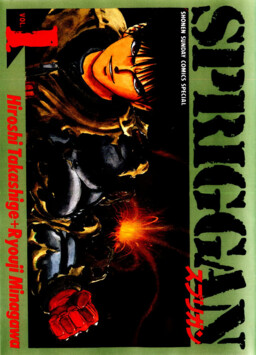
Spriggan
Yu's review of Spriggan — Yu Ominae is a Spriggan agent for ARCAM, a secret organization that locates ancient artifacts of catastrophic power and prevents governments and criminal organizations from weaponizing them; a 90s action sci-fi manga with excellent set-piece design and geopolitical scope.
Sci-Fi / Action
Origin
Yu's review of Origin by Boichi — a robot built as a killing machine has been living as a human boy for years, hiding his true nature while protecting the family he has come to care for; when other robots of his kind begin appearing and killing, he must fight while continuing to conceal what he is; a sci-fi action manga about identity, purpose, and what makes life meaningful.

Sci-Fi
Kokkoku
Yu's review of Kokkoku — the Yukawa family inherits a stone that can stop time, placing them in 'Stasis' — a frozen moment where they can move while everything else is still; when criminals kidnap family members, they use Stasis to rescue them, only to discover that a cult has been living in Stasis for years, and that Stasis is not as empty as they thought.
Sci-Fi / Comedy
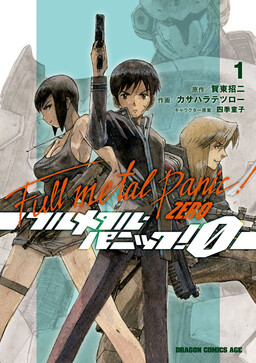
Full Metal Panic!
Yu's review of Full Metal Panic! — Sōsuke Sagara, a teenage military specialist from a private military organization, is assigned to protect high school girl Kaname Chidori who doesn't know why she needs protection; he attends her school undercover, treats every situation as a military operation, and creates chaos wherever he goes; military action comedy with genuine mecha sequences.
Sci-Fi
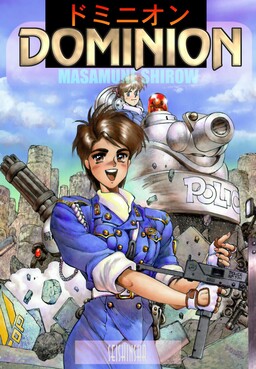
Dominion Tank Police
Yu's review of Dominion Tank Police — in a future city where crime requires a Tank Police division, officer Leona Ozaki is assigned to the unit and falls deeply in love with her miniature tank Bonaparte; Masamune Shirow's comedic sci-fi action, lighter than Ghost in the Shell but with the same worldbuilding attention.
Sci-Fi / Action
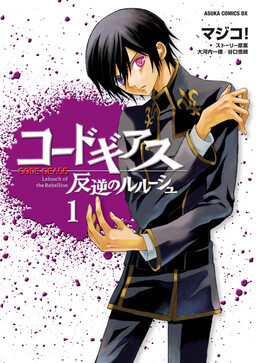
Code Geass: Lelouch of the Rebellion
Yu's review of Code Geass: Lelouch of the Rebellion, the 8-volume manga by Majiko! that retells the Sunrise anime without its Knightmare Frame mecha. Exiled prince Lelouch gains Geass, the power of absolute obedience, from the mysterious C.C. and becomes the masked rebel Zero — but the manga is lighter, more comedic, and more romance-focused than the anime.
Written by
Yu
Manga Enthusiast from Japan
I grew up in Japan and manga literally saved me during a tough time in elementary school. My English isn't perfect, but my love for manga is real — and I want to share it with you.
Disclosure: This post contains affiliate links. As an Amazon Associate, I earn from qualifying purchases at no extra cost to you.