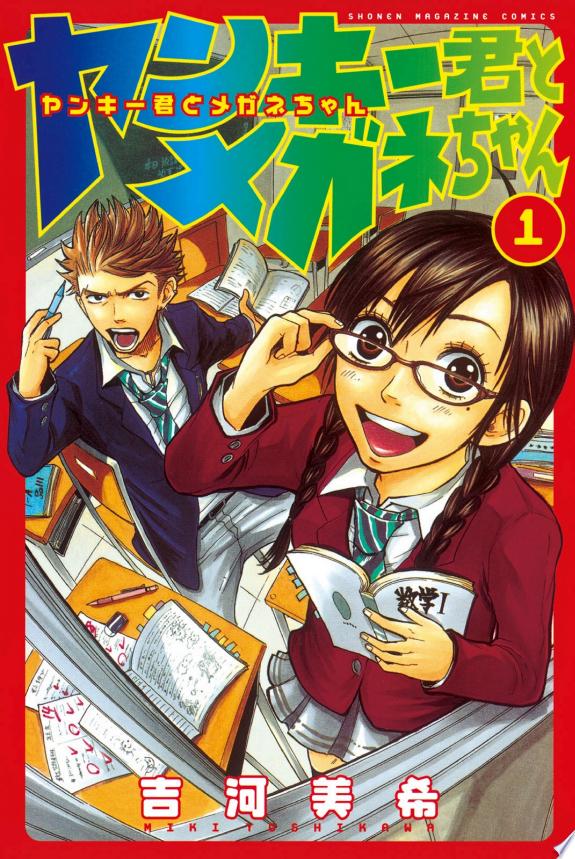
Yankee-kun to Megane-chan Review: The Delinquent and the Class Rep Who Were Both Wrong About Each Other
by Miki Yoshikawa
Read the first volume. If it doesn't hook you, put it down. It'll hook you.
Buy Yankee-kun to Megane-chan on Amazon →*Affiliate link — I earn a small commission at no extra cost to you.
Quick Take
- The delinquent-meets-class-rep comedy done with genuine twist — both characters have secrets about who they are
- Miki Yoshikawa's first major work before Yamada-kun and the Seven Witches — the same comedy sensibility fully present
- One of the few delinquent-adjacent shonen romance manga with a completed English release
Who Is This Manga For?
- Readers of shonen romance comedy who want good character chemistry before the romance develops
- Fans of Miki Yoshikawa's later work (Yamada-kun and the Seven Witches) who want to see where it started
- Anyone who enjoys the "secrets revealed" structure in comedy manga — both leads have something to hide
- Readers who want a completed delinquent-adjacent comedy with English translation available
Content Warnings & Age Rating
Age Rating: T (Teen) Content Warnings: Mild delinquent content — Shinagawa's background involves some past fighting. School comedy situations. Light romantic content.
Appropriate for teen readers.
Yu's Rating
| Category | Score |
|---|---|
| Story Depth | ★★★☆☆ |
| Art Style | ★★★★☆ |
| Character Development | ★★★★☆ |
| Accessibility for Non-Japanese Readers | ★★★★★ |
| Reread Value | ★★★☆☆ |
Story Overview
Daichi Shinagawa has a delinquent reputation he's not entirely comfortable with. He was a delinquent. He's trying to be less so. He doesn't want attention or responsibility.
Hana Adachi is the class representative — perfect grades, appropriate behavior, model student. She is also, it becomes clear, not exactly what she appears. The former delinquent Shinagawa senses something is off. He's right, and she needs his help with something she can't ask anyone else.
The series follows their increasingly complicated partnership as they navigate school responsibilities together, with Adachi using her mysterious leverage to recruit Shinagawa into activities he absolutely doesn't want to participate in, and Shinagawa finding that the person underneath the class rep persona is more interesting than the persona.
Characters
Daichi Shinagawa: A delinquent protagonist who is trying to change without being able to explain that he's trying to change. His reluctance is the source of much of the comedy; his hidden competence is the source of the romance.
Hana Adachi: A class representative who is performing the role rather than inhabiting it. Her secret recontextualizes her character and gives the romance its specific dynamic — she needed someone who had been where she'd been.
Art Style
Yoshikawa's art is energetic and expressive — the character designs are clear and immediately appealing, the comedic timing in the visual panels is reliable, and the face acting communicates emotion with the specific kind of excess that comedy manga rewards. Shinagawa's reluctant expressions are particularly well-drawn.
Cultural Context
The delinquent (ヤンキー) character type and the model student (委員長) character type are both recognized archetypes in Japanese school manga — their pairing as the basis for a comedy is not novel, but this series uses it with genuine knowledge of both types.
The series was published in Weekly Shonen Magazine — a different register than the Shonen Jump delinquent tradition, lighter and more comedy-focused.
What I Love About It
I love the series' specific reversal of expectations about both characters.
The delinquent wants to be ordinary. The class representative has a past. Neither of them is what the other initially expects, and the comedy comes from how long it takes them to correctly see each other — and from how well they eventually do.
This structure gives the romance real stakes. They're not falling for archetypes; they're falling for specific people who are different from their appearances. That's a more interesting thing to fall for.
What English-Speaking Fans Say
Moderate awareness in English-speaking markets through the completed Kodansha USA release. Generally regarded as a fun, well-executed comedy romance from before Yoshikawa's better-known Yamada-kun. Readers who find it often express that they wish the English release were more widely known.
Memorable Scene
A chapter where both characters' secrets are in the same room at the same time and neither realizes the other knows — a comedy of mutual obliviousness that reveals, through what they do when they think the other isn't watching, exactly what they actually think of each other.
Similar Manga
- Yamada-kun and the Seven Witches: Same author, same publisher, better known — read this if you like Yankee-kun
- Flunk Punk Rumble: Similar delinquent-comedy structure
- GTO: Delinquent adjacent, different register
Reading Order / Where to Start
Volume 1. The secrets are established early and the series builds on them.
Official English Translation Status
Yankee-kun to Megane-chan has a complete English release from Kodansha USA — all 14 volumes available.
Pros & Cons
Pros
- Complete in English — accessible to all readers
- Genuine character chemistry between the leads
- The secret-reveal structure gives it sustained momentum
- Early work from a manga artist who went on to greater success
Cons
- Less known than Yoshikawa's later work
- The comedy resolution can feel predictable in retrospect
- 14 volumes — some readers may find the middle section stretched
Format Comparison
| Format | Notes |
|---|---|
| Physical | Available in English (Kodansha USA, 14 volumes) |
| Digital | Available in English |
| Omnibus | Not available |
Where to Buy
Read the first volume. If it doesn't hook you, put it down. It'll hook you.
*Affiliate link — I earn a small commission at no extra cost to you.
More Manga You Might Like

Romance / Comedy
We Never Learn
Yu's review of We Never Learn — a scholarship student agrees to tutor three geniuses, each brilliant in one field but failing in the subjects they want to pursue, while navigating the increasingly complicated feelings everyone develops.

Romance / Comedy
Kaguya-sama: Love Is War
Aka Akasaka's 28-volume romantic comedy (2015–2022) about Miyuki Shirogane and Kaguya Shinomiya, two student council officers at Japan's most elite high school who are both in love and both certain that whoever confesses first loses. Complete in English from VIZ Media.

Romance / Comedy
Toradora!
Yu's review of Toradora! — a delinquent-looking boy and a tiny, terrifying girl make a deal to help each other confess to the other's best friend, and discover they had the wrong target all along.

Romance / Comedy
'Tis Time for 'Torture,' Princess
Yu's review of 'Tis Time for 'Torture,' Princess — the Princess is captured by the Demon King's forces; the Three Hell Executives interrogate her to get information about the kingdom's defenses; the 'torture' they use is things she actually enjoys — delicious food, comfortable beds, adorable animals — and she almost gives up information every time.

Romantic Comedy
Kaguya-sama: Love Is War
Yu's review of Kaguya-sama: Love Is War — 28 volumes about two geniuses who are in love but won't admit it. Funnier than it has any right to be, smarter than it looks, and one of the most satisfying romance arcs in manga history.

Romance / Comedy
Fly Me to the Moon
Yu's review of Fly Me to the Moon (Tonikaku Kawaii) — Nasa Yuzaki saves a girl from a traffic accident; she agrees to marry him on the spot if he can find her; when they reunite, they marry immediately; the series follows their married life as Nasa gradually learns who his wife Tsukasa actually is and why she proposed so quickly.
Written by
Yu
Manga Enthusiast from Japan
I grew up in Japan and manga literally saved me during a tough time in elementary school. My English isn't perfect, but my love for manga is real — and I want to share it with you.