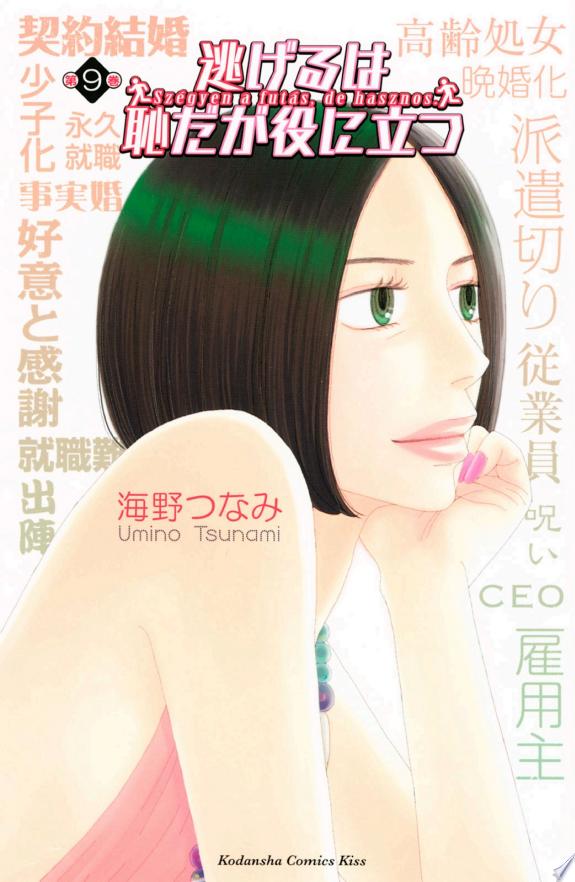
We Married as a Job! Review: A Contract Marriage That Sneaks Up on Your Heart
by Tsunami Minato
Read the first volume. If it doesn't hook you, put it down. It'll hook you.
Buy We Married as a Job! on Amazon →*Affiliate link — I earn a small commission at no extra cost to you.
Quick Take
- One of the most emotionally intelligent romance manga of the 2010s
- The contract marriage premise is a clever frame for a genuinely mature exploration of love and agency
- Mikuri is exactly the adult romantic heroine that manga needed more of
Who Is This Manga For?
- Adult readers who want romance about people with careers, anxieties, and real-world complexity
- Fans of intelligent romantic comedy where characters actually think through their feelings
- Those who enjoyed the TV drama and want more of the story and characters
- Readers who are tired of high school romance settings and want something different
Content Warnings & Age Rating
Age Rating: T (Teen) Content Warnings: Adult themes, mild romantic content, workplace themes
Appropriate for older teens and adults. The story deals with adult concerns (employment, relationships, autonomy) more than explicit content.
Yu's Rating
| Category | Score |
|---|---|
| Story Depth | ★★★★★ |
| Art Style | ★★★★☆ |
| Character Development | ★★★★★ |
| Accessibility for Non-Japanese Readers | ★★★★☆ |
| Reread Value | ★★★★☆ |
Story Overview
Mikuri Moriyama has a master's degree, specific skills and interests, and absolutely no employment prospects in the current market. When her parents can no longer support her financially, she becomes the live-in housekeeper for Hiramasa Tsuzaki — a senior IT professional who has neither the time nor the inclination to manage his own domestic life.
The arrangement works well. Mikuri is excellent at homemaking and deeply underutilized by it. Then her parents announce they're moving, and Mikuri loses her housing. The pragmatic solution Tsuzaki proposes: a professional marriage. She becomes his wife on paper, receives a professional's salary for her domestic work, and both of them continue their lives without the inconvenience of actual feelings.
The manga then does what the best romance does: it shows two intelligent people trying very hard not to fall in love, systematically failing, and having to figure out what love actually means in the context of an arrangement built on mutual convenience.
Characters
Mikuri Moriyama: Overqualified, under-employed, earnest, and capable of clear-eyed emotional analysis while completely unable to apply it to herself. She's the protagonist 2010s manga needed — adult, educated, self-aware, and still figuring things out. Her internal monologue (often delivered as analytical observations about her own emotional state) is one of the series' great pleasures.
Hiramasa Tsuzaki: A man who has never learned how to be in a relationship because he couldn't see the point of trying. His emotional development is the slower of the two — he's not cold, just genuinely unsure how to navigate feelings he hasn't experienced before. When he figures it out, it's completely convincing.
Kazami Yuki: Tsuzaki's colleague and the woman Mikuri initially worries about. Her character development is one of the series' best surprises — she becomes significantly more than a rival figure.
Numata Yoshida: Mikuri's cousin, who provides comic contrast through their genuine (if unconventional) relationship with their own partner.
Art Style
Tsunami Minato's art is clean, expressive, and particularly good at capturing characters' emotional states through facial micro-expressions. The domestic settings — the apartment, the office — are rendered with the kind of comfortable specificity that makes the world feel inhabited.
The art is less flashy than shonen manga but consistently effective at the story's most important moments: the quiet look, the moment of recognition, the expression someone makes when they think no one is watching.
Cultural Context
The manga speaks directly to a specific moment in Japanese social history — the "herbivore men" discourse, the "marriage hunting" (konkatsu) phenomenon, debates about women's economic dependence and employment prospects. Mikuri's situation is not imaginary; it reflects real concerns of highly educated Japanese women who found the labor market closed to their ambitions.
The "professional marriage" premise is partly satirical — it applies capitalist logic to a romantic relationship to expose how much of romantic life already operates on implicit economic exchange. The manga uses this frame to ask: what would a genuinely equal partnership look like, and how would you know if you had it?
What I Love About It
Mikuri gave me a way to think about something I hadn't had language for.
There's a scene where she describes her feelings for Tsuzaki in the most clinical terms possible — analyzing them like they're someone else's data — and the reader sees her protecting herself by keeping everything at intellectual distance. She knows what she feels. She doesn't know yet if she's allowed to feel it, or if it would be appropriate, or if it fits within the parameters of the arrangement.
And that specific anxiety — the anxiety of a person who has learned to make herself smaller so as not to inconvenience anyone — is something I recognized completely. The manga finds the precise point where intelligence becomes a defense mechanism, and it works through it with real care.
When Mikuri finally decides to be honest — to say what she wants without hedging, without analyzing whether it's appropriate, just to say it — that moment felt like something important.
What English-Speaking Fans Say
English-speaking readers who discovered this manga through the 2016 TV drama (which was a massive hit in Japan) tend to praise the manga for going further into the characters' psychology than the adaptation could. Readers without the drama background also respond strongly, particularly to Mikuri as a protagonist.
Common themes in reviews: "I didn't expect to feel so much reading a manga about a contract marriage." "Mikuri is what romance leads should be." "The second half goes places I wasn't prepared for."
The series is sometimes recommended specifically for readers who want romance for adult readers, not for teenagers.
Memorable Scene ⚠️ Spoiler Warning
The chapter where Mikuri and Tsuzaki renegotiate the terms of their arrangement — when the professional framing collapses under the weight of actual feelings they've both been accumulating — is written with such precise emotional intelligence that I read it twice immediately. She says what she wants. He hears it. He doesn't pretend he doesn't know what it means. Two intelligent people, finally choosing honesty over self-protection. It's a relief and a joy.
Similar Manga
- Kaguya-sama: Love Is War: Shares the intelligent-characters-avoiding-their-feelings structure
- Wotakoi: Love Is Hard for Otaku: Similar adult working characters, different comedic tone
- Monthly Girls' Nozaki-kun: Workplace romance comedy with characters who overthink everything
Reading Order / Where to Start
Volume 1. The premise is established efficiently in the first chapter. By Volume 2, you're invested.
Official English Translation Status
Kodansha USA published all 11 volumes in English. Complete and available in both digital and physical formats.
Pros & Cons
Pros
- Emotionally intelligent romance for adult readers
- Mikuri is one of the best romance protagonists in modern manga
- The contract marriage premise enables genuine exploration of what love requires
- Complete and satisfying at 11 volumes
Cons
- Some readers find the early analytical tone cold before warming to it
- Less dramatic than traditional romance manga — quieter satisfactions
- Cultural context around Japanese employment and marriage requires some background
Format Comparison
| Format | Notes |
|---|---|
| Physical | 11 standard volumes |
| Digital | Kindle available |
| Omnibus | Not available |
Where to Buy
Read the first volume. If it doesn't hook you, put it down. It'll hook you.
This post contains affiliate links. If you purchase through these links, I may earn a small commission at no extra cost to you. As an Amazon Associate, I earn from qualifying purchases.
*Affiliate link — I earn a small commission at no extra cost to you.
More Manga You Might Like
Romance / Josei
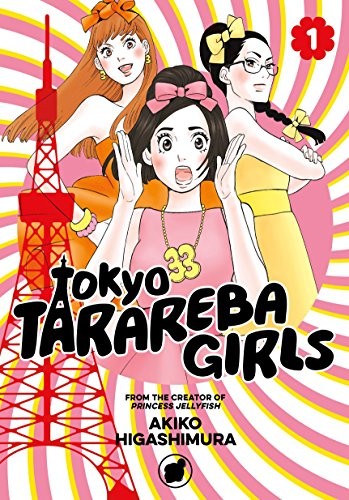
Tokyo Tarareba Girls
A review of Tokyo Tarareba Girls, Akiko Higashimura's brutally honest josei manga about three women in their thirties confronting their romantic failures.

Romance
Recovery of an MMO Junkie
A review of Recovery of an MMO Junkie — the manga about a 30-year-old woman who quits her job and retreats into an online game, where she forms a close bond with another player who is actually her neighbor in real life.

Romance / Comedy
Happy Mania
A review of Happy Mania — Moyoco Anno's ten-volume josei manga following Shigeta Kayoko, a woman in her twenties whose desperate pursuit of love and romance constantly undermines her relationships in ways she doesn't quite understand.

Romance / Comedy
Moteki
Yu's review of Moteki — Yukiyo Fujimoto, 25, unemployed temp worker, has never been in a relationship; his 'moteki' (a period of romantic popularity) arrives when multiple women from his past suddenly show interest; he is entirely unprepared and consistently fails to handle it well.

Romance / Comedy
Kaguya-sama: Love Is War
Aka Akasaka's 28-volume romantic comedy (2015–2022) about Miyuki Shirogane and Kaguya Shinomiya, two student council officers at Japan's most elite high school who are both in love and both certain that whoever confesses first loses. Complete in English from VIZ Media.

Romance / Comedy
Love★Com
Love★Com follows tall girl Risa and short boy Otani, always mistaken for a comedy duo, as they help each other with their love lives and slowly realize their feelings for each other.
Written by
Yu
Manga Enthusiast from Japan
I grew up in Japan and manga literally saved me during a tough time in elementary school. My English isn't perfect, but my love for manga is real — and I want to share it with you.
Disclosure: This post contains affiliate links. As an Amazon Associate, I earn from qualifying purchases at no extra cost to you.