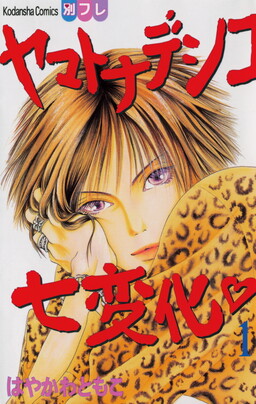
The Wallflower Review: Four Pretty Boys Must Turn a Horror Obsessed Girl Into a Lady — and Fail Entertainingly
by Tomoko Hayakawa
Read the first volume. If it doesn't hook you, put it down. It'll hook you.
Buy The Wallflower (Yamato Nadeshiko Shichihenge) on Amazon →*Affiliate link — I earn a small commission at no extra cost to you.
Quick Take
- The reverse harem manga where the heroine actively resists being the heroine — Sunako's horror obsession and the boys' attempts to modernize her is consistently funny across 36 volumes
- The romance that eventually develops is earned in a way that reverse harem manga rarely achieves because neither party wants it
- 36 volumes complete; one of Bessatsu Friend's longest-running series
Who Is This Manga For?
- Readers who want reverse harem comedy where the female protagonist is genuinely funny rather than passive
- Fans of gothic imagery played for comedy
- Anyone who wants a romance that develops despite both parties' resistance
- Readers who can handle a long series with sustained comedic momentum
Content Warnings & Age Rating
Age Rating: T (Teen) Content Warnings: Sunako's horror obsessions include skeletons, gore imagery, and death — played entirely for comedy; the content is funny rather than disturbing
The gothic content is the joke. Safe for the age rating.
Yu's Rating
| Category | Score |
|---|---|
| Story Depth | ★★★☆☆ |
| Art Style | ★★★★☆ |
| Character Development | ★★★★☆ |
| Accessibility for Non-Japanese Readers | ★★★★☆ |
| Reread Value | ★★★☆☆ |
Story Overview
The landlady makes a deal: if her four handsome tenants can turn her niece Sunako into a proper young lady, she will let them live rent-free. Sunako Nakahara, traumatized by a childhood rejection from a boy she confessed to, has retreated into a world of horror films, anatomy models, and total social avoidance. She refers to the four boys as "luminous beings" because their attractiveness is physically painful for her to look at.
The attempts to "ladyify" Sunako fail entertainingly every volume. What actually develops — gradually, and against both parties' stated wishes — is something the series handles with genuine comedic care.
Characters
Sunako Nakahara — Presented as a chibi/deformed figure for most of the series when in her "comfortable mode," transforming into a beautiful girl only in moments of emotional engagement. The visual joke (she looks like a horror manga character by choice) is the series' sustained visual structure.
Kyohei Takano — The most handsome of the four boys and Sunako's eventual romantic counterpart — both chosen because they are the most similar in actual personality, which the series takes its time establishing.
Takenaga, Ranmaru, Yuki — The other three boys whose own personalities and romantic subplots run parallel and provide the series with its secondary character depth.
Art Style
Hayakawa's art handles the dual visual modes effectively — Sunako's chibi/deformed comedy form and her occasional full-beauty moments create a visual contrast that the series uses for comedic and romantic timing simultaneously.
Cultural Context
The "yamato nadeshiko" of the Japanese title refers to the traditional ideal of Japanese femininity — the series' comedy is that this ideal is applied to someone who actively and humorously rejects it. The reverse harem structure is a consistent shoujo convention that the series both employs and gently subverts.
What I Love About It
Sunako's genuine competence in everything she cares about. She is extraordinary at cooking, at physical combat, at everything that interests her — the series consistently frames her as capable and the "needs improvement" assessment as the boys' problem, not hers.
What English-Speaking Fans Say
Western readers describe The Wallflower as the reverse harem manga they recommend to people who don't like reverse harem manga — because Sunako's resistance to the premise makes the formula work differently. The series' length is cited as both its greatest strength (sustained character development) and its challenge (requires significant commitment).
Memorable Scene ⚠️ Spoiler Warning
The moment where Kyohei's understanding of Sunako shifts from "improvement project" to "person I understand" — the specific way the series handles this moment without making it sentimental is what distinguishes it from conventional reverse harem resolution.
Similar Manga
- Ouran High School Host Club — Reverse harem, comedy, similar female protagonist who resists the genre conventions
- Fruits Basket — Reverse harem with genuine emotional depth
- Maid Sama! — Tsundere female lead, similar comedic romantic resistance
- Skip Beat! — Strong female lead, entertainment industry setting
Reading Order / Where to Start
Volume 1 — the premise and Sunako establish immediately.
Official English Translation Status
Del Rey (later Kodansha Comics) published the complete 36-volume run. All volumes available.
Pros & Cons
Pros
- Sunako is a genuinely distinctive shoujo heroine
- The comedy sustains across 36 volumes through character consistency
- The romance development is earned through resistance rather than convenience
- Complete in English
Cons
- 36 volumes is a major commitment
- The episodic structure means some volumes are lighter than others
- The "makeover" premise can feel dated
Format Comparison
| Format | Notes |
|---|---|
| Individual Volumes | Kodansha Comics; standard |
| Digital | Available |
Where to Buy
Read the first volume. If it doesn't hook you, put it down. It'll hook you.
This post contains affiliate links. If you purchase through these links, I may earn a small commission at no extra cost to you. As an Amazon Associate, I earn from qualifying purchases.
*Affiliate link — I earn a small commission at no extra cost to you.
More Manga You Might Like
Romance
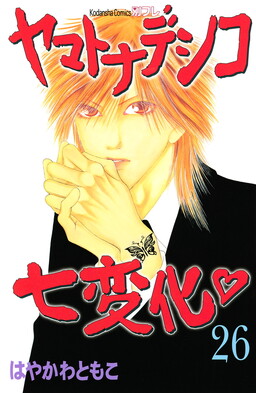
The Wallflower
Yu's review of The Wallflower — four beautiful high school boys are given free rent in exchange for transforming Sunako Nakahara, a girl obsessed with horror and darkness, into a lady; she resists; nobody wins; Tomoko Hayakawa's long-running shoujo comedy about the impossibility of changing someone fundamentally.
Romance / Comedy
W Juliet
Yu's review of W Juliet — Makoto Amano is a beautiful boy who has been living as a girl named Ito to fulfill a bet with his father; when he joins the drama club, the tomboy Ito Miura discovers his secret and becomes his protector; a shoujo romance about performance, identity, and two people who understand each other's hidden selves.

Romance / Comedy
So Cute It Hurts!!
Yu's review of So Cute It Hurts!! (Kobayashi ga Kawai sugite Tsurai) — twins Megumu and Mitsuru Kobayashi swap schools after Mitsuru fails a history exam; Megumu (a girl) attends his school disguised as a boy while he attends hers, and both fall in love; a shoujo romantic comedy about gender performance, twins, and the chaos that follows when you try to live someone else's life.

Romance / Comedy
Otomen
Yu's review of Otomen — Asuka Masamune is the ideal masculine figure at school — kendo champion, cool and capable — but secretly loves cute things, baking, sewing, and shojo manga; meeting Ryo, who is the exact inverse of expected gender roles, begins to change what he can admit about himself.
Romance / Comedy
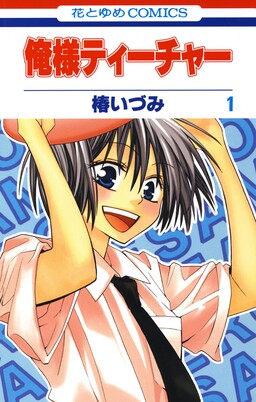
Oresama Teacher
Yu's review of Oresama Teacher — former gang leader Mafuyu Kurosaki transfers to Midorigaoka Academy determined to become a proper lady; her homeroom teacher Takaomi Saeki is her childhood friend and used to be a delinquent himself, and he immediately destroys all her plans.
Romance / Comedy
Kiss Him, Not Me!
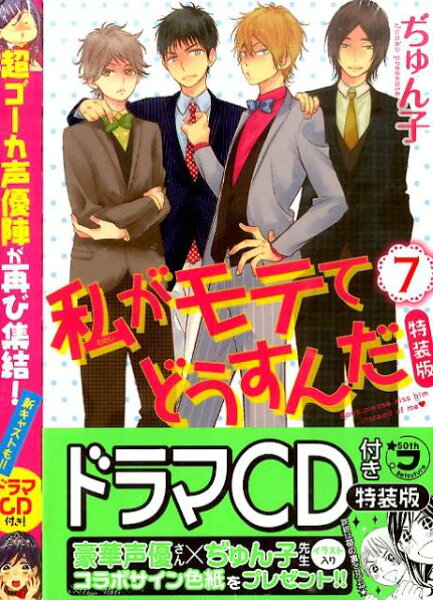
Yu's review of Kiss Him, Not Me! — Kae Serinuma is a passionate fujoshi who fantasizes about the boys around her dating each other; when she loses weight after a traumatic event, four boys suddenly notice her and want to date her; she wants them to fall in love with each other so she can watch.
Written by
Yu
Manga Enthusiast from Japan
I grew up in Japan and manga literally saved me during a tough time in elementary school. My English isn't perfect, but my love for manga is real — and I want to share it with you.
Disclosure: This post contains affiliate links. As an Amazon Associate, I earn from qualifying purchases at no extra cost to you.