
W Juliet Review: A Cross-Dressing Actor and the Girl Who Keeps His Secret
by Emura
Read the first volume. If it doesn't hook you, put it down. It'll hook you.
Buy W Juliet on Amazon →*Affiliate link — I earn a small commission at no extra cost to you.
Quick Take
- A cross-dressing romance that handles gender performance with more nuance than the premise suggests — the comedy comes from situation, but the series takes both characters' internal lives seriously
- The two protagonists each have something to prove to their families about who they are, and their relationship develops from that parallel position
- 11 volumes complete; one of the better gender-bender romance manga from the early 2000s VIZ era
Who Is This Manga For?
- Readers who enjoy romance manga where both protagonists have meaningful character arcs
- Anyone interested in identity and performance themes in shoujo format
- Fans of comedic romance with genuine emotional content underneath
- Readers who want complete shoujo romance in the 10-12 volume range
Content Warnings & Age Rating
Age Rating: T (Teen) Content Warnings: Cross-dressing and gender performance themes; standard teenage romance content; mild language
The T rating is accurate. The gender themes are handled thoughtfully for the era.
Yu's Rating
| Category | Score |
|---|---|
| Story Depth | ★★★★☆ |
| Art Style | ★★★★☆ |
| Character Development | ★★★★★ |
| Accessibility for Non-Japanese Readers | ★★★★☆ |
| Reread Value | ★★★★☆ |
Story Overview
Makoto Amano made a bet with his father: if he can live as a girl for two years without anyone discovering he's male, his father will acknowledge his choice to become an actor rather than inherit the family dojo. He transfers to a new school presenting as female, joining the drama club.
Ito Miura is the tomboy daughter of a theater family, constantly mistaken for male, who has been told that theater is not for girls like her. When she discovers Makoto's secret, she protects him — and in doing so, finds the one person who understands what it is to be told you're wrong for the role you want.
The romance develops between two people who have both been performing something they're not and recognize each other for it.
Characters
Makoto Amano — Beautiful, gentle, committed to the performance but aware of what it costs. His experience navigating female social spaces while knowing he'll eventually leave them gives him both comedy material and genuine emotional depth.
Ito Miura — The tomboy protagonist whose external rough edges protect someone with a precise understanding of theater and a strong sense of her own identity. Her protectiveness toward Makoto grows from recognition rather than rescue instinct.
Art Style
Emura's art is clean early-2000s shoujo with expressive character designs that make the gender performance aspects visually interesting. Makoto's design — beautiful enough to pass, with details that Ito notices — supports the series' central premise. The comedy expressions are effective.
Cultural Context
W Juliet was published in the early 2000s and reflects the era's engagement with gender performance in shoujo manga. The cross-dressing premise was more common in that period's shoujo than now, but this series handles the identity themes with more sophistication than most contemporaries.
The drama club setting — where performance is literally the subject — creates a thematic frame where questions about identity and role are structurally embedded.
What I Love About It
Both protagonists have something at stake in their relationship to performance that is personal and real, not just romantic. Makoto is performing to prove something to his father. Ito is proving that her authentic self belongs in theater despite what she's been told. Their relationship develops between two people who understand performance from the inside and can stop performing with each other.
What English-Speaking Fans Say
Western readers describe W Juliet as an underrated VIZ title from the early 2000s that holds up better than many contemporaries. The character development for both protagonists is consistently praised. Readers coming from later, more explicitly gender-focused manga sometimes find it handled with more nuance than expected for its era.
Memorable Scene ⚠️ Spoiler Warning
The moment when Makoto performs on stage for the first time as himself — when the performance he has been maintaining separately from his identity becomes the same thing — is the series' most complete statement of its theme. Theater and identity, the bet and the truth, resolve simultaneously.
Similar Manga
- Hana-Kimi — Cross-dressing in sports school, similar era
- Princess Princess — Boys performing female roles, different tone
- Ouran High School Host Club — Gender performance in club context, more comedy
- Kaguya-sama — Strategic performance in romance, different register
Reading Order / Where to Start
Volume 1 — The premise is established immediately. The series develops its characters in order and rewards reading through.
Official English Translation Status
VIZ Media published all 11 volumes. Complete and available.
Pros & Cons
Pros
- Character development treats both protagonists seriously
- Identity themes are handled with nuance for the era
- Drama club setting creates natural thematic resonance
- Complete 11-volume run
Cons
- Early 2000s art style may not appeal to all current readers
- Gender themes are less explicitly developed than contemporary manga handles them
Format Comparison
| Format | Notes |
|---|---|
| Individual Volumes | VIZ Media; complete |
| Digital | Available |
Where to Buy
Read the first volume. If it doesn't hook you, put it down. It'll hook you.
This post contains affiliate links. If you purchase through these links, I may earn a small commission at no extra cost to you. As an Amazon Associate, I earn from qualifying purchases.
*Affiliate link — I earn a small commission at no extra cost to you.
More Manga You Might Like

Romance / Comedy
So Cute It Hurts!!
Yu's review of So Cute It Hurts!! (Kobayashi ga Kawai sugite Tsurai) — twins Megumu and Mitsuru Kobayashi swap schools after Mitsuru fails a history exam; Megumu (a girl) attends his school disguised as a boy while he attends hers, and both fall in love; a shoujo romantic comedy about gender performance, twins, and the chaos that follows when you try to live someone else's life.
Romance
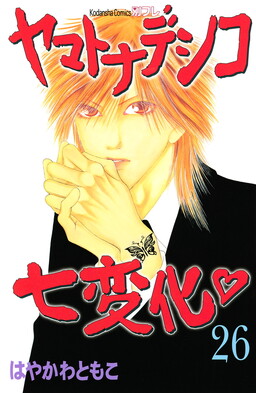
The Wallflower
Yu's review of The Wallflower — four beautiful high school boys are given free rent in exchange for transforming Sunako Nakahara, a girl obsessed with horror and darkness, into a lady; she resists; nobody wins; Tomoko Hayakawa's long-running shoujo comedy about the impossibility of changing someone fundamentally.

Romance / Fantasy
Alice 19th
Yu's review of Alice 19th — Alice Seno is a shy girl who becomes a Lotis Master, wielding words of power; when a jealous outburst banishes her sister Mayura to darkness, Alice must master the Lotis Words to undo what she said and save her. A compact 7-volume Yuu Watase shoujo about words, guilt, and sibling love.
Romance / Comedy
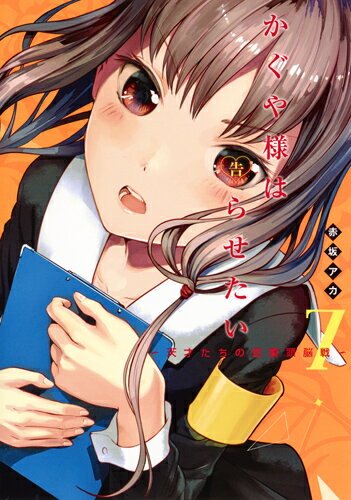
Kaguya-sama: Love Is War
Aka Akasaka's 28-volume romantic comedy (2015–2022) about Miyuki Shirogane and Kaguya Shinomiya, two student council officers at Japan's most elite high school who are both in love and both certain that whoever confesses first loses. Complete in English from VIZ Media.
Romance / Comedy
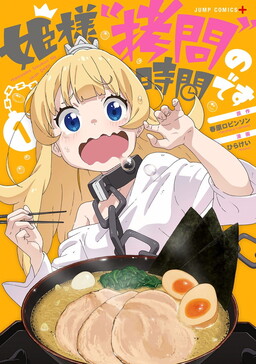
'Tis Time for 'Torture,' Princess
Yu's review of 'Tis Time for 'Torture,' Princess — the Princess is captured by the Demon King's forces; the Three Hell Executives interrogate her to get information about the kingdom's defenses; the 'torture' they use is things she actually enjoys — delicious food, comfortable beds, adorable animals — and she almost gives up information every time.
Romance / Slice of Life
A Sign of Affection
Yu's review of A Sign of Affection — Yuki is a deaf college student whose world is small by necessity; when a tall stranger at a train station asks her for help and she cannot explain her deafness in time, a classmate named Itsuomi translates — and Itsuomi is curious about Yuki's world in a way no one usually is.
Written by
Yu
Manga Enthusiast from Japan
I grew up in Japan and manga literally saved me during a tough time in elementary school. My English isn't perfect, but my love for manga is real — and I want to share it with you.
Disclosure: This post contains affiliate links. As an Amazon Associate, I earn from qualifying purchases at no extra cost to you.