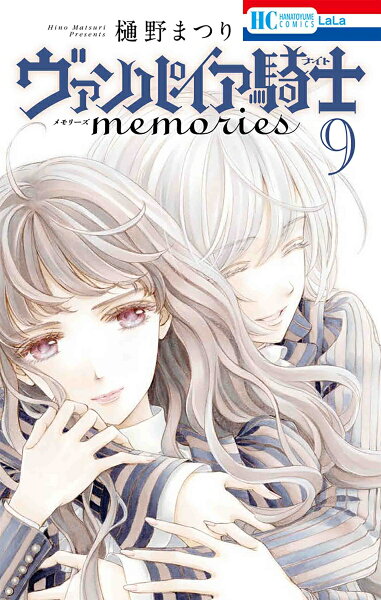
Vampire Knight: Memories Review — The Sequel That Gives Yuki and Zero the Quiet Ending the Original Couldn't
by Matsuri Hino
Read the first volume. If it doesn't hook you, put it down. It'll hook you.
Buy Vampire Knight: Memories on Amazon →*Affiliate link — I earn a small commission at no extra cost to you.
I read Vampire Knight when I was thirteen. I read it sneakily, on lunch breaks at my middle school in Tokyo, hiding the volumes inside my textbook. The original ended when I was sixteen, and the ending — which I will not spoil here, but which divided fans bitterly — broke something for me. I stopped reading Hino's work for years.
Vampire Knight: Memories arrived when I was in my twenties. It is the manga I had stopped expecting. It is the version of the ending that the original could not give us.
Quick Take
- The sequel to Vampire Knight (2004–2013). 7 volumes. Complete. The closure the original ending denied
- Matsuri Hino's quieter, more mature treatment of Yuki and Zero's lives after the events of the main series
- Age rating: T (Teen) — vampire violence and themes; no graphic content; significantly more restrained than the original at its most dramatic
Is Vampire Knight: Memories the Sequel to Vampire Knight?
Yes. This is the most-asked question about the series, so let me address it directly.
- Vampire Knight (ヴァンパイア騎士) — the original manga by Matsuri Hino, ran from 2004 to 2013 in LaLa. 19 volumes. Concluded in 2013 with an ending that was widely controversial among fans
- Vampire Knight: Memories (ヴァンパイア騎士 memories) — the direct sequel by the same author, ran from 2016 to 2020 in LaLa DX. 7 volumes. Complete
The two series share continuity. Memories takes place after the events of the original. The same characters appear (Yuki, Zero, the Night Class characters who survived, Aido, Kain, and others). Hino is the same writer and artist for both.
If you have not read the original Vampire Knight: read it first. Memories is a coda, not a standalone — most of its emotional weight comes from knowing what happened in volumes 1–19 of the original.
If you have read the original: Memories is the manga that fans of the controversial ending have been waiting for. Whether it "fixes" the ending depends on what you wanted fixed; what it definitely does is give the characters more time, more development, and a much quieter resting place.
Is Vampire Knight: Memories Finished?
Yes. The manga concluded in 2020 with volume 7. All 7 volumes are available in English from VIZ Media. There are no announced further continuations, and the story arc Hino was working with has reached its natural endpoint.
If you have been waiting for new chapters: there are none coming.
What Is Vampire Knight: Memories About?
The ending of the original (light spoilers from here for the original series):
At the end of Vampire Knight, Yuki Kuran/Cross has made her final choices. Kaname Kuran — her brother and one of her two romantic interests — has chosen to become the Original Vampire's heart, taking on the role that allows him to enable a future for Yuki and Zero. He is, effectively, unavailable to Yuki across the long timeline. Zero Kiryu — the other romantic interest — remains with Yuki. The two of them are partners. The series ends with Yuki having a daughter, Ai, who is Kaname's daughter biologically while Zero and Yuki raise her.
This ending caused enormous fan controversy in 2013. Some fans felt Kaname's sacrifice was beautiful; others felt Hino had taken Yuki's agency away. Some fans felt Zero won; others felt Zero lost. The discourse was bitter and extended.
Memories begins from this place. The sequel does not retcon the ending. It does not undo Kaname's choice. It does not bring him back in the way some fans wanted. What it does is:
- Show Yuki and Zero's actual life together across the years following the ending
- Show Ai growing up as a child raised by Yuki and Zero, with both Kaname's biological legacy and Zero's parental love
- Show the surviving Night Class characters (Aido, Kain, Ruka, Shiki, Rima) in their post-series lives
- Provide vignettes set at various points across the decades — some immediately after the ending, some centuries later
- Address Kaname's situation in chapters that allow his perspective to be heard from his current state
- Give Zero, in particular, the depth of treatment the original sometimes denied him in favor of Kaname's tragedy
The 7 volumes are structured as anthology vignettes more than continuous narrative. Each volume contains 4–6 short stories. Some are about the main couple; others focus on supporting characters. The cumulative effect is a slow filling-in of the world the original ended in.
Who Is This Manga For?
- Vampire Knight fans who read the original — this is for you, unconditionally
- Readers who found the original's ending unsatisfying — Memories provides what the original couldn't fit
- Fans of Zero specifically — Zero gets significant material here
- Anyone interested in post-canon vignette anthologies done well
- Not for: new readers without context; readers seeking continuous plot rather than vignette structure
Content Warnings & Age Rating
Age Rating: T (Teen) — 13+ Content Warnings: Vampire violence (restrained compared to the original); blood drinking (depicted with the manga's usual romantic-imagery framing); implied romantic intimacy between Yuki and Zero (no explicit content); themes of immortality, loss, and aging across long timelines
Memories is less dramatically violent than the original Vampire Knight. The series is more focused on quiet character moments. The T rating is generous; All Ages would be defensible for most of the volumes.
Story Overview (Structure)
Volume 1 — Opening vignettes set in the years immediately following the original's ending. Yuki and Zero's domestic life. The first chapters with Ai as a small child. Kaname's situation reframed. Aido's adjustment to a world without Kaname's direct presence.
Volume 2 — Expanding to the Night Class characters. Aido and Kain get extended material. Some chapters jump forward in time to show characters at different points in their long vampire lives.
Volume 3 — Ai begins to age into a young person with her own perspective on her parents and on the family she came from. The Kaname material intensifies.
Volume 4 — The middle of the run. Hino allows the manga to be quieter; some chapters are almost domestic slice-of-life with vampires.
Volume 5 — Returning to the more dramatic register. A few chapters address consequences of the original's events that the original could not fully process.
Volumes 6–7 — Final movements. The series approaches its endpoint. Hino brings the major emotional threads to rest. The final chapters are some of the most affecting in the entire Vampire Knight canon.
Characters
Yuki Kuran/Cross — In Memories, Yuki is depicted as a fully adult vampire managing the complicated emotional inheritance of the original series. Hino writes her with more depth than the original sometimes allowed; the Yuki of Memories has had time to process what she lost and what she chose. Her interior life is the manga's primary subject.
Zero Kiryu — The character who benefits most from Memories. The original Vampire Knight gave Zero significant material but framed much of it through the love triangle. Memories lets Zero exist on his own terms — as Yuki's partner, as Ai's father, as a person processing what he experienced across the original series. Hino's Zero in Memories is the most complete version of the character.
Ai Kuran — Yuki and Kaname's biological daughter, raised by Yuki and Zero. Ai appears at multiple ages across the volumes — small child, school-age, young vampire. Her character is the manga's quiet thesis: a person who exists because of the choices the original cast made, who is loved by parents who chose to love her.
Kaname Kuran — Present in Memories, but in his post-original-series state. The Kaname material is among the manga's most carefully written. Hino allows Kaname's perspective into the narrative in ways that complicate without undoing the original's ending. Whether Kaname's situation is tragic, peaceful, or both depends on which chapter you read.
Aido Hanabusa — The Night Class character with the most extensive Memories presence. Aido has his own arc across the volumes — taking on responsibilities, dealing with grief, developing in ways the original could only hint at.
The other Night Class characters — Kain, Ruka, Shiki, Rima, Takuma, Seiren — each get some focused chapters. Long-time readers will find resolution for relationships and arcs the original left open.
Art Style
Matsuri Hino's art in Memories is noticeably matured from the original Vampire Knight. The character designs are cleaner; the panel composition is more controlled; the use of negative space is more confident. The high-drama gothic visual register of the original is dialed back in Memories in favor of a quieter aesthetic that matches the manga's gentler tone.
The romantic moments are drawn with care. The action sequences are fewer and more restrained. The character faces — particularly Yuki's and Zero's — carry significant emotional information that the manga relies on.
Cultural Context
The Vampire Knight phenomenon in Japanese shoujo manga of the late 2000s was one of the dominant works of its era. The original manga sold over 8 million copies. The 2008 anime adaptation by Studio Deen ran two seasons and brought significant international attention. The series was a flagship LaLa property and helped define the gothic-vampire-romance subgenre in shoujo for the late 2000s and 2010s.
The original's ending controversy was substantial. Japanese and international fans both engaged in extended discourse about Hino's choices. The Kaname-Zero shipping wars were among the more intense in shoujo manga history. Memories represents Hino's own response to that discourse — not by changing what happened, but by extending the story so that readers could spend more time with the characters and reach their own peace with the outcome.
Matsuri Hino has been a major LaLa creator since the 1990s (her earlier work includes Captive Hearts and Wanted). Her style is distinctly gothic-shoujo: aristocratic settings, complicated romance, supernatural elements with European visual references. Memories shows Hino at a more reflective career stage; the manga is less commercially aggressive than the original and more authorially considered.
The 2008 Vampire Knight anime ended before the manga's later arcs. There has been no anime adaptation of Memories as of 2026.
What I Love About It
The chapter where Zero teaches Ai how to be a Day Class student.
I won't spoil specifics. Somewhere in the middle volumes, Ai is at school age. She is enrolled at Cross Academy — the school where Yuki, Zero, and Kaname all attended in the original series. Day Class students are humans; Night Class students are vampires. Ai is a vampire enrolled in the Day Class, which is unusual. She has to perform "human" during the day. She doesn't always know how.
Zero, who is now an adult and a Hunter and Ai's father, sits with her one evening and teaches her how to be a Day Class student. He tells her things he learned at her age — what to say when humans get nosy, how to handle the smell of human blood without being obvious, how to eat regular food in front of classmates. The conversation is practical. It is also tender in a specific way that the original series rarely allowed itself.
What I love is what the scene says about Zero. The Zero of the original was angry, traumatized, in pain. The Zero of Memories has built a life. He is teaching his daughter — a daughter who is biologically Kaname's, who he has chosen to raise with Yuki — how to navigate the world he himself had to navigate as a young person. He is doing this not because he has forgotten the original series but because he has lived past it.
The scene is the manga's argument for what life after trauma looks like. You do not forget. You do not get over it. You teach the next person the things you learned, and you love them enough that they get to start where you ended rather than where you started. Zero, who began the original series wanting to die, is in Memories the parent of a child whose entire life is the consequence of him choosing to stay alive.
That is what I want sequels to do. Not retcon. Not reverse. Just stay with the characters long enough that the reader can see what they built with the wreckage. Hino did that for Zero. I am grateful for it.
What English-Speaking Fans Say
Vampire Knight: Memories has been generally well-received by Vampire Knight fans, with the most consistent comment being that the sequel does what the original ending could not: give the characters time to live with what happened.
The discourse remains complicated. Kaname-team fans are split on whether Memories' handling of Kaname is satisfying or insufficient. Zero-team fans are largely positive. New readers without context generally find Memories confusing (which is expected; it's a sequel).
The most common criticism: Memories' anthology structure means the manga lacks the dramatic urgency of the original. Readers who came for plot intensity find it slow. Readers who came for character resolution find it satisfying.
Memorable Scene ⚠️ Spoiler Warning
The final volume's resolution of Kaname's situation.
I won't spoil what specifically happens. In the closing chapters of Memories, Hino addresses Kaname's state in a way the original could not — partly because the original ended too quickly for this level of treatment, partly because Hino needed years to figure out what she wanted to say about him.
The resolution is not what either Kaname-team or Zero-team fans expected. It is not a return. It is not an absolute ending. It is something more difficult and more honest: an acknowledgment that some sacrifices are real even when we hope they aren't, and some loves continue across distance even when distance is total.
Yuki's response to the resolution is, for me, the manga's emotional core. She has spent two manga series carrying both Zero and Kaname. The final chapters allow her to put both relationships into their proper places — not by choosing one over the other, but by accepting that she is the person both of them loved, and that she gets to live with the totality of that.
Hino draws the final panels with restraint that the original sometimes lacked. The series ends not with a kiss, not with a death, not with a wedding. It ends with a quiet, specific image of life continuing. That is the gift of Memories.
Similar Manga
| Title | Its Approach | How Vampire Knight: Memories Differs |
|---|---|---|
| Vampire Knight (original) | The series this is a sequel to | Memories is quieter; original is more dramatic |
| Black Bird | Vampire/supernatural romance with similar emotional intensity | Black Bird is more action; Memories is more reflective |
| Inu x Boku SS | Supernatural Japanese romance | More comedic; Memories is more melancholic |
| Diabolik Lovers | Vampire boys romance | More explicitly dark; Memories is more emotionally complex |
Reading Order / Where to Start
Read the original Vampire Knight first (volumes 1–19, all available in English from VIZ). Then Memories (volumes 1–7).
Do not start with Memories. The sequel relies on knowledge of the original; without it, you will be confused and the emotional payoff will be lost.
Official English Translation Status
VIZ Media published all 7 volumes of Memories in English in print and digital. The series is complete. The original Vampire Knight (19 volumes) is also fully available in English.
No anime adaptation of Memories has been announced.
Pros & Cons
Pros
- Provides closure the original ending denied
- Zero's character work is the most complete version of his arc
- Hino's art has matured noticeably
- 7 volumes complete with real resolution
- Quieter, more reflective tone is welcome after the original's intensity
Cons
- Not standalone; requires the original Vampire Knight for full impact
- Anthology vignette structure lacks the dramatic urgency of the original
- Kaname fans may find his treatment insufficient
- The slower, reflective pace is an acquired taste. It won't land for everyone, especially readers who want the original's dramatic intensity.
Is Vampire Knight: Memories Worth Reading?
For Vampire Knight fans: yes, unconditionally. The sequel is what the original needed.
For new readers: read the original first, then decide. Memories alone won't make sense.
Format Comparison
| Format | Notes |
|---|---|
| Physical (VIZ) | All 7 volumes available in English |
| Digital | Available via VIZ digital, Kindle |
| Anime | Original Vampire Knight has anime; Memories does not |
Where to Buy
Read the first volume. If it doesn't hook you, put it down. It'll hook you.
This post contains affiliate links. If you purchase through these links, I may earn a small commission at no extra cost to you. As an Amazon Associate, I earn from qualifying purchases.
*Affiliate link — I earn a small commission at no extra cost to you.
More Manga You Might Like

Romance / Fantasy
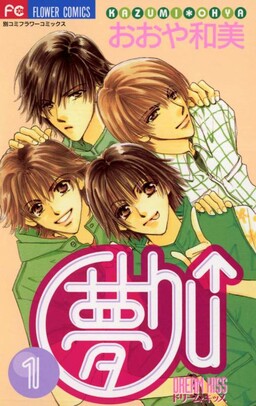
Tokimeki Tonight
Tokimeki Tonight follows Ranze Eto, the daughter of a vampire father and a werewolf mother, who has inherited both bloodlines and the power to transform into whatever she bites. Her romance with the most popular boy at school, Shun, and her supernatural mishaps drive a classic Ribon comedy romance.
Romance / Comedy
W Juliet
Yu's review of W Juliet — Makoto Amano is a beautiful boy who has been living as a girl named Ito to fulfill a bet with his father; when he joins the drama club, the tomboy Ito Miura discovers his secret and becomes his protector; a shoujo romance about performance, identity, and two people who understand each other's hidden selves.
Romance / Comedy
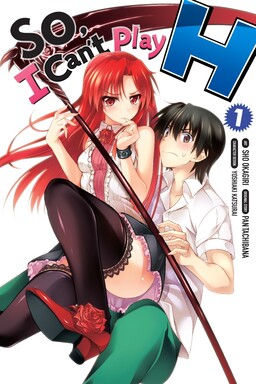
So Cute It Hurts!!
Yu's review of So Cute It Hurts!! (Kobayashi ga Kawai sugite Tsurai) — twins Megumu and Mitsuru Kobayashi swap schools after Mitsuru fails a history exam; Megumu (a girl) attends his school disguised as a boy while he attends hers, and both fall in love; a shoujo romantic comedy about gender performance, twins, and the chaos that follows when you try to live someone else's life.
Romance
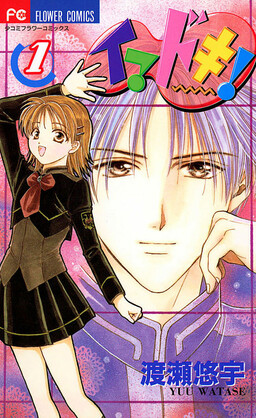
Imadoki!
Tanpopo Yamazaki arrives at Meiooh Academy — Tokyo's most elite private school — from rural Hokkaido. She is mocked for her accent, her clothes, her poverty. She plants a dandelion in the school garden and refuses to leave. She forms a 'greening committee' that becomes the school's strangest student group. The Kugiou brothers — Koki and Yoji, sons of the school's chairman — both notice her. Yuu Watase's 5-volume Shoujo Comic series ran 2000–2001, complete in English from VIZ.
Romance / Fantasy
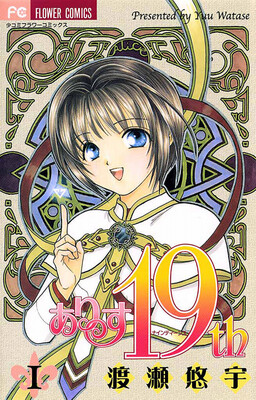
Alice 19th
Yu's review of Alice 19th — Alice Seno is a shy girl who becomes a Lotis Master, wielding words of power; when a jealous outburst banishes her sister Mayura to darkness, Alice must master the Lotis Words to undo what she said and save her. A compact 7-volume Yuu Watase shoujo about words, guilt, and sibling love.

Romance / Drama
Hot Gimmick
Yu's review of Hot Gimmick — Hatsumi Narita lives in company housing where her neighbor Ryoki holds a secret over her; what begins as coercive leverage develops into one of shoujo manga's most discussed and debated romantic triangles, with Hatsumi caught between childhood friend Shinogu, first love Azusa, and the controlling Ryoki; a romance that is controversial precisely because it depicts what it depicts without editorial distance.
Written by
Yu
Manga Enthusiast from Japan
I grew up in Japan and manga literally saved me during a tough time in elementary school. My English isn't perfect, but my love for manga is real — and I want to share it with you.
Disclosure: This post contains affiliate links. As an Amazon Associate, I earn from qualifying purchases at no extra cost to you.