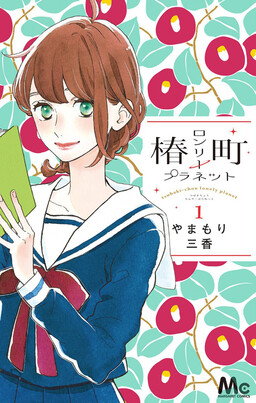
Tsubaki-chou Lonely Planet Review: A Homeless Girl Becomes a Housekeeper for a Young Novelist Who Hates People
by Mika Yamamori
Read the first volume. If it doesn't hook you, put it down. It'll hook you.
Buy Tsubaki-chou Lonely Planet on Amazon →*Affiliate link — I earn a small commission at no extra cost to you.
Quick Take
- A completed shojo romance where the unusual living arrangement — Fumi as Akatsuki's live-in housekeeper — creates genuine intimacy without manufactured drama
- Akatsuki's antisocial nature is softened not by Fumi changing him but by her presence creating a space where he can be himself
- 9 volumes complete in English; warm and satisfying completed shojo romance from the creator of Hibi Chouchou
Who Is This Manga For?
- Readers who want completed shojo romance with warm emotional development
- Anyone who enjoys cohabitation romance where proximity creates genuine closeness
- Fans of grumpy-protagonist romance where the heroine is not a pushover
- Readers who want shojo with characters who feel like real people rather than archetypes
Content Warnings & Age Rating
Age Rating: T (Teen) Content Warnings: Unusual living arrangement between employer/employee of different ages; family financial hardship as backstory; shojo romance with light physical affection
A T rating appropriate to the shojo romance.
Yu's Rating
| Category | Score |
|---|---|
| Story Depth | ★★★★☆ |
| Art Style | ★★★★★ |
| Character Development | ★★★★★ |
| Accessibility for Non-Japanese Readers | ★★★★★ |
| Reread Value | ★★★★★ |
Story Overview
Fumi Ohara's father has run up gambling debts and disappeared, leaving her with no home and no money. Through a family connection, she is offered a job: live-in housekeeper for Akatsuki Kibikino, who works from home as a novelist and needs meals prepared and the apartment maintained.
Akatsuki does not like people. He works alone, prefers silence, and does not want company. He agreed to this arrangement because he needs to eat.
Fumi, who is practical and warm and refuses to be intimidated, fills Akatsuki's apartment with the presence of someone who is simply there, day after day, without demands or performance. Akatsuki, who has organized his entire life around avoiding people, does not know how to process someone who doesn't require him to be anyone in particular.
Characters
Fumi Ohara — A heroine whose practical warmth is the series' defining quality — she is not naive or helpless, she is someone who has learned to make the best of bad situations and whose genuine cheerfulness is not performance but character. Her feelings for Akatsuki develop slowly and without pretense.
Akatsuki Kibikino — A romantic lead whose grumpiness is consistent and whose slow thawing never tips into sudden personality change. He doesn't become a different person around Fumi — he becomes more himself, which is the more interesting development.
Art Style
Yamamori's art is clean and warm — the apartment setting, the cooking sequences, and the quiet domestic moments are rendered with specificity. Akatsuki's expressions across the range from irritated to something softer carry enormous weight.
Cultural Context
The "housekeeper romance" is a well-established shojo device, but Tsubaki-chou Lonely Planet uses it with more attention to Fumi's situation — she needs this job, the arrangement has a specific power dynamic she navigates, and her relationship with Akatsuki develops within those real constraints.
What I Love About It
Akatsuki needed someone around who didn't need him to be impressive. Fumi, who has her own reasons to value quiet reliability, provided exactly that without knowing she was doing it. The romance grows from two people accidentally being exactly what the other needed.
What English-Speaking Fans Say
Western readers describe Tsubaki-chou Lonely Planet as one of the most reliably satisfying completed shojo romances — specifically praised for Fumi's character as a heroine who is strong without being defined by strength, for Akatsuki's consistent personality making his development feel genuine, and for an ending that satisfies. Yamamori's art is consistently cited as a draw.
Memorable Scene ⚠️ Spoiler Warning
The first time Akatsuki expresses something about Fumi directly — not through action or implicit behavior but in words, however imperfectly — and her response to a person who doesn't say things easily choosing to say this, is the series' most precisely earned romantic moment.
Similar Manga
- Hibi Chouchou — By the same author; similar quiet warmth, school setting
- My Happy Marriage — Completed romance with gruff protagonist and warm heroine
- Snow White with the Red Hair — Completed shojo romance with active heroine
- Shortcake Cake — Completed shojo romance with cohabitation element
Reading Order / Where to Start
Volume 1 — Fumi's situation and her first day at Akatsuki's apartment are established immediately.
Official English Translation Status
Kodansha Comics has published the complete English series. All 9 volumes available.
Pros & Cons
Pros
- Fumi is a genuinely strong shojo heroine without being defined by strength
- Akatsuki's development is consistent and earned
- Art is warm and precise
- Complete — a real ending that satisfies
Cons
- Employer/employee cohabitation premise requires tolerance
- Slow burn means feelings develop gradually across 9 volumes
- Relatively quiet tone may not suit readers wanting dramatic stakes
Format Comparison
| Format | Notes |
|---|---|
| Individual Volumes | Kodansha Comics; complete series available |
| Digital | Available |
Where to Buy
Read the first volume. If it doesn't hook you, put it down. It'll hook you.
This post contains affiliate links. If you purchase through these links, I may earn a small commission at no extra cost to you. As an Amazon Associate, I earn from qualifying purchases.
*Affiliate link — I earn a small commission at no extra cost to you.
More Manga You Might Like
Romance / Slice of Life
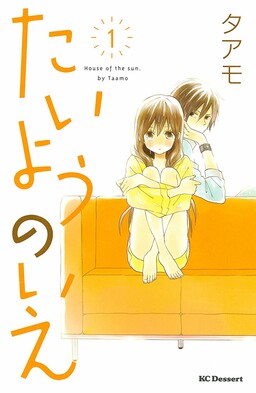
House of the Sun (Taiyou no Ie)
Yu's review of House of the Sun (Taiyou no Ie) — Mao Motomiya, whose home life fell apart when her father remarried, finds herself staying at the house of Hiro, her cheerful childhood friend; his large, warm family gradually becomes the home she didn't know she needed, and the romance that develops is built on that foundation.
Romance / Slice of Life
A Sign of Affection
Yu's review of A Sign of Affection — Yuki is a deaf college student whose world is small by necessity; when a tall stranger at a train station asks her for help and she cannot explain her deafness in time, a classmate named Itsuomi translates — and Itsuomi is curious about Yuki's world in a way no one usually is.
Romance
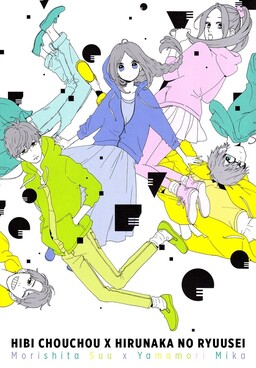
Hibi Chouchou: Everyday Butterflies
Yu's review of Hibi Chouchou: Everyday Butterflies — Suiren Shibazeki is so beautiful and quiet that people find her unapproachable; Kawasumi is so internally focused that he barely notices others; they notice each other, and what follows is one of the most unhurried and genuinely tender slow-burn romances in shojo manga.

Romance / Slice of Life
Love in Focus
Yu's review of Love in Focus — Mako moves to a new city after her grandfather's death and joins the photography club; she keeps encountering and photographing Kei, a boy from a different school who seems to appear wherever she points her camera; what starts as coincidence becomes something deliberate.

Romance / Comedy
LDK
Yu's review of LDK — Aoi Nishimori's apartment floods and she ends up temporarily sharing her neighbor Shusei Kugayama's apartment; Shusei is the school's most unapproachable boy who has never shown interest in anyone; the cohabitation produces a relationship that neither expected.

Romance / Drama
I Cannot Reach You
Yu's review of I Cannot Reach You — Kakeru is perfect: good at everything, well-liked, seemingly without needs; his best friend Yamato has been in love with him since childhood but has convinced himself that someone like Kakeru is beyond his reach; the series is about the gap between who Yamato thinks Kakeru is and who Kakeru actually is.
Written by
Yu
Manga Enthusiast from Japan
I grew up in Japan and manga literally saved me during a tough time in elementary school. My English isn't perfect, but my love for manga is real — and I want to share it with you.
Disclosure: This post contains affiliate links. As an Amazon Associate, I earn from qualifying purchases at no extra cost to you.