
Translucent Review: A Middle School Girl Who Is Slowly Becoming Invisible Learns to Be Seen
by Kazuhiro Okamoto
Read the first volume. If it doesn't hook you, put it down. It'll hook you.
Buy Translucent on Amazon →*Affiliate link — I earn a small commission at no extra cost to you.
Quick Take
- The premise — a girl becoming literally invisible — works as perfect metaphor for the experience of feeling unseen in adolescence, and the series earns that metaphor without being heavy-handed
- Okamoto treats Shizuka's condition with emotional seriousness while keeping the tone warm
- 7 volumes complete; an underseen gem of supernatural middle-school romance
Who Is This Manga For?
- Readers who want supernatural premises used for emotional resonance rather than action
- Anyone who remembers feeling invisible during adolescence and wants to see that literalized
- Fans of quiet, warm middle school romance with unusual concepts
- Readers looking for short complete supernatural romance
Content Warnings & Age Rating
Age Rating: T (Teen) Content Warnings: Themes of social invisibility and isolation; the supernatural condition is emotionally weighted but not graphic; gentle romance
T rating — appropriate for middle school setting and themes.
Yu's Rating
| Category | Score |
|---|---|
| Story Depth | ★★★★☆ |
| Art Style | ★★★★☆ |
| Character Development | ★★★★☆ |
| Accessibility for Non-Japanese Readers | ★★★★★ |
| Reread Value | ★★★★☆ |
Story Overview
Shizuka Shiroyama is becoming invisible. Literally. Translucent Syndrome is a condition that causes the body to gradually lose opacity — Shizuka's arm can already be seen through. She has been managing the condition quietly, avoiding attention, not wanting to be noticed for the wrong reason.
Mamoru Tadami notices her anyway. Not as the girl with the condition — as Shizuka, who is interesting and present and worth knowing. His attention is the series' inciting force: someone who wants her to be visible to him specifically, not despite her condition and not because of it.
The series follows their developing connection against the backdrop of Shizuka navigating middle school life with a condition that literalizes the experience of feeling like no one can see you.
Characters
Shizuka Shiroyama — A protagonist whose management of her condition has made her careful about taking up space; her gradual willingness to be seen is the series' emotional arc.
Mamoru Tadami — The classmate whose attention is specific rather than generic — he sees Shizuka rather than her condition, and the distinction matters.
Keiko — Shizuka's friend whose relationship with Shizuka provides a different kind of connection — the friend who has always been there versus the new connection.
Art Style
Okamoto's art handles the visual challenge of depicting transparency with delicacy — Shizuka's gradually translucent portions are drawn with enough visual specificity to communicate the condition without becoming the focus of every panel. The character work is warm and expressive, and the school setting is rendered simply but effectively.
Cultural Context
Translucent ran in Comic Blade from 2005 to 2009. The series uses a supernatural condition as metaphor in the tradition of magical realist school manga — the condition is specific enough to be interesting as a premise but emotional enough to work as metaphor. Dark Horse's translation brought it to Western readers who responded to the metaphorical resonance.
What I Love About It
The moment when someone sees Shizuka — really sees her, not the condition — and she doesn't know what to do with it. The series understands that being seen by the right person is more difficult than being invisible, because being seen requires letting someone matter to you.
What English-Speaking Fans Say
Western readers describe Translucent as an underseen and emotionally intelligent supernatural romance — specifically noted for the premise being used with genuine emotional care, for Shizuka being a believable protagonist whose arc is emotionally satisfying, and for the warmth of the series despite its melancholy premise. Consistently recommended as an overlooked gem.
Memorable Scene ⚠️ Spoiler Warning
The scene where Shizuka's condition worsens at a moment when she most wants to be present — and how the people around her respond — is the series' most emotionally concentrated moment.
Similar Manga
- Kimi ni Todoke — Middle school girl learning to be seen in similar emotional register
- Koe no Katachi (A Silent Voice) — Adolescent connection across a significant difference
- Shortcake Cake — School romance with careful character work
- Blue Spring Ride — Adolescent connection and visibility themes
Reading Order / Where to Start
Volume 1 — Shizuka's condition, her management of it, and Mamoru's initial attention establish the series completely.
Official English Translation Status
Dark Horse published the complete English series. All 7 volumes available.
Pros & Cons
Pros
- Premise works as metaphor without forcing the connection
- Shizuka is a carefully observed protagonist
- Warm tone despite melancholy subject
- Complete in 7 volumes
Cons
- Middle school setting may not appeal to adult readers
- Dark Horse volumes may be harder to find
- Shorter than the premise might warrant
Format Comparison
| Format | Notes |
|---|---|
| Individual Volumes | Dark Horse; complete series |
| Digital | Limited availability |
Where to Buy
Read the first volume. If it doesn't hook you, put it down. It'll hook you.
This post contains affiliate links. If you purchase through these links, I may earn a small commission at no extra cost to you. As an Amazon Associate, I earn from qualifying purchases.
*Affiliate link — I earn a small commission at no extra cost to you.
More Manga You Might Like
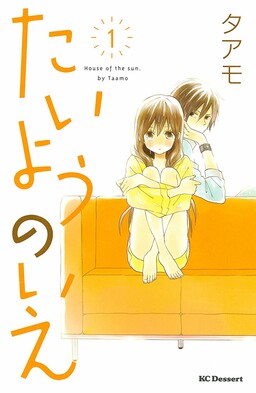
Romance / Slice of Life
House of the Sun (Taiyou no Ie)
Yu's review of House of the Sun (Taiyou no Ie) — Mao Motomiya, whose home life fell apart when her father remarried, finds herself staying at the house of Hiro, her cheerful childhood friend; his large, warm family gradually becomes the home she didn't know she needed, and the romance that develops is built on that foundation.
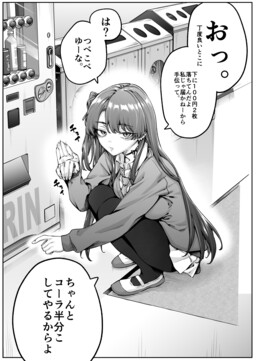
Romance / Slice of Life
A Sign of Affection
Yu's review of A Sign of Affection — Yuki is a deaf college student whose world is small by necessity; when a tall stranger at a train station asks her for help and she cannot explain her deafness in time, a classmate named Itsuomi translates — and Itsuomi is curious about Yuki's world in a way no one usually is.
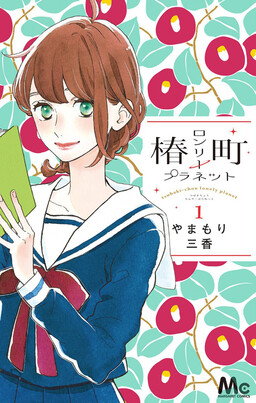
Romance / Slice of Life
Tsubaki-chou Lonely Planet
Yu's review of Tsubaki-chou Lonely Planet — Fumi Ohara's father's gambling debts leave her without a home; she takes a job as a live-in housekeeper for Akatsuki Kibikino, a young novelist who works from home, has no patience for people, and is completely unprepared for someone like Fumi.
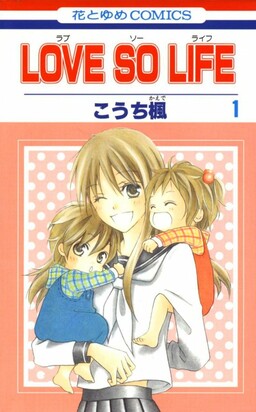
Romance / Slice of Life
Love So Life
Yu's review of Love So Life — Shiharu Nakamura is a high school girl raised in an orphanage who loves small children; when Seiji Matsunaga, a TV newscaster whose sister recently died, asks her to babysit his twin niece and nephew, she takes the job; the series follows her developing relationship with the twins and slowly with their uncle.

Romance / Slice of Life
Love in Focus
Yu's review of Love in Focus — Mako moves to a new city after her grandfather's death and joins the photography club; she keeps encountering and photographing Kei, a boy from a different school who seems to appear wherever she points her camera; what starts as coincidence becomes something deliberate.

Romance
Love at Fourteen
Yu's review of Love at Fourteen — Kanata Tanaka and Kazuki Yoshikawa are thirteen-year-olds who present as older than their classmates; their maturity makes them popular and respected, but they hide their actual selves; they find each other as the only ones who understand the isolation of seeming older than you are.
Written by
Yu
Manga Enthusiast from Japan
I grew up in Japan and manga literally saved me during a tough time in elementary school. My English isn't perfect, but my love for manga is real — and I want to share it with you.
Disclosure: This post contains affiliate links. As an Amazon Associate, I earn from qualifying purchases at no extra cost to you.