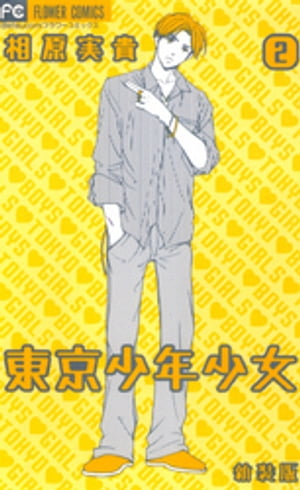
Tokyo Boys & Girls Review: Four People, One Shared Past, and the Specific Mess That Follows
by Miki Aihara
Read the first volume. If it doesn't hook you, put it down. It'll hook you.
Buy Tokyo Boys & Girls on Amazon →*Affiliate link — I earn a small commission at no extra cost to you.
Fashion school. New start. Somehow every person from her past ended up there too.
Quick Take
- Miki Aihara's five-volume shojo about a girl enrolling in a prestigious fashion design school who discovers complicated history with multiple classmates
- Compact and efficiently plotted; the fashion setting is used with visual specificity
- 5 complete volumes — tight, complete, satisfying
Who Is This Manga For?
- Fans of Miki Aihara (Hot Gimmick, So Cute It Hurts) who want her compact work
- Shojo readers who want fashion-world setting alongside the romance
- People who enjoy tangled-past romance complications
- Anyone who wants a complete short shojo series
Content Warnings & Age Rating
Age Rating: T (Teen) Content Warnings: Romantic rivalry, past relationship complications, school drama
Standard shojo content throughout.
Yu's Rating
| Category | Score |
|---|---|
| Story Depth | ★★★☆☆ |
| Art Style | ★★★★☆ |
| Character Development | ★★★☆☆ |
| Accessibility for Non-Japanese Readers | ★★★★☆ |
| Reread Value | ★★★☆☆ |
Story Overview
Mimori enrolls in Tokyo's prestigious Meidai Fashion High School with high hopes for a fresh start. Her hopes for fresh collide immediately with reality: her new school is full of people with whom she has unresolved history. Two boys from her past — both of whom mean something different to her — are classmates, along with others whose connections to those relationships complicate everything further.
The fashion design setting is used specifically rather than decoratively: Mimori's actual interest in fashion is shown through her work, and the school's competitive environment provides real stakes alongside the personal entanglements.
Aihara works efficiently with five volumes — the tangled relationships are established quickly and developed at a pace that doesn't allow the story to slow before resolution.
Characters
Mimori — Aihara's female leads are consistently capable rather than passive, and Mimori continues that pattern: she has genuine ambition about fashion separate from the romantic complications.
The male leads — Two figures from her past who represent different things she wants and different problems. Aihara uses the contrast economically within the short format.
Art Style
Aihara's art is polished, sophisticated shojo with fashion-appropriate character design. The clothing in the school setting is drawn with the detail that fashion context requires. Character designs are attractive and clearly differentiated. Strong visual work throughout.
Cultural Context
Specialty high schools for fashion, art, and design exist in Japan and carry status as places where students self-select by passion as well as ability — the competitive environment is real and Aihara uses it with awareness. The fashion world as shojo setting has a tradition that Tokyo Boys & Girls enters with enough specificity to avoid being generic.
What I Love About It
Mimori's actual fashion work. In a short series with a lot of romantic plot to handle, Aihara still makes room for Mimori to be good at what she came to school for. That professional competence running parallel to the personal complications is the choice that makes the series more interesting than the summary implies.
What English-Speaking Fans Say
Appreciated as a tight, professional entry in Aihara's catalog. Readers who enjoyed Hot Gimmick often find this less intense and more accessible. Five volumes is consistently cited as the right length. CMX's English translation is noted positively.
Memorable Scene ⚠️ Spoiler Warning
The fashion competition chapter where Mimori has to choose between the design she wants to make and the design that will win — and her choice in that moment reveals exactly what kind of designer she's becoming — is the scene where the fashion premise earns its place in what is primarily a romance manga.
Similar Manga
| Title | Its Approach | How Tokyo Boys & Girls Differs |
|---|---|---|
| Hot Gimmick | Miki Aihara romance with complex entanglements | Hot Gimmick is darker and more intense; Tokyo Boys & Girls is lighter |
| Nana | Fashion-adjacent shojo in Tokyo | Nana is longer and more emotionally ambitious; Tokyo Boys & Girls is more contained |
| Paradise Kiss | Fashion school romance | Paradise Kiss is more art-focused; Tokyo Boys & Girls is more romance-focused |
Reading Order / Where to Start
Volume 1, straight through.
Official English Translation Status
CMX published all 5 volumes in English. Complete and available.
Pros & Cons
Pros
- Compact and professionally executed
- The fashion setting is used specifically
- Five volumes — complete without overstaying
- Aihara's art is strong throughout
Cons
- Not as emotionally complex as Aihara's longer work
- The tangled past is established quickly, which some readers find rushed
- CMX closure may affect some volume availability
- Not distinctive outside committed Aihara readers
Is Tokyo Boys & Girls Worth Reading?
For Miki Aihara fans — yes. For casual shojo readers, it's a light, professional read.
Format Comparison
| Format | Pros | Cons |
|---|---|---|
| Physical | Complete 5-volume set | CMX closure; some volumes may be out of print |
| Digital | More accessible | — |
| Omnibus | No omnibus available | — |
Where to Buy
Read the first volume. If it doesn't hook you, put it down. It'll hook you.
This post contains affiliate links. If you purchase through these links, I may earn a small commission at no extra cost to you. As an Amazon Associate, I earn from qualifying purchases.
*Affiliate link — I earn a small commission at no extra cost to you.
More Manga You Might Like
Romance / Drama
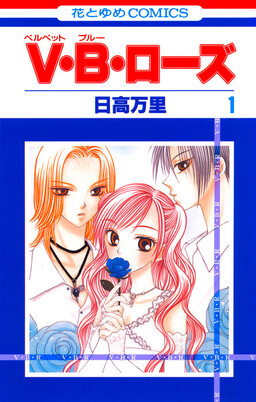
V.B. Rose
Yu's review of V.B. Rose — Ageha helps out at VB Rose, a boutique wedding dress shop run by two young men; her sister is getting married and Ageha becomes involved in making the dress; the craft focus and the shop's atmosphere form the backdrop for a romance with one of the shop's owners.

Romance / Comedy
Moe Kare!!
A review of Moe Kare!! — Ikuemi Ryo's eight-volume shojo comedy about a girl who is obsessed with bishounen anime characters and the real boy who appears to be her ideal type in person — and then turns out to be considerably more complicated than a 2D character.
Romance
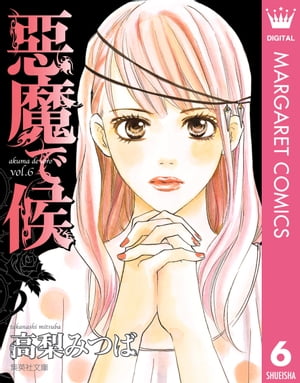
The Devil Does Exist
A review of The Devil Does Exist — the shojo romance about a girl whose mother remarries, bringing into her life a stepfather and a stepbrother who is the terrifying delinquent at her school — and the complicated relationship that develops.

Romance / Drama
We Were There
A high school love story that follows its couple deep into adulthood, through a four-year silence, a mother's suicide, and the slow work of finding each other again.
Romance / Drama
Skip Beat!
Yu's review of Skip Beat! — a girl who sacrificed everything to support her childhood friend's pop idol career discovers he was using her, and decides the best revenge is to break into the entertainment industry herself.
Romance / Drama
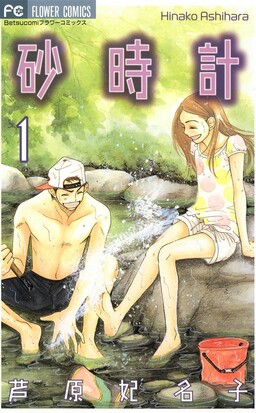
Sand Chronicles
Yu's review of Sand Chronicles — Ann Uekusa moves from Tokyo to rural Shimane after her parents' separation; her mother's death by suicide shapes everything that follows; the series follows Ann from childhood through adulthood with unflinching attention to grief, depression, and the slow work of becoming a whole person.
Written by
Yu
Manga Enthusiast from Japan
I grew up in Japan and manga literally saved me during a tough time in elementary school. My English isn't perfect, but my love for manga is real — and I want to share it with you.
Disclosure: This post contains affiliate links. As an Amazon Associate, I earn from qualifying purchases at no extra cost to you.