
The Devil Does Exist Review: The Bad Boy Next Door Was Supposed to Be the Villain
by Mitsuba Takanashi
Read the first volume. If it doesn't hook you, put it down. It'll hook you.
Buy The Devil Does Exist on Amazon →*Affiliate link — I earn a small commission at no extra cost to you.
Her mother married her worst enemy's father. He moved in. This is the shojo manga version of diplomacy.
Quick Take
- A shojo romance where the female lead's mother marries the father of the most feared delinquent at her school, forcing them to live together
- The hostile-to-romance progression is well-executed
- 11 complete volumes; a full story with proper resolution
Who Is This Manga For?
- Shojo readers who enjoy antagonistic-beginning romances
- Fans of stepfamily dynamics as romantic complications
- People who like school-setting romance with real social stakes
- Anyone who wants a complete, conventional shojo story done well
Content Warnings & Age Rating
Age Rating: T (Teen) Content Warnings: Antagonistic behavior, family restructuring, possessive romantic dynamics
Standard shojo drama content.
Yu's Rating
| Category | Score |
|---|---|
| Story Depth | ★★★☆☆ |
| Art Style | ★★★★☆ |
| Character Development | ★★★★☆ |
| Accessibility for Non-Japanese Readers | ★★★★☆ |
| Reread Value | ★★★☆☆ |
Story Overview
Kayano Takeru is feared throughout her school — the kind of presence that clears hallways and disrupts class schedules. Kayano Kayoko (same surname coincidence) is a first-year who has been terrified of him from a distance.
When their parents meet and fall in love, the coincidence of surnames becomes a plot mechanic: Takeru's father and Kayoko's mother marry. Takeru and Kayoko are now stepsiblings, living in the same house, attending the same school, and navigating a relationship that started with fear and contempt and has nowhere obvious to go.
Takanashi's approach is conventional in form but careful in execution: the hostility between them is real and motivated, the development of something warmer is paced across eleven volumes without feeling rushed or contrived, and the family dynamics — the two parents, their relationships with their respective children, the question of what stepfamily actually means — are given genuine attention.
Characters
Kayano Takeru — The "bad boy" who is more complicated than the type. His behavior has history and his development is about gradually trusting someone with it.
Kayano Kayoko — More backbone than the standard shojo heroine — she's frightened of Takeru at the start but not passive about it, and her development involves learning to distinguish between the performance and the person.
The parents — More present and more human than the typical absent/irrelevant parents of shojo manga. Their own relationship mirrors and complicates the central romance.
Art Style
Takanashi's art is clean, expressive shojo with strong character design. Takeru's presence is established visually before the story explains it — the art conveys the threat convincingly. The domestic scenes, where the majority of the story takes place, are drawn with the specific warmth of a house that two uncomfortable people are learning to share.
Cultural Context
The stepfamily romance premise exists in shojo manga as a way to create immediate forced proximity while maintaining social legitimacy — the characters are thrown together by circumstances and must navigate proximity before choice. The Devil Does Exist uses this structure seriously, treating the parental relationship as something with its own validity rather than a convenient plot mechanism.
The delinquent-as-romantic-lead is a durable shojo type whose appeal rests on the implicit narrative: the person everyone fears is in fact someone specific, and being seen accurately by the right person changes them. Takanashi executes this with enough character specificity to make it feel like more than a type.
What I Love About It
The chapter where Takeru's actual situation — why he is the way he is, what he's been carrying — is explained to Kayoko not as a confession but as something she figures out herself. She doesn't need him to explain. She already understood. That moment is the series' emotional anchor.
What English-Speaking Fans Say
A reliable mid-tier shojo romance — praised for execution rather than innovation. The Takeru character is the consistent praise point. The eleven-volume length is considered appropriate. CMX's English translation is noted positively. A recommendation for readers who enjoy the type.
Memorable Scene ⚠️ Spoiler Warning
The scene at the midpoint where Kayoko does something unexpected to protect Takeru — using the information she has rather than waiting for him to handle it — is where the relationship shifts from one-directional to mutual. She's been reading him correctly. Now he knows it.
Similar Manga
| Title | Its Approach | How The Devil Does Exist Differs |
|---|---|---|
| Boys Over Flowers | Delinquent romance with social stakes | BOF is more dramatic and extreme; Devil is more domestic and grounded |
| Kare Kano | Romance between characters maintaining facades | Kare Kano is more psychologically focused; Devil is more conventionally romantic |
| Black Bird | Antagonistic supernatural romance | Black Bird is supernatural; Devil is entirely realistic |
Reading Order / Where to Start
Volume 1, straight through. The family setup establishes immediately.
Official English Translation Status
CMX (DC Comics) published all 11 volumes in English. Complete and available, though some volumes may be out of print.
Pros & Cons
Pros
- The hostile-to-romantic progression is well-paced
- Both leads develop genuinely across eleven volumes
- The stepfamily context is handled with more seriousness than usual
- Complete story with proper resolution
Cons
- Conventional premise that offers no surprises in structure
- CMX closure means some volumes may be hard to find
- Takeru's early behavior requires patience before the warmth develops
- Not distinctive enough to be essential outside committed shojo readers
Is The Devil Does Exist Worth Reading?
For shojo romance fans who enjoy the antagonistic-beginning type — yes. Well executed within its genre.
Format Comparison
| Format | Pros | Cons |
|---|---|---|
| Physical | Complete 11-volume set | CMX closure; some volumes out of print |
| Digital | More accessible | — |
| Omnibus | No omnibus available | — |
Where to Buy
Read the first volume. If it doesn't hook you, put it down. It'll hook you.
This post contains affiliate links. If you purchase through these links, I may earn a small commission at no extra cost to you. As an Amazon Associate, I earn from qualifying purchases.
*Affiliate link — I earn a small commission at no extra cost to you.
More Manga You Might Like

Romance / Comedy
Moe Kare!!
A review of Moe Kare!! — Ikuemi Ryo's eight-volume shojo comedy about a girl who is obsessed with bishounen anime characters and the real boy who appears to be her ideal type in person — and then turns out to be considerably more complicated than a 2D character.

Romance
Tokyo Boys & Girls
A review of Tokyo Boys & Girls — Miki Aihara's five-volume shojo romance about a girl who enrolls in a famous fashion design school and discovers her past is more intertwined with her new classmates than she expected.

Romance / Drama
We Were There
A high school love story that follows its couple deep into adulthood, through a four-year silence, a mother's suicide, and the slow work of finding each other again.
Romance / Drama
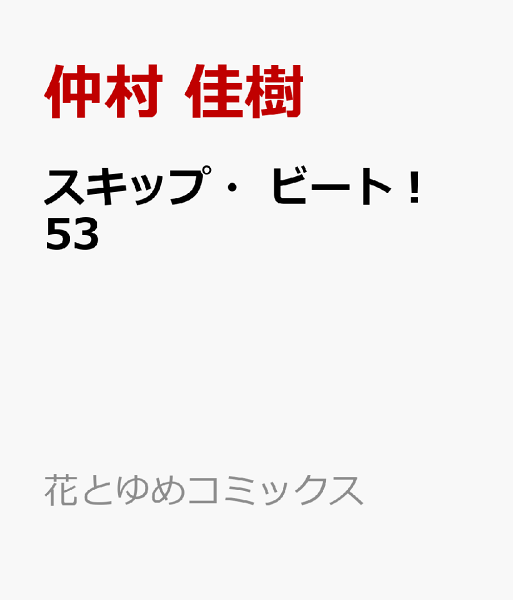
Skip Beat!
Yu's review of Skip Beat! — a girl who sacrificed everything to support her childhood friend's pop idol career discovers he was using her, and decides the best revenge is to break into the entertainment industry herself.

Romance / Drama
Sand Chronicles
Yu's review of Sand Chronicles — Ann Uekusa moves from Tokyo to rural Shimane after her parents' separation; her mother's death by suicide shapes everything that follows; the series follows Ann from childhood through adulthood with unflinching attention to grief, depression, and the slow work of becoming a whole person.
Romance / Drama
Orange
Yu's review of Orange — on the first day of high school, Naho receives a letter from herself ten years in the future, listing the regrets she has about a classmate named Kakeru, and warning her to save him before it's too late.
Written by
Yu
Manga Enthusiast from Japan
I grew up in Japan and manga literally saved me during a tough time in elementary school. My English isn't perfect, but my love for manga is real — and I want to share it with you.
Disclosure: This post contains affiliate links. As an Amazon Associate, I earn from qualifying purchases at no extra cost to you.