
The 100 Girlfriends Review: A Boy Destined to Fall in Love with 100 Girls Refuses to Let Any of Them Get Away
by Rikito Nakamura / Yukiaki Nozawa
Read the first volume. If it doesn't hook you, put it down. It'll hook you.
Buy The 100 Girlfriends Who Really, Really, Really, Really, Really Love You on Amazon →*Affiliate link — I earn a small commission at no extra cost to you.
Quick Take
- The harem genre taken to its logical extreme and then executed with genuine heart — Rentaro doesn't pick one girlfriend, but he also doesn't treat the others as secondary; each girl receives complete and total devotion, and the series means it
- The comedy is absurdist and escalating — as the girlfriend count increases, situations become increasingly elaborate — but the emotional warmth is consistent throughout
- 16 volumes ongoing; one of the most inventive romantic comedies currently publishing
Who Is This Manga For?
- Readers who want romantic comedy pushed to deliberate absurdity
- Anyone curious what a harem manga looks like if the protagonist genuinely loves every character
- Fans of increasingly elaborate comedic escalation that also delivers real warmth
- Readers who want ongoing shonen romance with a rotating focus on distinct characters
Content Warnings & Age Rating
Age Rating: T (Teen) Content Warnings: Harem comedy premise; mild fan service consistent with Weekly Young Jump publication; romantic situations become increasingly absurd as the girlfriend count increases
A genuine T rating — the content is comedy-focused throughout.
Yu's Rating
| Category | Score |
|---|---|
| Story Depth | ★★★☆☆ |
| Art Style | ★★★★☆ |
| Character Development | ★★★★★ |
| Accessibility for Non-Japanese Readers | ★★★★★ |
| Reread Value | ★★★★★ |
Story Overview
Rentaro Aijou has confessed his love 100 times across middle school and been rejected every time. A god takes pity on him — or perhaps creates a worse situation — by telling him that 100 soulmates have been arranged for his high school years, but that if he fails to properly love any of them, both he and that girl will die.
Rentaro's solution: love all 100 with his entire heart, equally and completely, refusing to let any of them be secondary.
The series follows his relationship with each girlfriend as she enters his life, each with a distinct personality and a distinct comedic arc. By the time the group has grown to double digits, the logistics of loving everyone are genuinely complicated, and the series embraces the absurdity while maintaining that Rentaro's feelings for each person are real.
Characters
Rentaro Aijou — The series' comedic hero, whose commitment to loving everyone equally is both his defining quality and the engine of every situation the series generates. His sincerity is absolute and is the straight-man center of increasingly elaborate comedy.
The girlfriends — Each of the 100 has a distinct design, personality, and comedic archetype, and the series gives each enough time when she enters to make her feel genuinely present rather than background. The expanding group creates ongoing character dynamics as established girlfriends interact with new arrivals.
Art Style
Nozawa's art manages the visual challenge of an expanding cast — each girlfriend is distinctly recognizable, and group scenes with many characters are organized without becoming cluttered. The comedic expression work is excellent and the art gets more confident as the series progresses.
Cultural Context
The harem comedy is a long-standing genre in Japanese manga and anime — The 100 Girlfriends is an explicit genre deconstruction that asks what happens when the usual harem formula's emotional sleight-of-hand (the protagonist who loves multiple people but the audience knows who "really" wins) is removed and replaced with genuine commitment to all parties.
What I Love About It
The series refuses to be cynical about its own premise. Rentaro isn't playing with these girls' feelings — he genuinely loves each one — and the girls know about each other and choose to be part of this genuinely unusual relationship structure. The warmth this creates is more earnest than the absurdist comedy premise suggests.
What English-Speaking Fans Say
Western readers describe The 100 Girlfriends as the harem manga they can actually recommend because it doesn't make the usual harem mistakes — no one is secretly the "real" girlfriend, no one is used as a comedic prop, and Rentaro's love for each person is depicted with the same sincerity regardless of how long she's been in the series.
Memorable Scene ⚠️ Spoiler Warning
The sequence where Rentaro manages to simultaneously satisfy the emotional needs of several girlfriends at once — through a chain of increasingly elaborate contingency planning — reaches a level of absurd logistics that becomes its own kind of beautiful.
Similar Manga
- Nisekoi — High school harem comedy, conventional structure
- We Never Learn — Multi-heroine romance, serious approach
- Rent-a-Girlfriend — Multiple romantic interests, more conventional handling
- Love Hina — Classic harem comedy, the genre's foundational work
Reading Order / Where to Start
Volume 1 — Rentaro's situation, the god's declaration, and the first two girlfriends are all established in the opening chapters.
Official English Translation Status
Seven Seas Entertainment publishes the ongoing series. 12+ volumes currently available in English.
Pros & Cons
Pros
- Genuine warmth beneath the absurdist comedy
- Each girlfriend is a distinct character rather than a type
- The escalating absurdity is consistently inventive
- Subverts the harem genre's usual emotional dishonesty
Cons
- Ongoing with expanding cast requires tracking many characters
- The absurdist premise requires accepting its internal logic
- T rating fan service may not suit all readers
Format Comparison
| Format | Notes |
|---|---|
| Individual Volumes | Seven Seas Entertainment; ongoing |
| Digital | Available |
Where to Buy
Read the first volume. If it doesn't hook you, put it down. It'll hook you.
This post contains affiliate links. If you purchase through these links, I may earn a small commission at no extra cost to you. As an Amazon Associate, I earn from qualifying purchases.
*Affiliate link — I earn a small commission at no extra cost to you.
More Manga You Might Like
Romance / Comedy
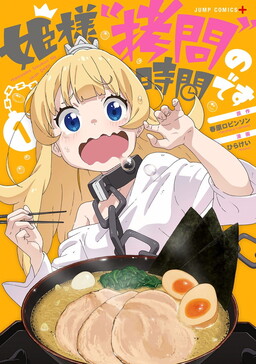
'Tis Time for 'Torture,' Princess
Yu's review of 'Tis Time for 'Torture,' Princess — the Princess is captured by the Demon King's forces; the Three Hell Executives interrogate her to get information about the kingdom's defenses; the 'torture' they use is things she actually enjoys — delicious food, comfortable beds, adorable animals — and she almost gives up information every time.
Romance
The Girl I Like Forgot Her Glasses
Yu's review of The Girl I Like Forgot Her Glasses — Komura has a crush on his seatmate Mie; every day Mie forgets her glasses; without glasses she can barely see; she has to get extremely close to Komura to see anything; Koume Fujichika's rom-com about a boy who loves a girl who has no idea how close she keeps getting.

Romance / Comedy
Girlfriend, Girlfriend
Yu's review of Girlfriend, Girlfriend — Naoya Mukai, who has finally started dating his long-time crush Saki, falls in love with a second girl, Nagisa, and proposes that they all date simultaneously; his complete honesty about his feelings collides with everyone's reaction to them in this shamelessly energetic romantic comedy.
Romance / Comedy
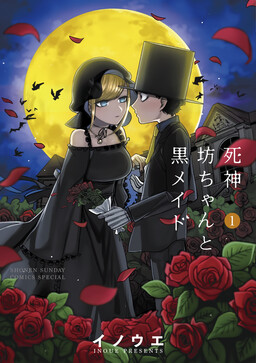
The Duke of Death and His Maid
Yu's review of The Duke of Death and His Maid — the young Duke Caladbolg was cursed as a child: any living thing he touches dies; exiled to a manor and avoided by everyone, his only companion is Alice the maid, who delights in flirting with him as close to the edge of his curse as she can get.
Romance / Comedy
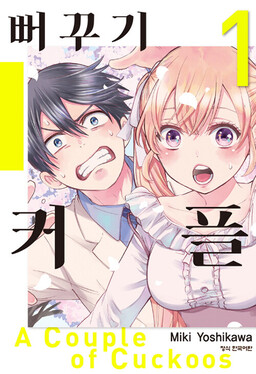
A Couple of Cuckoos
Yu's review of A Couple of Cuckoos — Nagi Umino discovers he was switched at birth with the daughter of a wealthy family; their parents decide the obvious solution is for the two teenagers to fake-date and eventually marry, which goes about as well as expected when both already have feelings for other people.
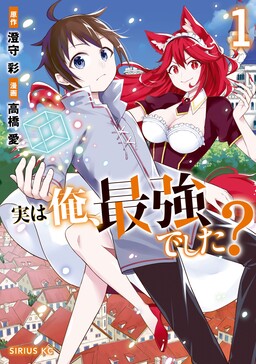
Romance / Comedy
Actually, I Am...
Yu's review of Actually, I Am... (My Monster Secret) — Asahi Kuromine has one defining flaw: his face betrays every thought he has. When he walks in on his beautiful classmate Youko Shiragami with her vampire wings deployed, he becomes her secret-keeper — despite being the single most unsuited person for the job.
Written by
Yu
Manga Enthusiast from Japan
I grew up in Japan and manga literally saved me during a tough time in elementary school. My English isn't perfect, but my love for manga is real — and I want to share it with you.
Disclosure: This post contains affiliate links. As an Amazon Associate, I earn from qualifying purchases at no extra cost to you.