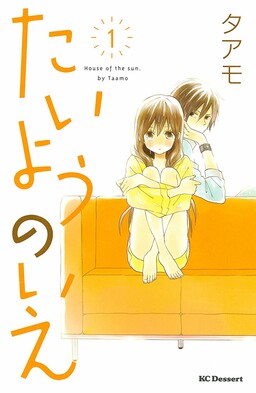
House of the Sun Review: A Girl Who Lost Her Home Finds Herself in Her Childhood Friend's House and His Family's Warmth
by Taamo
Read the first volume. If it doesn't hook you, put it down. It'll hook you.
Buy House of the Sun (Taiyou no Ie) on Amazon →*Affiliate link — I earn a small commission at no extra cost to you.
Quick Take
- A romance built on found family as much as on romantic feeling — Mao's experience of Hiro's household as the warmth she lost is the series' most emotionally true element, and the romance grows from that foundation rather than despite it
- Taamo renders the specific comfort of a genuinely warm family household with exceptional care — the Nakamura family is the series' actual protagonist
- 10 volumes complete; one of shojo manga's most genuinely warm romantic completions
Who Is This Manga For?
- Readers who want romance centered on found family and domestic warmth
- Anyone who has experienced a friend's household as more comfortable than their own
- Fans of childhood friend romance with emotional depth
- Readers who want complete shojo with a satisfying family arc alongside the romance
Content Warnings & Age Rating
Age Rating: T (Teen) Content Warnings: Family dysfunction (Mao's home situation involves an absent-feeling father and difficult stepmother dynamic); childhood friend romance with age-appropriate content; found family themes
A very gentle T rating — primarily warm domestic content.
Yu's Rating
| Category | Score |
|---|---|
| Story Depth | ★★★★★ |
| Art Style | ★★★★★ |
| Character Development | ★★★★★ |
| Accessibility for Non-Japanese Readers | ★★★★★ |
| Reread Value | ★★★★★ |
Story Overview
Mao Motomiya's father remarried, and the home she grew up in no longer feels like her home. Unable to make peace with the new situation, she ends up at the house of Hiro Nakamura — her cheerful, boisterous childhood friend — with nowhere else to go.
The Nakamura household is the opposite of what she left: loud, warm, full of family members who treat each other and strangers with the same uncomplicated affection. Hiro's father and grandfather, his siblings — everyone — accepts Mao immediately and completely.
The series follows Mao's gradual recovery of the ability to accept warmth she'd been denied, and the romance that develops between her and Hiro as both of them understand their feelings through the context of the family she has found.
Characters
Mao Motomiya — A protagonist whose emotional wound is not dramatic but deeply familiar — the specific loss of home comfort when a family changes around you, and the difficulty of accepting new warmth without waiting for it to be withdrawn.
Hiro Nakamura — Cheerful without being naive, warm without being unaware — his family's warmth is genuine because his own warmth is genuine. His feelings for Mao develop alongside his understanding of what she needed from him and his family.
The Nakamura family — Individually distinct, collectively the series' emotional center — each family member interacts with Mao differently and each relationship contributes to the found-family arc that makes the romance possible.
Art Style
Taamo's art is warm and expressive — the domestic settings (the kitchen, the living room, the garden) are rendered with the specific care of someone who understands that warmth is communicated through visual detail. Character expressions carry the series' emotional range from comedy to genuine feeling.
Cultural Context
The specific Japanese family structure — multiple generations in a household, shared domestic space, the role of meals in family bonding — gives the Nakamura household its cultural specificity. Mao's experience of this warmth is not generic but specifically grounded in how Japanese family togetherness operates.
What I Love About It
The series understands that what Mao needs is not only to be loved but to have a place to belong — and that those are related but different needs. The Nakamura family provides both, and watching her accept both, separately, is more emotionally satisfying than any romantic moment in the series.
What English-Speaking Fans Say
Western readers describe House of the Sun as one of the most genuinely warm manga they've encountered — the family dynamics feel real rather than idealized, and Mao's journey from defended to open is paced with exactly the right care. The romance is consistently cited as secondary to the found-family arc, which readers consider a strength.
Memorable Scene ⚠️ Spoiler Warning
The chapter where Mao realizes, doing something completely ordinary in the Nakamura kitchen, that she has stopped waiting for this to be taken away — and what that realization means for her understanding of herself — is the series' most emotionally complete moment and one of shojo manga's gentlest revelations.
Similar Manga
- Honey and Clover — Found family, artistic community warmth, similar emotional register
- Barakamon — Finding warmth in unexpected family, similar domestic care
- Snow White with the Red Hair — Protagonist finding her place, similar character integrity
- Fruits Basket — Found family, specific family warmth, similar emotional depth
Reading Order / Where to Start
Volume 1 — Mao's situation and her arrival at the Nakamura household are established immediately.
Official English Translation Status
Kodansha Comics published all 10 volumes. Complete and available.
Pros & Cons
Pros
- Found-family arc is the series' emotional center and is handled with exceptional care
- Complete 10-volume run with full resolution for both family and romance arcs
- The Nakamura family is one of shojo manga's most genuinely rendered families
- Mao's emotional development is specific and genuinely earned
Cons
- Readers who want romance-forward shojo may find the family focus slow
- Ten volumes means some relationships get more space than others
- The childhood friend premise is familiar in the genre
Format Comparison
| Format | Notes |
|---|---|
| Individual Volumes | Kodansha Comics; complete |
| Digital | Available |
Where to Buy
Read the first volume. If it doesn't hook you, put it down. It'll hook you.
This post contains affiliate links. If you purchase through these links, I may earn a small commission at no extra cost to you. As an Amazon Associate, I earn from qualifying purchases.
*Affiliate link — I earn a small commission at no extra cost to you.
More Manga You Might Like
Romance / Slice of Life
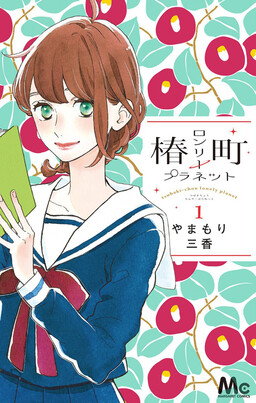
Tsubaki-chou Lonely Planet
Yu's review of Tsubaki-chou Lonely Planet — Fumi Ohara's father's gambling debts leave her without a home; she takes a job as a live-in housekeeper for Akatsuki Kibikino, a young novelist who works from home, has no patience for people, and is completely unprepared for someone like Fumi.
Romance / Slice of Life
A Sign of Affection
Yu's review of A Sign of Affection — Yuki is a deaf college student whose world is small by necessity; when a tall stranger at a train station asks her for help and she cannot explain her deafness in time, a classmate named Itsuomi translates — and Itsuomi is curious about Yuki's world in a way no one usually is.
Romance / Slice of Life
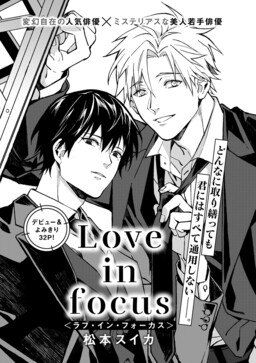
Love in Focus
Yu's review of Love in Focus — Mako moves to a new city after her grandfather's death and joins the photography club; she keeps encountering and photographing Kei, a boy from a different school who seems to appear wherever she points her camera; what starts as coincidence becomes something deliberate.
Romance / Slice of Life
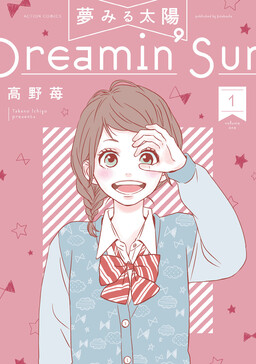
Dreamin' Sun
Yu's review of Dreamin' Sun — Shimana Kameko runs away from home after her father remarries and she feels replaced; she ends up in a large old house where three men live, and the house's owner allows her to stay in exchange for performing household duties; the series follows her slow development through found family, romantic feelings, and the eventual resolution of her family relationships.
Romance / Comedy
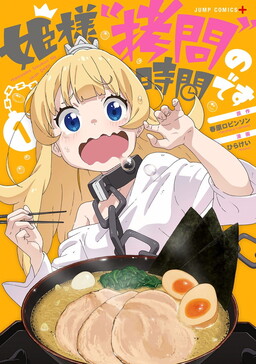
'Tis Time for 'Torture,' Princess
Yu's review of 'Tis Time for 'Torture,' Princess — the Princess is captured by the Demon King's forces; the Three Hell Executives interrogate her to get information about the kingdom's defenses; the 'torture' they use is things she actually enjoys — delicious food, comfortable beds, adorable animals — and she almost gives up information every time.
Romance
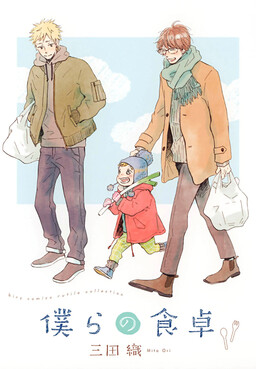
Our Dining Table
Yu's review of Our Dining Table — Yutaka Uedera has a condition that makes eating with others impossible; when he meets the cheerful Tsubasa and his young son Minoru who keep inviting him to share meals, the shared table becomes the site of unexpected healing and connection.
Written by
Yu
Manga Enthusiast from Japan
I grew up in Japan and manga literally saved me during a tough time in elementary school. My English isn't perfect, but my love for manga is real — and I want to share it with you.
Disclosure: This post contains affiliate links. As an Amazon Associate, I earn from qualifying purchases at no extra cost to you.