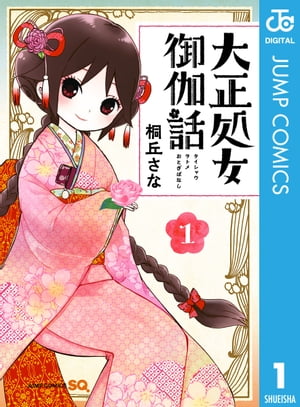
Taisho Otome Fairy Tale Review — A Disinherited 17-Year-Old and a 14-Year-Old Bride He Didn't Ask For Slowly Save Each Other
by Sana Kirioka
Read the first volume. If it doesn't hook you, put it down. It'll hook you.
Buy Taisho Otome Fairytale on Amazon →*Affiliate link — I earn a small commission at no extra cost to you.
My grandmother was born in 1936. Late Showa, not Taisho — but close enough that her stories about her own mother (born 1915) painted a picture of a Japan that's hard to imagine now. Arranged marriages. Debts settled with daughters. The specific gentle hopelessness of being a young woman in a country that hadn't yet decided you were a person.
Taisho Otome Fairy Tale is a romance manga set in that Japan. It is also, more quietly, a manga about being gentle to each other in spite of it.
Quick Take
- 5-volume gentle romance set in 1921 (Taisho 10) about a disinherited young man and the teenage bride sent to live with him to settle her family's debt
- Sana Kirioka's restrained, careful writing turns a premise that sounds uncomfortable into one of the warmer romance manga in English
- Age rating: T (Teen) — see notes about the age gap below; the relationship is gentle and explicitly kept innocent across the entire run
What Is the Age Rating? (And: Should I Be Worried About the Age Gap?)
Yen Press rates the manga T (Teen) — 13+. The rating is accurate.
The question many Western readers ask first is about the age gap. Let me address it directly.
The ages:
- Tamahiko Shima — 17 years old (high school age in modern terms)
- Yuzuki Tachibana — 14 years old at the start of the series
The setup:
- An arranged marriage in 1921 rural Japan
- Yuzuki's family sold her into the marriage to settle a financial debt to Tamahiko's father
- Tamahiko's father intended this as a humiliation/burden for his disinherited son, not as a real marriage
- Tamahiko and Yuzuki agree, on Yuzuki's arrival, that the formal marriage will not be consummated; the agreement holds for the entire series
- The relationship across 5 volumes is gentle, affectionate, and intentionally chaste; the characters develop feelings but the manga does not depict sexual content
- The arc concludes with them choosing to remain together as the kind of couple they have actually become — closer to companions/best friends with romantic care than to a 1920s marriage
The manga's treatment:
- Sana Kirioka writes the relationship as one of mutual care between two lonely people, not as a romance between adults
- Yuzuki's age is depicted honestly; she is a 14-year-old, drawn as such, treated as such, given the interior life of one
- The "fairy tale" of the title is doing thematic work — it signals that the manga is a gentle, idealized version of what such a situation would actually have been in 1921
Historical context:
- The legal marriage age in 1920s Japan was lower than modern Western standards; arranged marriages of teenagers were common, especially in rural areas
- The manga is not glorifying these conditions. It depicts them as the historical reality the characters are navigating. The manga's emotional weight comes partly from the characters' awareness that they are inside a system that does not particularly serve either of them
Reader recommendation:
- If you can read gentle historical romance with a non-modern age gap, told with restraint and without sexual content: this manga is for you
- If the premise as described is something you cannot read around regardless of treatment: this manga is not for you
The T rating is accurate. The age-gap question is real and worth thinking about; the manga handles it with more care than the premise suggests.
What Is Taisho Otome Fairy Tale About? (Synopsis)
1921, Chiba prefecture, rural Japan.
Tamahiko Shima is 17. He is the second son of a wealthy industrialist. He was, until recently, the family's intended heir — his older brother showed no interest in business, but Tamahiko had been studying. Then a traffic accident killed his mother and permanently damaged his right arm. He cannot write. He cannot grip. He cannot, his father informs him, be the family's heir.
His father disinherits him. He is sent to a remote mountain house outside Chiba, given an allowance, and told to live (or die) quietly. The household help is minimal. Visitors are not expected. The expectation is that he will fade.
This is volume 1's opening.
Yuzuki Tachibana is 14. Her father, a once-prosperous merchant who has fallen into debt, has run out of options. He sells Yuzuki to the Shima family as a "bride" for the disinherited son — a way to settle his debts and dispose of an extra mouth. Yuzuki, who has been raised cheerful and dutiful, accepts her circumstances with the kind of composure 1920s Japan demanded of poor teenage girls.
She arrives at Tamahiko's mountain house one cold afternoon, carrying everything she owns in a single bundle.
The series unfolds across five gentle volumes:
- Tamahiko's initial rejection softening into shared meals and quiet companionship
- Yuzuki's relentless cheerfulness revealing itself, gradually, as the survival mechanism it is — she has reasons for the smile, and the manga lets her grief surface in measured beats
- The Shima family, who continue to try to manipulate Tamahiko from a distance, becoming a recurring complication
- The Tachibana family, particularly Yuzuki's younger sister Tsubaki, becoming another thread
- The relationship between Tamahiko and Yuzuki developing — not into a passionate romance, but into the specific intimacy of two lonely people who have decided to be a household
- The decision they make together by the end about what kind of life they actually want, given the limited options the era and their families have offered them
The ending is gentle. The manga finishes complete in 5 volumes. There is a sequel series (Taisho Otome Otogibanashi: After Story) but the main work concludes.
Who Are Tamahiko and Yuzuki?
Tamahiko Shima — 17, disinherited, depressed, smart, kind underneath defensive coldness. The accident that took his mother and his arm has taught him to expect nothing from anyone. Yuzuki's arrival is, initially, unwanted; he sees her as another humiliation his father has arranged. Across the series, Tamahiko learns — slowly and against his own caution — to allow another person to matter to him.
Tamahiko's specific character note: he is not bitter. The series carefully avoids making him a hostile or cruel protagonist. His withdrawal is grief, not anger. When Yuzuki's gentleness reaches him, he does not have a hardened shell to break; he has a wound that gradually permits being seen.
Yuzuki Tachibana — 14, daughter of a fallen merchant, raised on the social conditions of pre-modern Japan's expectation that daughters serve. She is not naively cheerful. The manga is careful to show that her cheerfulness is a chosen response to circumstances that would crush most people. She loves cooking. She loves small everyday tasks. She finds, in Tamahiko's mountain house, the first space she has had that is her own — even if technically it isn't.
Yuzuki's specific character note: she is a real person, not a manic-pixie cheerful prop. The series gives her interior life. She mourns her family situation. She has fears she keeps from Tamahiko. She has decisions she has to make about her own future that the series treats with the seriousness they deserve.
The supporting cast — Tamahiko's older brother Tatsuya (whose own arc is one of the series' surprises); Yuzuki's younger sister Tsubaki (a teenager with her own ambitions); various servants and townspeople. Each gets enough texture to feel real.
Who Is This Manga For?
- Gentle romance readers who like slow-burn, chaste, healing-focused stories
- Historical fiction fans interested in Taisho-era (1912–1926) Japan
- Readers comfortable with non-modern age conventions depicted with care
- Healing-fiction readers — Tamahiko's recovery from grief and Yuzuki's processing of her circumstances are the emotional core
- Not for: readers who want passionate or sexual romance; readers who cannot read past the age premise regardless of treatment
Content Warnings & Age Rating
Age Rating: T (Teen) — 13+ Content Warnings: Arranged marriage of a young teenager (handled with care, marriage not consummated); financial sale of a daughter as historical reality; grief and disability backstories; some background depictions of 1920s social conditions including poverty and gendered expectations
The marriage premise is the most sensitive element. The manga handles it with restraint and care. No sexual content. No graphic violence. No mature visual content.
Story Overview
Volume 1 — Yuzuki's arrival. Tamahiko's initial rejection. The first slow accommodation between them. The mountain house, the cooking, the establishment of household routine.
Volume 2 — Deepening. Yuzuki's family begins to surface as recurring presence. Tamahiko's brother Tatsuya appears for the first time. The town beyond the mountain house enters the story. The first real conversation between Tamahiko and Yuzuki about why each of them is in the situation they are in.
Volume 3 — Complications. The Shima family's continued interest in Tamahiko (specifically, their concerns about his inheritance even after disinheritance). Tsubaki, Yuzuki's younger sister, becomes a recurring character. The series' romantic register starts to crystallize — neither character has named what they feel; the manga signals their growing attachment through small specific moments.
Volume 4 — Choices. Tamahiko and Yuzuki begin to consider the long-term shape of their lives. External pressures intensify. The series' most emotionally weighted volume.
Volume 5 — Resolution. The major plot threads close. Tamahiko and Yuzuki make decisions about who they want to be together and apart. The ending is hopeful within the constraints of 1920s Japan and the characters' specific circumstances.
Art Style
Sana Kirioka's art is clean, gentle, and period-appropriate. Character designs lean toward classic shoujo styling — soft features, expressive eyes. The Taisho-era setting is rendered with care — kimono fabrics, household details, mountain landscape, period architecture.
The faces carry the emotional weight. Tamahiko's slowly shifting expressions across the series — from closed-off to permitting connection — are some of the manga's best visual storytelling. Yuzuki's smile is drawn with specific care; Kirioka can show the difference between her real smile and her duty smile in subtle ways.
The romantic moments are gentle — hand-holding, shared meals, quiet conversations. The manga's most affecting visual moments are not the explicit romantic ones; they are the small panels of two people occupying the same room without performing for each other.
Cultural Context
The Taisho period (1912–1926) was a distinctive moment in Japanese history. Brief, between the Meiji modernization and the Showa militarization. Characterized by cultural flowering — Western-influenced fashion, art deco, jazz arriving from Europe and America — alongside profound social inequality, especially for women and the rural poor. "Taisho roman" (大正ロマン, Taisho romanticism) is a specific aesthetic register in Japanese popular culture: nostalgic, slightly melancholic, period-detailed.
Taisho Otome Fairy Tale is participating in this aesthetic tradition. The setting is doing thematic work — Tamahiko and Yuzuki are inside a moment that looks beautiful from outside but contained limited options for either of them.
The manga also engages with arranged-marriage customs, the legal status of teenage marriage in pre-modern Japan, and the financial transactions that were sometimes called marriages. The manga does not pretend these were better than they were. It depicts them as the world the characters are surviving inside.
The 2021 anime adaptation (by Synergy SP) covers approximately volumes 1–3 of the manga and is generally considered a faithful adaptation. The English-subtitled anime is available on streaming services.
What I Love About It
The first time Tamahiko laughs.
I won't say which chapter exactly. Somewhere in volume 1, after Yuzuki has been at the mountain house for a few weeks, Tamahiko makes a joke. A small one. The joke is mostly directed at himself — at his own situation, his uselessness, the absurdity of his position. Yuzuki responds the way she has been responding to everything: with cheerful warmth. But this time Tamahiko, instead of folding back into the cold distance he has been maintaining, laughs.
The laugh is small. Kirioka draws it in a couple of panels — a half-smile, a small exhale, a moment of his face doing something it hasn't done since the accident. Yuzuki notices. She doesn't make a big deal of it. She just keeps doing what she was doing — sweeping the floor, cooking the rice, whatever the routine was.
What I love about that moment is what it costs Tamahiko to allow. The manga has spent volume 1 establishing that he has shut down. The mountain house was supposed to be where he disappeared. Yuzuki's arrival was supposed to be the next humiliation in a series of humiliations. Instead, in this small panel, she is the person who has made him laugh for the first time in months, and he has decided — by laughing rather than catching himself — to let that happen.
The rest of the series is what they build on top of that one moment. Not a romance, exactly. Not a marriage, exactly. A specific kind of mutual permission. Two people in a house, deciding to let each other matter.
That is the manga's whole project. Taisho Otome Fairy Tale knows that what it is depicting is not, by modern standards, an acceptable circumstance. The manga has not been blind to the situation it has placed its characters in. What it has done instead is show, with care, what it might look like for two people inside a difficult arrangement to choose, in small daily ways, to be gentle to each other anyway.
That choice — repeated across 5 volumes — is the fairy tale of the title.
What English-Speaking Fans Say
Taisho Otome Fairy Tale has a small but devoted English fan base, expanded somewhat by the 2021 anime. Reader response is consistently positive among finishers, with the most common comment being that the manga is much warmer and more carefully written than its premise suggests.
The age-gap question is the most common topic raised in English-language discussions of the manga. The general fan consensus is that the manga handles it carefully, but readers are encouraged to evaluate for themselves before committing.
Comparison points to other "1920s arranged marriage" romance manga (notably Otoyomegatari / A Bride's Story by Kaoru Mori) come up often. Most readers consider Taisho Otome a lighter, more domestic counterpart to Mori's more historically expansive work.
Memorable Scene ⚠️ Light Spoiler
The conversation in volume 3 where Yuzuki tells Tamahiko why she actually came.
The premise of the marriage has been established as financial — Yuzuki's family sold her. The manga has left this as the backdrop for several volumes while building the gentle daily life at the mountain house.
In volume 3, in a quiet scene, Yuzuki tells Tamahiko the parts of her family situation she hasn't told him. The specific debts. What her father has done. What her younger sister Tsubaki is at risk of being subjected to next. The financial calculation that put Yuzuki on the train to the mountain house and the specific things her family is at risk of doing if she ever leaves.
What makes the scene work is Tamahiko's response. He doesn't fix it. He doesn't make a dramatic vow. He doesn't sweep her up in promises. He listens. When she's done, he asks one specific question. The question — and what it allows Yuzuki to say in response — is the manga's clearest articulation of what the two of them are becoming to each other.
They are not exactly a married couple. They are not exactly siblings. They are two people who have decided that each other's worry is worth carrying. The conversation in volume 3 is the moment that decision is articulated. Everything after it is the consequence of having had it.
Similar Manga
| Title | Its Approach | How Taisho Otome Differs |
|---|---|---|
| Otoyomegatari (A Bride's Story) | 19th-century Central Asia, arranged marriages depicted with care | Otoyomegatari is more sprawling historical drama; Taisho Otome is more intimate domestic |
| Snow White with the Red Hair | Historical fantasy romance with patient development | Snow White is fantasy; Taisho Otome is period-grounded |
| Hakushaku Cain (Earl Cain Series) | Taisho/Victorian aesthetic | Cain is gothic; Taisho Otome is gentle |
| Maison Ikkoku | Adult romance with healing-through-companionship | Maison Ikkoku is modern; Taisho Otome is period |
Reading Order / Where to Start
Volume 1. Five volumes; a quick read.
For anime watchers: the 2021 Synergy SP adaptation covers approximately the first three volumes. The manga continues meaningfully past where the anime stops.
Official English Translation Status
Yen Press published all 5 volumes of the main series in English in print and digital. A sequel series (Taisho Otome Otogibanashi: After Story) has begun in Japanese but is not yet available in English. The 2021 anime is available on Crunchyroll.
Pros & Cons
Pros
- Gentle, careful handling of a sensitive premise
- Tamahiko and Yuzuki are both fully realized characters, not props
- 5 volumes complete with a real ending
- Taisho-era setting beautifully rendered
- Healing-fiction at its most patient
Cons
- The age premise will not work for some readers regardless of treatment
- Very slow-paced; readers who want romantic intensity will find it gentle to a fault
- 5 volumes is short — leaves the reader wanting more time with the characters
- Period-piece romance is an acquired taste. It won't land for everyone, especially readers who prefer contemporary settings.
Is Taisho Otome Fairy Tale Worth Reading?
If you can engage with the premise: yes. The manga is one of the gentler healing-fiction romances in English, and the 5-volume length makes it a low-commitment read. The age-gap question is real and worth thinking about; the manga handles it with more care than its setup suggests.
If the premise as described is unworkable for you: skip without guilt. The manga is good but it is not for every reader, and that's a legitimate response to the material.
Format Comparison
| Format | Notes |
|---|---|
| Physical (Yen Press) | All 5 volumes available in English |
| Digital | Available via Yen Press digital, Kindle |
| Anime (Synergy SP, 2021) | 12 episodes covering approximately volumes 1–3; on Crunchyroll |
Where to Buy
Read the first volume. If it doesn't hook you, put it down. It'll hook you.
This post contains affiliate links. If you purchase through these links, I may earn a small commission at no extra cost to you. As an Amazon Associate, I earn from qualifying purchases.
*Affiliate link — I earn a small commission at no extra cost to you.
More Manga You Might Like
Romance
Taisho Otome Fairy Tale
Yu's review of Taisho Otome Fairy Tale — Tamahiko Shima is a sickly, bitter young man exiled to the countryside after an accident; his father sends Yuzuki Tachibana as a bride without asking; she is cheerful, capable, and changes his life; Sana Kirioka's Taisho era romance about someone who stopped hoping being given reason to hope.
Romance / Thriller
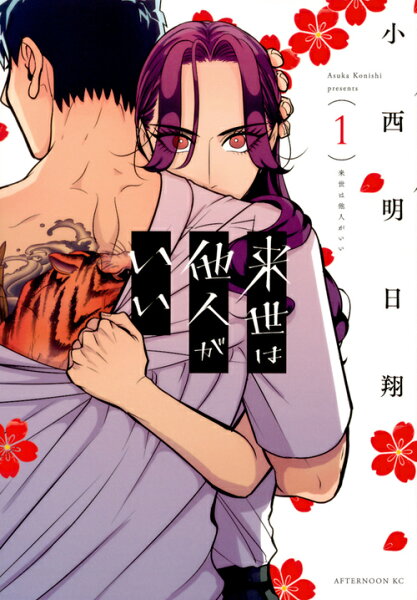
Raise wa Tanin ga Ii
Raise wa Tanin ga Ii follows Yoshino Somei, granddaughter of a yakuza boss, who is placed in an arranged marriage with Miyama Kirishima — another boss's grandson who is terrifyingly, smilingly dangerous. Their courtship is a psychological chess match between two people who understand exactly what they're doing.
Romance / Historical
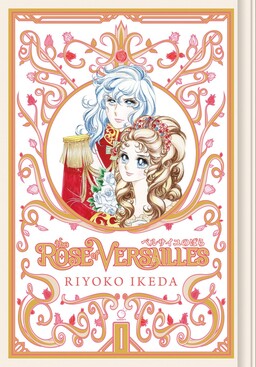
The Rose of Versailles
Yu's review of The Rose of Versailles — Oscar François de Jarjayes is raised by her father as a son and commander of the royal guard; she navigates the court of Louis XVI and Marie Antoinette, torn between duty to the aristocracy and growing awareness of what the common people suffer; as the French Revolution approaches, the world she has served is ending.
Romance
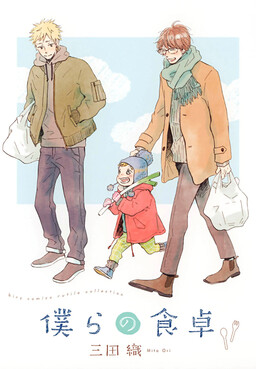
Our Dining Table
Yu's review of Our Dining Table — Yutaka Uedera has a condition that makes eating with others impossible; when he meets the cheerful Tsubasa and his young son Minoru who keep inviting him to share meals, the shared table becomes the site of unexpected healing and connection.
Romance
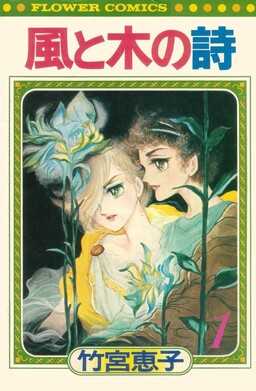
Kaze to Ki no Uta
Yu's review of Kaze to Ki no Uta — set in a 19th century French boarding school, the relationship between Serge, a half-Japanese student with a traumatic past, and Gilbert, a beautiful and sexually promiscuous boy whose behavior conceals something devastating; the manga that essentially created the Boys' Love genre, published between 1976 and 1984.

Romance / Historical
Emma
Yu's review of Emma — Emma is a maid in Victorian England working for a retired governess; William Jones, a young gentleman from an upper-class family, falls in love with her; Victorian class structure stands between them as both an obstacle and a presence in every scene.
Written by
Yu
Manga Enthusiast from Japan
I grew up in Japan and manga literally saved me during a tough time in elementary school. My English isn't perfect, but my love for manga is real — and I want to share it with you.
Disclosure: This post contains affiliate links. As an Amazon Associate, I earn from qualifying purchases at no extra cost to you.