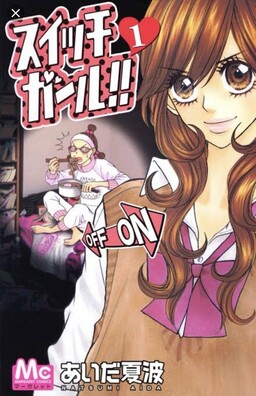
Switch Girl!! Review: At School She's Perfect, At Home She's a Complete Disaster
by Natsumi Aida
Read the first volume. If it doesn't hook you, put it down. It'll hook you.
Buy Switch Girl!! on Amazon →*Affiliate link — I earn a small commission at no extra cost to you.
Quick Take
- The shojo comedy that doubles down on the "performance vs. real self" premise by making both leads perform at school and disaster at home — the symmetry is the series' best choice
- The comedy of two people with mutual knowledge of each other's worst selves trying to maintain dignity in front of each other is executed with consistent wit
- 12 volumes complete; light, fun shojo comedy for readers who want the premise played completely for laughs
Who Is This Manga For?
- Readers who enjoy shojo where the romantic chemistry comes from mutual embarrassment and mutual acceptance
- Anyone who wants comedy romance without serious drama
- Fans of "real self vs. performed self" shojo premises
- Readers who want completed romance with plenty of comedic content throughout
Content Warnings & Age Rating
Age Rating: T (Teen) Content Warnings: Mild romantic content; the comedy involves appearance-based transformation
Light and safe throughout.
Yu's Rating
| Category | Score |
|---|---|
| Story Depth | ★★★☆☆ |
| Art Style | ★★★★☆ |
| Character Development | ★★★★☆ |
| Accessibility for Non-Japanese Readers | ★★★★★ |
| Reread Value | ★★★☆☆ |
Story Overview
Nika Tamiya has two modes: school mode, where she is perfectly presented, socially skilled, and popular; home mode, where she is lazy, disheveled, and eats snacks in decrepit comfort. She keeps these modes completely separate. This is her entire social strategy.
Arata Kamiyama is her neighbor. He also has school mode (impressive, cool) and home mode (barely functional). They discover each other's real selves through the proximity of shared neighborhood space.
The romance develops from a foundation of mutual compromising information — they both know something that would shatter the other's school reputation. The comedy is what happens when two people who have each other's secrets have to deal with actually liking each other.
Characters
Nika Tamiya — Her quality is the specific pride of someone who has invested enormously in her school performance and finds the awareness that someone has seen the other mode both mortifying and, eventually, relieving.
Arata Kamiyama — His quality is the particular calm of someone who maintains his cool school mode through considerable effort and finds it genuinely restful that there's someone who doesn't require the performance.
Art Style
Aida's art handles the visual comedy of the "switch" effectively — the contrast between the immaculate school versions and the home versions is the series' main visual joke and it's rendered with appropriate exaggeration. The expressions during the mutual-embarrassment scenes are the series' best panels.
Cultural Context
Switch Girl!! engages with the Japanese concept of "tatemae" (public face) and "honne" (real self) — a cultural dynamic that the series plays for comedy but with a genuine premise underneath: most people present differently in public and private, and the rarity of someone who has seen both is the intimacy the series is actually about.
What I Love About It
The first time Nika and Arata are together in a situation that requires school mode but they both know neither of them is really like this — and the comedy of two people maintaining their performances for an audience while exchanging glances that acknowledge the mutual knowledge is the series' funniest recurring situation.
What English-Speaking Fans Say
Western readers describe Switch Girl!! as one of the more reliably funny shojo comedies of its era — the symmetrical premise (both leads have the switch) is consistently cited as the better choice than the typical one-switch setup. The mutual-knowledge dynamic is noted as producing more interesting comedy than one-sided romantic discovery.
Memorable Scene ⚠️ Spoiler Warning
The scene where Nika's school mode and Arata's school mode encounter each other in a social situation where everyone else is watching — and both of them maintain their performances while each knows exactly what the other looks like when they drop it — is the series' most precisely comedic moment.
Similar Manga
- Kare Kano — More serious version of the performed-self premise
- Ouran High School Host Club — Performance and real self in a different register
- Say I Love You — Shojo romance with genuine emotional honesty
- My Love Story!! — Comedy romance with unconventional appeal dynamics
Reading Order / Where to Start
Volume 1 — Nika's switches, Arata's discovery, and the establishment of the mutual-knowledge dynamic.
Official English Translation Status
VIZ Media published all 12 volumes. Complete and available.
Pros & Cons
Pros
- The symmetrical switch premise is more interesting than single-switch setups
- The mutual-knowledge comedy is consistently executed
- Light and fun throughout
- The romance is warm and earned without being melodramatic
Cons
- Light on emotional depth — primarily comedy-driven
- The 12-volume structure is slightly long for the premise
- Readers wanting serious romance content will be underserved
Format Comparison
| Format | Notes |
|---|---|
| Individual Volumes | VIZ Media; complete |
| Digital | Available |
Where to Buy
Read the first volume. If it doesn't hook you, put it down. It'll hook you.
This post contains affiliate links. If you purchase through these links, I may earn a small commission at no extra cost to you. As an Amazon Associate, I earn from qualifying purchases.
*Affiliate link — I earn a small commission at no extra cost to you.
More Manga You Might Like
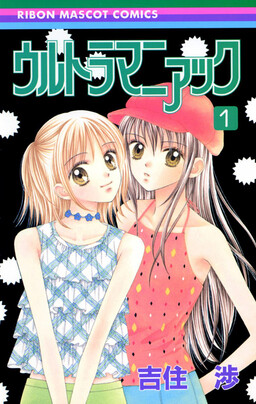
Romance / Comedy
Ultra Maniac
Yu's review of Ultra Maniac — Nina is a witch from the Magic Kingdom studying abroad at a regular Japanese middle school; she is terrible at concealing her magic; Ayu, her only friend who knows her secret, tries to manage the chaos while pursuing her own low-key romance.

Romance / Comedy
Monkey High!
Yu's review of Monkey High — Haruna Aizawa transfers to a new school after her politician father's scandal; she expects to keep her distance from her new classmates; Masaru, the class's short, energetic leader who reminds everyone of a baby monkey, is entirely impossible to keep at a distance.
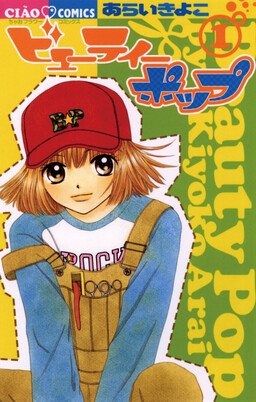
Romance / Comedy
Beauty Pop
Yu's review of Beauty Pop — Kiri Koshiba is a half-asleep hairdressing genius who quietly fixes bullied girls' hair while wanting nothing to do with the spotlight; when she defeats the school's flashy Scissors Project in disguise, she's dragged into a styling team led by the insufferable Narumi, and a one-sided rivalry slowly turns into a ten-years-later marriage.

Romance / Comedy
Absolute Boyfriend
Yu's review of Absolute Boyfriend — Riiko Izawa, repeatedly rejected in romance, accidentally orders a life-size perfect boyfriend robot named Night on a free trial; the trial becomes real feelings, and the question becomes whether love with something that cannot imperfect itself is love at all.
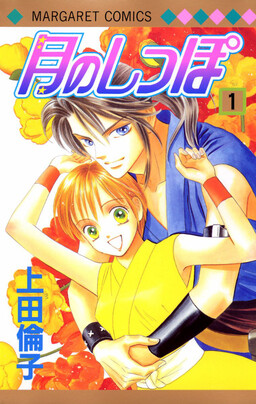
Romance
Tail of the Moon
Yu's review of Tail of the Moon — Usagi is the granddaughter of the leader of Iga and is supposed to be an elite kunoichi, but she keeps failing her ninja exams; she falls for the cold, competent Hanzo; Rinko Ueda's historical ninja romance about an underachieving heroine's determination to improve.

Romance
Cactus's Secret
Yu's review of Cactus's Secret (サボテンの秘密) by Nana Haruta — Miku Yamada has crushed on clueless Kyohei Fujioka since middle school, but when she tries to confess he treats it as a joke and nicknames her 'cactus' for being so prickly around him. A breezy four-volume Ribon romance where the girl makes the first move.
Written by
Yu
Manga Enthusiast from Japan
I grew up in Japan and manga literally saved me during a tough time in elementary school. My English isn't perfect, but my love for manga is real — and I want to share it with you.
Disclosure: This post contains affiliate links. As an Amazon Associate, I earn from qualifying purchases at no extra cost to you.