
Strawberry 100% Review: The Shonen Jump Romance That Defined a Generation's Heartbreak
by Mizuki Takahashi
Read the first volume. If it doesn't hook you, put it down. It'll hook you.
Buy Strawberry 100% on Amazon →*Affiliate link — I earn a small commission at no extra cost to you.
Quick Take
- The Shonen Jump romance that runs from middle school through college and takes its time
- Three-way love polygon that refuses to let you have an easy answer
- Sentimental and earnest in ways that older readers may find nostalgic and younger readers may find fresh
Who Is This Manga For?
- Readers who enjoy classic school romance manga from the Weekly Shonen Jump era
- Those who appreciate love stories that take their time with development
- Anyone who loves bittersweet multi-girl romance structures
- Fans looking for a complete, long-form romantic journey
Content Warnings & Age Rating
Age Rating: T (Teen) Content Warnings: Mild suggestive content, fan service lighter than typical ecchi manga, romantic competition
Generally appropriate for teen readers. Less explicit than modern romance manga.
Yu's Rating
| Category | Score |
|---|---|
| Story Depth | ★★★☆☆ |
| Art Style | ★★★★☆ |
| Character Development | ★★★★☆ |
| Accessibility for Non-Japanese Readers | ★★★★★ |
| Reread Value | ★★★★☆ |
Story Overview
Junpei Manaka is a middle school student with dreams of becoming a film director. One evening he finds himself on the rooftop of the school and sees a beautiful girl jumping down from above — and, very briefly, her strawberry-patterned underwear.
The girl vanishes before he can learn who she is. All he has is that image and the feeling that he has met someone extraordinary.
This encounter shapes Junpei's entire high school and early college life. He meets Tsukasa Nishino — cool, composed, beautiful, the kind of girl who seems completely out of reach. He meets Aya Toujou — thoughtful, kind, a writer who genuinely sees him. He meets Satsuki Kitaoji and others.
The question the series asks — over 19 volumes — is not just who was the mysterious girl on the roof, but who Junpei is, what he wants to make, and who he wants to love.
Characters
Junpei Manaka is a classic indecisive shonen romance protagonist who is more interesting than the type usually gets credit for. His film-making dream is consistently present and occasionally well-developed. His indecision is frustrating but recognizable — he is someone who feels things deeply but acts on them slowly.
Tsukasa Nishino is cold and controlled and developed genuine feelings for Junpei through circumstances she initially resisted. Her arc from unattainable ideal to real person is one of the series' strongest elements.
Aya Toujou is the bookish, gentle girl who loves writing and genuinely understands Junpei's creative ambitions. Many readers felt she was the right choice. The series has opinions on this.
Satsuki Kitaoji is the exuberant, confident girl who pursues what she wants without second-guessing. Her presence adds energy to every chapter she is in.
Art Style
Takahashi's art is characteristic of the Weekly Shonen Jump romance era — detailed backgrounds, expressive faces, and careful attention to character design differentiation. Tsukasa and Aya look and feel different as people, not just as character types.
The art improves over the series' run, with later volumes showing more confident composition and emotional expression.
Cultural Context
Strawberry 100% ran in Weekly Shonen Jump from 2002 to 2005, during a period when the magazine was publishing several serious romance titles alongside its action manga. The series was enormously popular with its target audience — middle and high school boys — and its love polygon structure was influential on subsequent manga.
"Strawberry" in Japanese manga contexts often signals something about innocence and first love — the fruit's appearance in the title is both a plot element and a symbol. The rooftop scene that opens the series belongs to a long tradition of meaningful rooftop encounters in manga romance.
What I Love About It
I read Strawberry 100% when I was in high school, and it hit me harder than I expected. Not because of the romance competition, but because of Junpei's dream.
He wants to make films. He keeps setting that aside for relationships, then coming back to it, then losing it again. The series treats his creative ambition as important even though the story is nominally about romance, and that gave me something to hold onto at a time when I was unsure about my own ambitions.
Also, the Aya scenes are genuinely good. The way she reads Junpei's scripts and responds to them as a writer rather than as a girlfriend is the most interesting relationship dynamic in the manga.
What English-Speaking Fans Say
Western readers who discovered this series tend to have strong opinions about Team Tsukasa vs Team Aya that persist for years. The final answer the series gives is the most common topic of discussion in English-speaking forums.
The consensus is that the series is essential reading for classic Jump romance history, and that it holds up as a character study better than some more modern but flashier alternatives.
Memorable Scene ⚠️ Spoiler Warning
There is a late scene where Junpei reads a manuscript Aya wrote during the years of their separation. Understanding what she put into it, and what she did with those feelings, is the moment where the series earns everything it has built.
Whether you think Junpei makes the right choice after that moment is the question readers argue about.
Similar Manga
- Boys Over Flowers — intense multi-year romance with stronger female protagonist
- Nisekoi — harem romance with a central mystery, later-era but similar setup
- Ichigo Mashimaro — same "strawberry" title but completely different tone; slice-of-life about children
- We Never Learn — more recent multi-girl romance with similar structure but different resolution
Reading Order / Where to Start
Start from Volume 1. The series spans middle school through college and is designed to be read in order. The ending rewards those who read the whole journey.
Official English Translation Status
VIZ Media published all 19 volumes in English. The series is complete. All volumes are available in print and digital.
Pros & Cons
Pros
- Complete journey from middle school through college — satisfying scope
- The love polygon is handled with more care than the genre average
- Aya Toujou is one of the best romantic rivals in shonen manga
- The film-making thread gives the story substance beyond romance
Cons
- Junpei's indecision can be deeply frustrating
- 19 volumes is a significant commitment
- The ending divides readers sharply
Format Comparison
| Format | Notes |
|---|---|
| Physical | VIZ volumes; older edition but complete |
| Digital | Available on Viz platforms and Kindle |
| Omnibus | Not available; standard 19 volumes |
Where to Buy
Read the first volume. If it doesn't hook you, put it down. It'll hook you.
*Affiliate link — I earn a small commission at no extra cost to you.
More Manga You Might Like

Romance / Comedy
Toradora!
Yu's review of Toradora! — a delinquent-looking boy and a tiny, terrifying girl make a deal to help each other confess to the other's best friend, and discover they had the wrong target all along.
Romance
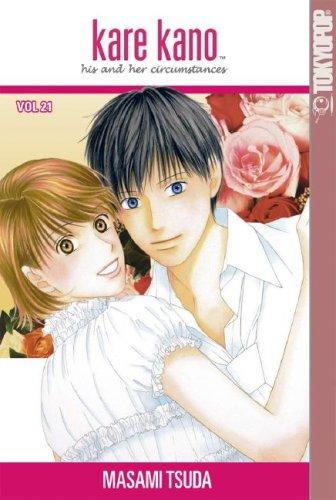
His and Her Circumstances
A review of His and Her Circumstances (Kare Kano) — the 1990s shoujo manga about two high school students whose obsessive need for recognition brings them together and forces them to confront who they really are.
Romance / Comedy
Miyuki
Miyuki follows high school student Masato Wakamatsu who is secretly in love with his neighbor Miyuki Kashima, while also living with his quiet stepsister — who is also named Miyuki.

Romance / Comedy
We Never Learn
Yu's review of We Never Learn — a scholarship student agrees to tutor three geniuses, each brilliant in one field but failing in the subjects they want to pursue, while navigating the increasingly complicated feelings everyone develops.
Romance / Comedy
Ouran High School Host Club
Yu's review of Ouran High School Host Club — a scholarship student at an elite school accidentally breaks a vase and must join the Host Club to pay off the debt, in a manga that satirizes shojo tropes while being genuinely charming.
Romance / Drama
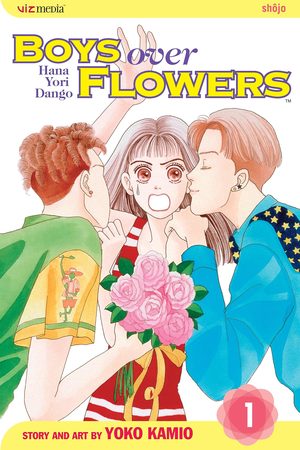
Boys Over Flowers (Hana Yori Dango)
Yu's review of Boys Over Flowers — Tsukushi Makino is a working-class scholarship student at Eitoku Academy, a school ruled by the F4. When she fights back against their bullying instead of breaking, she becomes the obsession of their leader, Tsukasa Domyoji.
Written by
Yu
Manga Enthusiast from Japan
I grew up in Japan and manga literally saved me during a tough time in elementary school. My English isn't perfect, but my love for manga is real — and I want to share it with you.
Disclosure: This post contains affiliate links. As an Amazon Associate, I earn from qualifying purchases at no extra cost to you.