
Stop!! Hibari-kun! Review: The Unfinished Manga That Finished Its Cultural Work Anyway
by Hisashi Eguchi
Read the first volume. If it doesn't hook you, put it down. It'll hook you.
Buy Stop!! Hibari-kun! on Amazon →*Affiliate link — I earn a small commission at no extra cost to you.
The manga ran for four volumes. The conversation it started is still going.
Quick Take
- Hisashi Eguchi's 1981 Jump manga — famous for beautiful art, groundbreaking gender themes, and its notoriously unfinished state
- Kosaku falls for Hibari, who is biologically male; the series treats this as a romantic situation, not a lesson
- 4 volumes that punch far above their page count in cultural influence — Eguchi returned decades later to complete what he left open
Who Is This Manga For?
- Romance comedy readers who want the genre's conventions gently subverted
- Readers interested in gender representation in 1980s manga — the series is early and surprisingly thoughtful
- Eguchi fans who want to see his beautiful character design applied to an emotionally complex setup
- Anyone fascinated by famous unfinished manga and the cultural aftermath of things left incomplete
Content Warnings & Age Rating
Age Rating: T (Teen) Content Warnings: Gender themes handled with comedy but also genuine feeling. Yakuza-adjacent family setting (played for comedy). Mild slapstick violence.
Suitable for teen readers.
Yu's Rating
| Category | Score |
|---|---|
| Story Depth | ★★★★☆ |
| Art Style | ★★★★★ |
| Character Development | ★★★★☆ |
| Accessibility for Non-Japanese Readers | ★★★★☆ |
| Reread Value | ★★★★☆ |
Story Overview
Kosaku Umetsu, recently orphaned, moves in with his late mother's friends — the Oozora family, who happen to be yakuza. The family has four daughters. The eldest, Hibari, is the most beautiful person Kosaku has ever seen.
Then he discovers that Hibari is biologically male.
Kosaku's response — extended, comedic, and increasingly complicated — is the series' engine. He cannot simply move on because Hibari is there, in the same house, every day. He cannot simply accept his feelings because the cultural framework he grew up in has no easy place for them. What he can do is be confused in increasingly elaborate ways while Hibari remains composed, amused, and entirely comfortable with who she is.
The series is careful about this distinction: Kosaku's discomfort is his problem, not Hibari's. Hibari doesn't need to be resolved or explained. She exists, she is who she is, and Kosaku's job — which takes four volumes — is to figure out what that means for him.
Characters
Kosaku Umetsu: A protagonist whose confusion is the comedy and whose slow emotional education is the heart — his arc is about learning that the category he's trying to put Hibari in doesn't fit, and what to do when categories fail.
Hibari Oozora: Composed, beautiful, entirely certain of herself — her certainty is the series' moral center, and the comedy comes from everyone around her being less certain than she is.
Art Style
Eguchi's art is among the finest in 1980s Jump manga — his character designs have a softness and elegance that made Hibari genuinely iconic. The beauty of the art is part of the series' argument: Hibari is drawn as beautiful because she is.
Cultural Context
Stop!! Hibari-kun! ran in Weekly Shonen Jump from 1981 to 1983 — famously incomplete, ending without resolution due to Eguchi's increasing focus on other illustration work. The series was significant both for its gender themes and for the quality of Eguchi's art, which influenced character design in manga and anime for years afterward.
Eguchi returned to the material in 2012 with a continuation, finally giving the story some of the closure it had been denied for three decades.
What I Love About It
I love that Hibari never apologizes.
Most manga in 1981 that featured gender-nonconforming characters treated the character's existence as a problem to be resolved — either through revelation, rejection, or transformation. Hibari is not a problem. She is a person who knows exactly who she is, living in a house with people who are still catching up to that fact. Her composure in the face of Kosaku's confusion is the series' most radical element.
What English-Speaking Fans Say
Known among readers of 1980s Jump manga and in discussions of gender representation in anime and manga history. The series is regularly cited as an early and surprisingly thoughtful engagement with gender identity in a mainstream shonen context. The art's reputation is consistently noted.
Memorable Scene ⚠️ Spoiler Warning
The moment when Kosaku stops trying to categorize Hibari and simply, briefly, sees her as she is — without the framework of his confusion intervening. It lasts one panel. Then the comedy resumes. But that panel is what the series has been building toward.
Similar Manga
| Title | Its Approach | How Stop!! Hibari-kun! Differs |
|---|---|---|
| Ranma 1/2 | Gender-changing protagonist as comedy and romance | Permanent gender identity rather than situational change |
| Kashimashi: Girl Meets Girl | Gender transition as romance and drama | 1980s context, yakuza comedy framing, male rather than female transition |
| Kimagure Orange Road | Romantic triangle with psychic element | Single romantic complication rather than triangle |
Reading Order / Where to Start
Volume 1. The series is short — four volumes — and the character introduction is essential.
Official English Translation Status
Stop!! Hibari-kun! has no official English translation.
Pros & Cons
Pros
- Eguchi's art is genuinely beautiful and has aged exceptionally well
- Hibari's characterization is ahead of its time
- The comedy works alongside the genuine emotional content
- Short — four volumes is a small commitment
Cons
- No English translation
- Famously unfinished (the 2012 continuation helps but doesn't fully close)
- Four volumes is not enough for the story it was setting up
- The pacing issue means things left unresolved — readers used to satisfying endings may find this frustrating
Is Stop!! Hibari-kun! Worth Reading?
For readers interested in 1980s manga and gender representation, yes — this is historically significant and emotionally thoughtful in ways that remain surprising for its era. For readers who need closure, the unfinished nature is a genuine limitation. But as a beautiful, culturally significant four-volume artifact, it delivers more than its page count suggests.
Format Comparison
| Format | Notes |
|---|---|
| Physical | Japanese editions available |
| Digital | Available in Japanese |
| Omnibus | Collected editions available |
Where to Buy
No English release yet. That just means you find it before everyone else does.
*Affiliate link — I earn a small commission at no extra cost to you.
More Manga You Might Like
Romance / Comedy
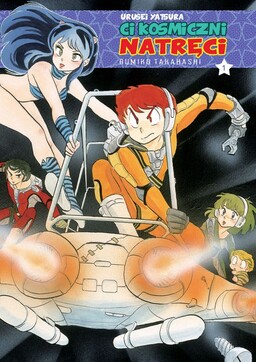
Urusei Yatsura
Yu's review of Urusei Yatsura — Earth is invaded by aliens; a random lottery selects Ataru Moroboshi to compete against the alien princess Lum in a game of tag; he wins by grabbing her horns; his victory declaration is mistaken for a marriage proposal; Lum moves into his house; Ataru continues to chase every other girl he sees while Lum insists on being his wife.
Romance / Comedy
Toradora!
Yu's review of Toradora! — a delinquent-looking boy and a tiny, terrifying girl make a deal to help each other confess to the other's best friend, and discover they had the wrong target all along.
Romance / Comedy
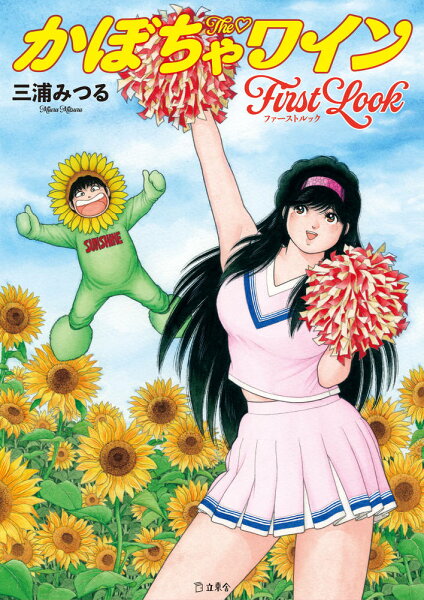
The Pumpkin Wine
The Pumpkin Wine follows the romantic misadventures of a short, ordinary boy in love with an extraordinarily tall, beautiful girl — a high school romance comedy built entirely on the comedy of that contrast and the genuine sweetness underneath it.

Sports / Romance
Jajabako Groomin UP!
Jajabako Groomin UP! follows Yuu Kasugano, a city boy who comes to work at a horse ranch and falls into the world of horse grooming — and into the orbit of the ranch owner's daughter, a tomboyish girl named Chizuru whose relationship with horses is more natural than her relationship with people.
Romance / Comedy
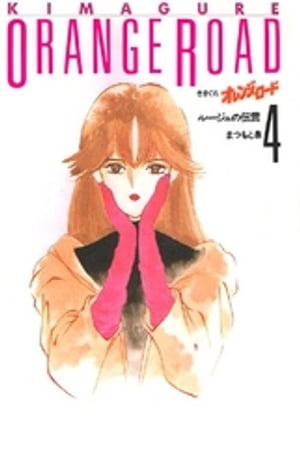
Kimagure Orange Road
Kimagure Orange Road follows Kyosuke Kasuga, a boy with hidden psychic powers who is caught between two girls — the cool, mysterious Madoka he loves and the devoted, energetic Hikaru who loves him — in one of the defining romantic comedies of 1980s manga.

Romance / Comedy
Yuukan Club
Yuukan Club follows six ultra-wealthy high school students who form the Leisure Club and stumble into mysteries, adventures, and romantic entanglements while maintaining an existence so extravagant it functions as its own genre of comedy.
Written by
Yu
Manga Enthusiast from Japan
I grew up in Japan and manga literally saved me during a tough time in elementary school. My English isn't perfect, but my love for manga is real — and I want to share it with you.