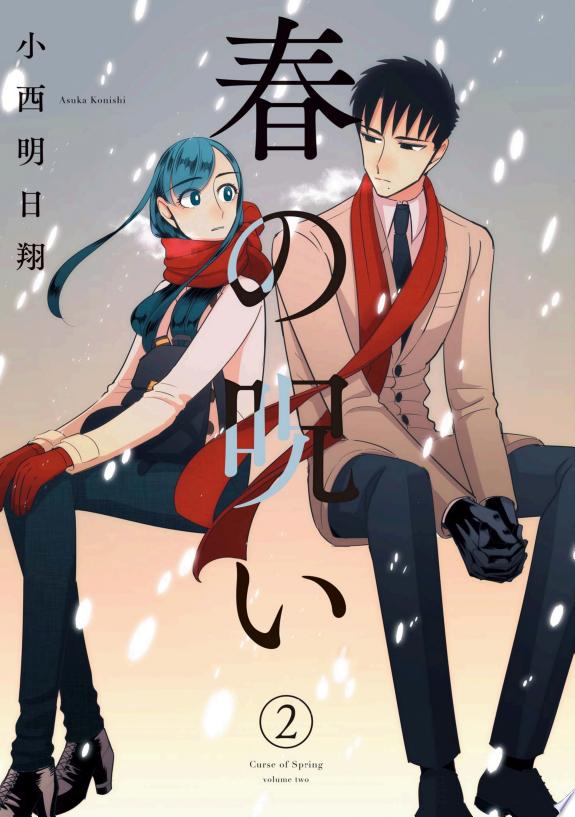
Spring Has Come Review: The Manga About Grief, Guilt, and the Sister Who Was Left Behind
by Shiwasu Yuki
Read the first volume. If it doesn't hook you, put it down. It'll hook you.
Buy Spring Has Come on Amazon →*Affiliate link — I earn a small commission at no extra cost to you.
Quick Take
- A young woman named Chun forms a complicated bond with her late sister's husband
- The manga is less about romance and more about grief, guilt, and what we owe the dead
- Short (4 volumes), complete, and emotionally precise
Who Is This Manga For?
- Readers who want romance manga that takes emotional complexity seriously
- Those who appreciate quiet storytelling with a restrained art style
- Fans of josei drama where the central conflict is internal rather than external
- Readers looking for a complete short series
Content Warnings & Age Rating
Age Rating: T (Teen) Content Warnings: Grief, death of a sibling referenced throughout, complicated family relationships
The series handles its subject matter with care. Nothing graphic, but emotionally heavy.
Yu's Rating
| Category | Score |
|---|---|
| Story Depth | ★★★★★ |
| Art Style | ★★★★☆ |
| Character Development | ★★★★★ |
| Accessibility for Non-Japanese Readers | ★★★★☆ |
| Reread Value | ★★★★☆ |
Story Overview
Chun's older sister Haru was everything — warm, social, beloved. And then she died.
Chun, who always lived in her sister's shadow and felt herself the lesser of the two, is left with two things: her grief, and Nao, the man her sister was going to marry.
Their relationship forms across that shared loss. Nao loved Haru. Chun loved Haru. They are bound together by the same absence, and complicated by the fact that Chun had — before her sister's death — quietly loved Nao herself.
The series is about what you do with that. With a feeling that preceded the tragedy, that makes the grief shameful even to hold.
Characters
Chun is a difficult protagonist to be inside, and the series knows it. Her love for her sister was genuine. Her love for Nao predated her sister's relationship with him. The combination is the series' core knot, and the manga never lets her off easily or condemns her completely.
Nao is a man who loved someone completely and is still learning to live in the world without that person. He is not a romantic lead in the conventional sense. He is a grieving person who meets another grieving person.
Their connection develops slowly and is earned.
Art Style
Shiwasu Yuki's art is soft and somewhat austere. Lines are clean, expressions are restrained but communicative. The visual language matches the emotional register — this is not a flashy manga. It is a precise one.
The character designs distinguish Chun and Haru in ways that matter for the story: Haru, seen in memory and photographs, luminous and open; Chun, quieter, more interior.
Cultural Context
Japanese cultural attitudes around grief and guilt — the idea that certain feelings are shameful and must be suppressed — run through this series. Chun's guilt is partly that she cannot stop feeling something inappropriate at the worst possible time, and partly that she has always measured herself against her sister and found herself lacking.
The title (春の呪い — literally "Spring's Curse") frames the warm season that should mean renewal as something haunted. Spring comes around again. The dead do not.
What I Love About It
I came into Spring Has Come expecting a romance and found something else — something that uses the form of romance to investigate whether some feelings can be untangled from their complicated origins.
Chun does not get easy forgiveness from the narrative. She has to sit with what she feels without the story telling her it is okay. That is rare in manga. Most stories resolve their morally complex premises into clarity. This one stays honest about the knottedness.
What English-Speaking Fans Say
Western readers who discover this series tend to seek it out based on the premise and find it quieter and more emotionally serious than expected. The consensus is that it rewards patience — it is a slow accumulation, not a dramatic arc.
Several readers note that the series is less a romance than a grief study that happens to have romantic elements. That framing is accurate.
Memorable Scene ⚠️ Spoiler Warning
There is a scene where Chun, looking at a photograph of her sister, realizes that she cannot fully remember Haru's voice anymore. The panic of forgetting — even while still inside the grief — is the most honest moment in the series.
It is not about Nao at all. It is about loss and how it changes you even in the process of remembering.
Similar Manga
- A Silent Voice — different structure but same emotional honesty about guilt and connection
- The Ancient Magus' Bride — different genre but similar slow accumulation of feeling
- My Love Story!! — much lighter, but both examine atypical romantic dynamics
- I Think Our Son Is Gay — quieter family drama with emotional precision
Reading Order / Where to Start
Start from Volume 1. The 4-volume series is complete and readable as one arc.
Official English Translation Status
Seven Seas Entertainment published all 4 volumes in English. The series is complete and available.
Pros & Cons
Pros
- Emotionally honest in ways most manga avoids
- Short and complete — a full story in 4 volumes
- Chun is a well-realized character, complicated without being punished
- The grief elements are handled with genuine care
Cons
- Slow pacing; not for readers wanting romantic momentum
- The subject matter is heavy throughout
- The romance element is secondary to the grief element
Format Comparison
| Format | Notes |
|---|---|
| Physical | Seven Seas volumes; good production quality |
| Digital | Available on various platforms |
| Omnibus | Not available |
Where to Buy
Read the first volume. If it doesn't hook you, put it down. It'll hook you.
*Affiliate link — I earn a small commission at no extra cost to you.
More Manga You Might Like

Romance / Drama
We Were There
A high school love story that follows its couple deep into adulthood, through a four-year silence, a mother's suicide, and the slow work of finding each other again.
Romance / Music
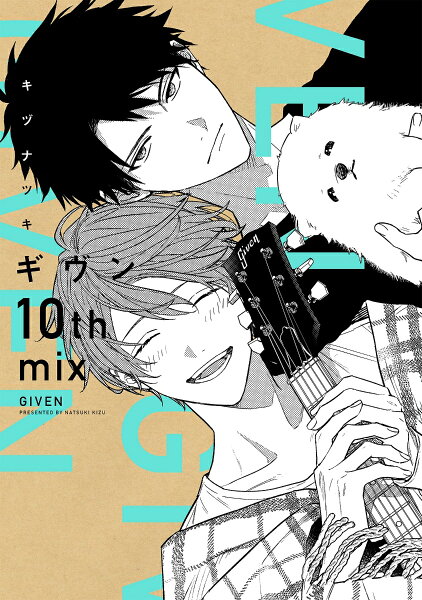
Given
A review of Given, the BL music manga about a guitarist who falls for a beautiful boy with an extraordinary voice and a devastating past.
Romance / Drama
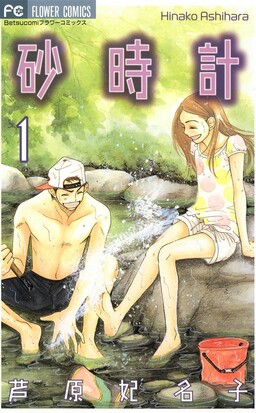
Sand Chronicles
Yu's review of Sand Chronicles — Ann Uekusa moves from Tokyo to rural Shimane after her parents' separation; her mother's death by suicide shapes everything that follows; the series follows Ann from childhood through adulthood with unflinching attention to grief, depression, and the slow work of becoming a whole person.
Romance / Drama
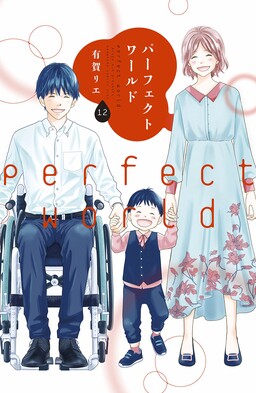
Perfect World
Yu's review of Perfect World — Tsugumi Kawana reconnects with her high school crush Itsuki Ayukawa, now an architect who uses a wheelchair after a spinal cord injury; the manga follows their relationship with honest attention to the practical, emotional, and social dimensions of disability in a romantic relationship.
Romance / Drama
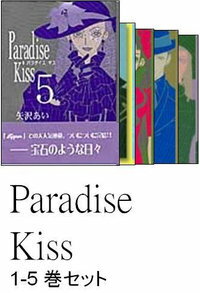
Paradise Kiss
Yu's review of Paradise Kiss — Yukari, a high-achieving student who has never questioned her path, is spotted by fashion students and asked to model their graduation collection; George, the designer, becomes the first person who sees who she might actually be.

Romance / Drama
Nana
Yu's review of Nana — two young women named Nana meet on a train to Tokyo and become inseparable, even as their lives move in opposite directions through love, music, and loss.
Written by
Yu
Manga Enthusiast from Japan
I grew up in Japan and manga literally saved me during a tough time in elementary school. My English isn't perfect, but my love for manga is real — and I want to share it with you.
Disclosure: This post contains affiliate links. As an Amazon Associate, I earn from qualifying purchases at no extra cost to you.