
Heaven's Lost Property Review: An Angeloid Falls from the Sky and Calls a Boy Her Master
by Suu Minazuki
Read the first volume. If it doesn't hook you, put it down. It'll hook you.
Buy Heaven's Lost Property on Amazon →*Affiliate link — I earn a small commission at no extra cost to you.
Quick Take
- The series starts as explicit harem comedy and develops into genuine science fiction — the lore about where Angeloids come from and what "New World" means becomes the series' actual subject
- Ikaros is one of the more affecting robot-learning-emotion characters in manga, which makes the series' emotional late-game work
- 20 volumes complete; M-rated but more substantive than the start suggests
Who Is This Manga For?
- Adult readers who want harem comedy that develops into science fiction
- Anyone interested in "android learning to feel" character arcs
- Fans of action-comedy with M-rated content that has genuine emotional payoff
- Readers who accept the early explicit content because the later material earns it
Content Warnings & Age Rating
Age Rating: M (Mature) Content Warnings: Heavy fan service and explicit sexual content throughout; master/servant dynamic; action violence; science fiction horror elements in later volumes
M rating — the early volumes especially are explicit; the series becomes more serious over time.
Yu's Rating
| Category | Score |
|---|---|
| Story Depth | ★★★★☆ |
| Art Style | ★★★★☆ |
| Character Development | ★★★★☆ |
| Accessibility for Non-Japanese Readers | ★★★☆☆ |
| Reread Value | ★★★★☆ |
Story Overview
Tomoki Sakurai has one dream: a peaceful, peaceful life. He is given the opposite. Ikaros — an Angeloid, a winged android from a civilization beyond the sky — falls from a dimensional gap and imprints on Tomoki as her master. She will do anything he asks. Her power is essentially limitless.
This setup generates early comedy — Tomoki's wishes, Ikaros's literal compliance, the chaos that results — and M-rated content that the early volumes embrace without restraint.
Then the series asks where Angeloids come from. What is the "New World" in the sky? Why does Ikaros have no memories? Why is she classified as a "Pet-class" when her combat capability is among the highest known?
The answers develop over 20 volumes into a science fiction story about the nature of created beings, the civilization that made them, and what it means for something designed not to feel to begin feeling anyway.
Characters
Ikaros — The Angeloid whose emotional development is the series' most compelling content; she begins as a blank weapon and ends as something genuinely different.
Tomoki Sakurai — A protagonist whose apparent shallowness masks a consistent care for the Angeloids that becomes the series' emotional core.
Nymph — A second Angeloid with a different design and personality whose relationship with Ikaros and Tomoki develops the themes.
Art Style
Minazuki's art handles both the M-rated content (explicitly) and the science fiction action (with scale and energy). Ikaros's design — the pink hair, the expressionless face that gradually develops expression — is the visual center of the series' emotional arc.
Cultural Context
Heaven's Lost Property ran in Monthly Shonen Ace from 2007 to 2013. The series participates in the moe science fiction tradition — artificial beings created for service who develop human qualities — while being more explicit and more emotionally ambitious than most examples of the genre.
What I Love About It
Ikaros discovering what emotions feel like from the inside. The series builds to this over many volumes — and the payoff, when it comes, earns the investment. A character designed to not feel is more affecting when she begins to feel than a character who was always capable of it.
What English-Speaking Fans Say
Western readers describe Heaven's Lost Property as a series that rewards readers who get past the early explicit content — specifically noted for the science fiction development being more sophisticated than the premise suggests, for Ikaros being a genuinely affecting character, and for the finale earning the emotional investment. Frequently described as underrated by readers who finish it.
Memorable Scene ⚠️ Spoiler Warning
The scenes where Ikaros processes an emotion for the first time — specifically joy, and then grief — and cannot categorize what is happening to her systems are the series' most emotionally concentrated moments.
Similar Manga
- Chobits — Android and emotions in less explicit register
- Absolute Boyfriend — Android love interest with similar emotional development
- Saikano — Science fiction and emotional devastation
- DearS — Alien devoted servant in similar romantic comedy register
Reading Order / Where to Start
Volume 1 — Tomoki and Ikaros's first encounter. The series takes several volumes to reveal the science fiction depth.
Official English Translation Status
Yen Press published the complete English series. All 20 volumes available.
Pros & Cons
Pros
- Science fiction development is more ambitious than the start suggests
- Ikaros is an affecting character
- Emotional payoff earns the length
- Complete in 20 volumes
Cons
- Early M-rated content is very explicit
- Master/servant dynamic may not suit all readers
- Takes several volumes to show its actual ambition
Format Comparison
| Format | Notes |
|---|---|
| Individual Volumes | Yen Press; complete series |
| Digital | Available |
Where to Buy
Read the first volume. If it doesn't hook you, put it down. It'll hook you.
This post contains affiliate links. If you purchase through these links, I may earn a small commission at no extra cost to you. As an Amazon Associate, I earn from qualifying purchases.
*Affiliate link — I earn a small commission at no extra cost to you.
More Manga You Might Like
Romance / Action
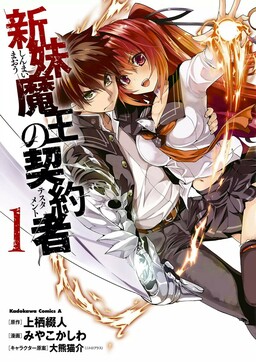
The Testament of Sister New Devil
Yu's review of The Testament of Sister New Devil — Basara Toujou's father remarries and reveals the two new stepsisters are a demon lord's daughter named Mio and a succubus named Maria; Basara, from the Hero Clan, is supposed to be their enemy; instead he forms a master/servant contract with Mio to protect her.
Romance / Fantasy
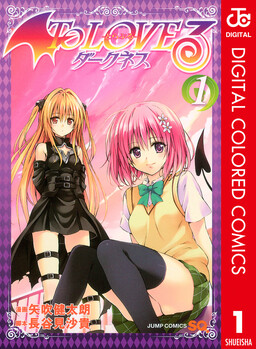
To Love-Ru Darkness
Yu's review of To Love-Ru Darkness — the sequel to To Love-Ru shifts focus to Momo Belia Deviluke's plan to build a harem for Rito by integrating more girls into his life; while Rito remains the protagonist, the series develops Yami, Mikan, and Nemesis as central characters with more serious character arcs than the original series offered.

Romance
Yuuna and the Haunted Hot Springs
Yu's review of Yuuna and the Haunted Hot Springs — Kogarashi Fuyuzora is a young psychic who has spent his life being possessed by spirits; when he moves into a cheap hot springs inn, he discovers it is full of supernatural tenants; the ghost Yuuna, whose unresolved feelings keep her tied to the inn, becomes his central concern.
Romance
Omamori Himari
Yu's review of Omamori Himari — Yuuto Amakawa is a normal high school boy who forgot he comes from a demon-slaying clan; when his protective charm expires on his sixteenth birthday, demons can now sense and target him; Himari, a cat demon (ayakashi) bound by oath to his family, appears to protect him.
Romance
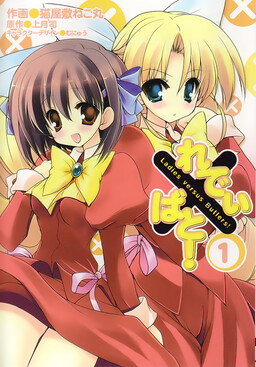
Ladies versus Butlers!
Yu's review of Ladies versus Butlers! — Hino Akiharu enrolls in Hakureiryou Academy's servant-training course, a school that also trains noble ladies; his rough-looking face causes constant misunderstandings; his childhood friend Sernia and the dignified Flaminia both compete for his attention across twelve volumes.
Romance / Comedy
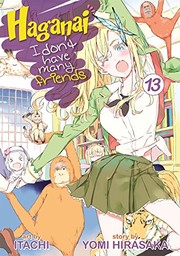
Haganai: I Don't Have Many Friends
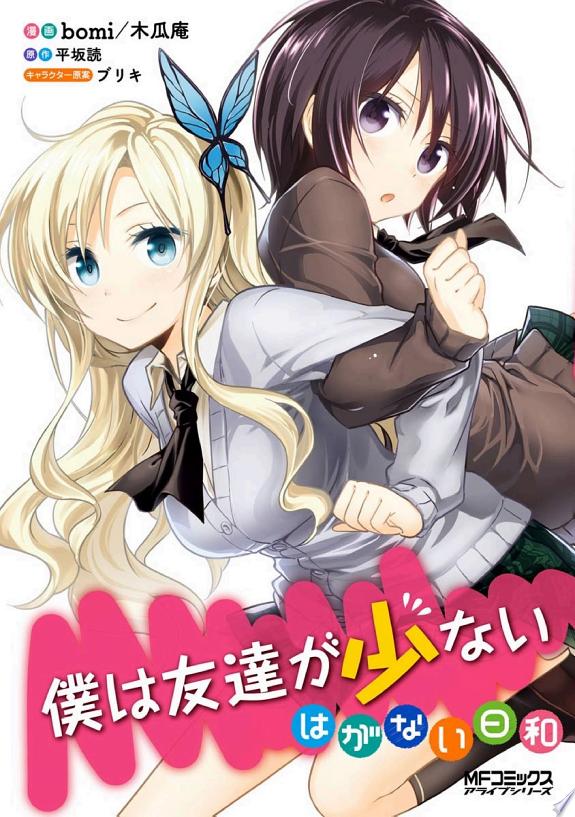
Yu's review of Haganai: I Don't Have Many Friends — Kodaka Hasegawa is a loner because his blond hair makes him look like a delinquent; Yozora Mikazuki is a loner who lost her childhood friend; they accidentally form the Neighbors Club — a club for people who have no friends, to practice friendship; the comedy and eventual romance come from a group of social misfits figuring out what connection means.
Written by
Yu
Manga Enthusiast from Japan
I grew up in Japan and manga literally saved me during a tough time in elementary school. My English isn't perfect, but my love for manga is real — and I want to share it with you.
Disclosure: This post contains affiliate links. As an Amazon Associate, I earn from qualifying purchases at no extra cost to you.