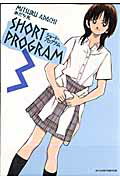
Short Program Review: Adachi's Short Stories That Land Harder Than His Novels
by Mitsuru Adachi
Read the first volume. If it doesn't hook you, put it down. It'll hook you.
Buy Short Program on Amazon →*Affiliate link — I earn a small commission at no extra cost to you.
What if two volumes could tell you more about love than most series tell you in twenty?
Quick Take
- Adachi's short story collection — each story is 15-30 pages and contains a complete emotional world
- The precision of his storytelling is more visible in short form than in his longer series
- Some of the best individual chapters in all of romance manga, concentrated and unhidden
Who Is This Manga For?
- Readers of Adachi's longer works (Touch, H2, Cross Game) who want to understand his craft
- Fans of short story manga in the tradition of Taniguchi or Urasawa's short work
- Romance readers who want stories that end before they explain too much
- Anyone who has ever almost said something and didn't — Adachi's great subject
Content Warnings & Age Rating
Age Rating: T (Teen) Content Warnings: Light romance. Some stories deal with loss, regret, and missed connection. Nothing graphic.
Appropriate for all ages.
Yu's Rating
| Category | Score |
|---|---|
| Story Depth | ★★★★★ |
| Art Style | ★★★★★ |
| Character Development | ★★★★★ |
| Accessibility for Non-Japanese Readers | ★★★★☆ |
| Reread Value | ★★★★★ |
Story Overview
Short Program does not have a single story. It has many stories — each complete, each built around a single moment of human connection or disconnection.
The typical Adachi short story: two people. A situation that brings them into proximity. A moment when something could happen or not happen. The story ends just after or just before that moment, with enough ambiguity that the reader has to decide what they saw.
The subjects range across Adachi's obsessions — baseball, youth, the specific feeling of being sixteen in Japan in the 1980s — but the underlying structure is consistent: the space between what people feel and what they say, and what happens in that space.
Characters
Short Program doesn't have recurring characters across stories — each story has its own cast, used completely within their few pages and then put down. The skill is in how quickly Adachi establishes them: a handful of panels, a few lines of dialogue, and the reader knows exactly who these people are.
Art Style
Adachi's art in short form is the same as in his long series — the same clean lines, the same ability to communicate emotion through minimal expression, the same sports sequences that function as emotional metaphors — but concentrated. The compression reveals the craft.
Cultural Context
Adachi has said that short stories are harder than long stories because there is nowhere to hide. Short Program demonstrates this — the stories work because every element is necessary, and they are set in the specific world of Japanese youth in the Showa era with the same accuracy his longer works achieve.
What I Love About It
I love what Adachi does with the moment just before a confession.
His stories are full of these moments — the moment when someone is about to say something true, when the gap between feeling and language is about to close. Most of his stories end without the gap closing. The thing doesn't get said. And the story's last panel is left with just enough light in it that you can decide whether that was a tragedy or a reprieve.
This is the most honest thing about his work: he knows that in life, most of those moments pass unsaid. And he makes that fact feel like the story's completion rather than its failure.
What English-Speaking Fans Say
Not known in English-speaking markets because it hasn't been translated. Among readers of Adachi's English-available works — Touch (if they can find it), Cross Game, Katsu! — Short Program is cited as what they would most want to read if it existed in English. The short form is considered his purest expression of what he does.
Memorable Scene ⚠️ Spoiler Warning
A story about two people who have known each other for years without ever saying what they meant — who in the final pages realize they have run out of time to say it — and who respond to this realization not with tragedy but with a specific, almost peaceful acceptance. The last panel is one of the most quietly devastating images in Adachi's work.
Similar Manga
- Touch: Adachi's most celebrated long work — the same sensibility over 26 volumes
- Cross Game: His most recent major work — available in English
- H2: His other great baseball romance — similar warmth and precision
Reading Order / Where to Start
Volume 1. The stories are independent so any order works, but the first volume contains some of the collection's finest work.
Official English Translation Status
Short Program has no official English translation.
Pros & Cons
Pros
- Adachi's purest and most concentrated storytelling
- Complete in 2 volumes — a short commitment for a major reward
- Individual stories can be recommended easily
- Reveals the craft that makes his longer works work
Cons
- No English translation
- The compression may frustrate readers who want longer character development
- Some stories are more effective than others
Format Comparison
| Format | Notes |
|---|---|
| Physical | Japanese editions available |
| Digital | Available in Japanese |
| Omnibus | Collected edition available |
Where to Buy
No English release yet. That just means you find it before everyone else does.
*Affiliate link — I earn a small commission at no extra cost to you.
More Manga You Might Like
Romance / Drama
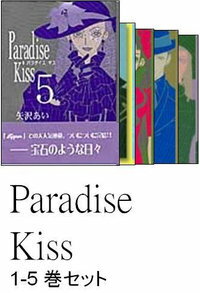
Paradise Kiss
Yu's review of Paradise Kiss — Yukari, a high-achieving student who has never questioned her path, is spotted by fashion students and asked to model their graduation collection; George, the designer, becomes the first person who sees who she might actually be.
Romance
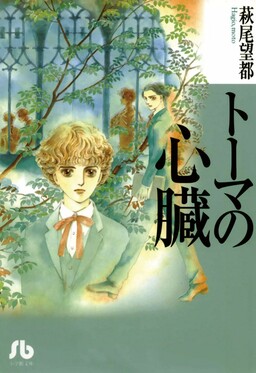
The Heart of Thomas
Yu's review of The Heart of Thomas — Thomas Werner falls from a bridge at a European boarding school, leaving behind a letter declaring his love for Juli; Juli, the student Thomas adored, must now live with having rejected Thomas's love, while a new student who resembles Thomas arrives at the school.

Romance / Drama
Fruits Basket
Yu's review of Fruits Basket — a girl who has lost everything moves in with a family cursed to transform into animals of the Chinese zodiac, and slowly melts the ice that generations of abuse built around their hearts.
Romance / Sports
Rough
Rough follows two high school students from rival families of traditional confectionery makers who both swim competitively — a typically Adachi romance where the sport and the relationship develop at the same careful, restrained pace.
Romance / Drama
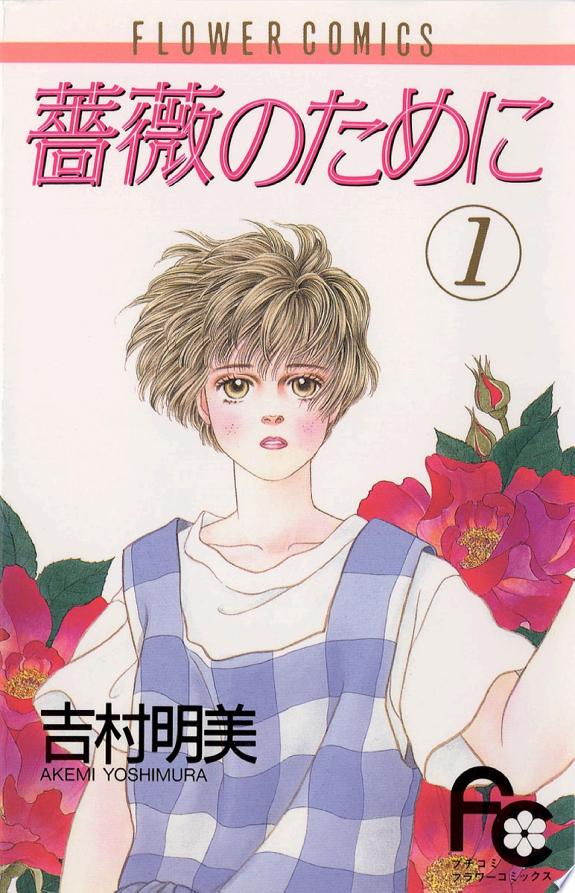
Bara no Tame ni
Bara no Tame ni follows Yuri Makurano, a plain, orphaned girl who learns her actress 'mother' is alive — along with three glamorous half-siblings — and a buried secret about her real parentage. An award-winning Shogakukan shojo drama by Akemi Yoshimura.
Romance / Drama
Video Girl Ai
Yu's review of Video Girl Ai — Yota Moteuchi is heartbroken after the girl he loves confesses her feelings to his best friend; he rents a video from a magical shop and the girl on the tape, Ai Amano, steps out of his television — damaged by his worn VCR, with a personality different from what was intended, and developing real feelings he wasn't supposed to create.
Written by
Yu
Manga Enthusiast from Japan
I grew up in Japan and manga literally saved me during a tough time in elementary school. My English isn't perfect, but my love for manga is real — and I want to share it with you.