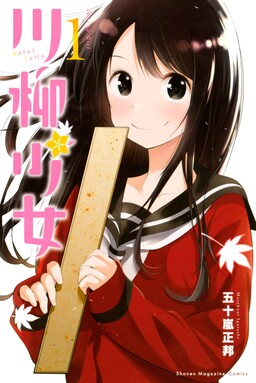
Senryū Girl Review: A High School Romance Where the Girl Speaks Only in Seventeen Syllables
by Masakuni Igarashi
Read the first volume. If it doesn't hook you, put it down. It'll hook you.
Buy Senryū Girl on Amazon →*Affiliate link — I earn a small commission at no extra cost to you.
I read Senryū Girl across the year and a half its English volumes were dropping at semi-regular intervals, and the experience of waiting for each volume was part of what I came to love about it. This is a manga that does very little in any one chapter — by design — and slowly accumulates into something quietly perfect.
I'm Yu. I am a sucker for high school romance manga that respect their characters enough not to manufacture conflict. Senryū Girl is one of the best examples of that mode I've read this decade.
Quick Take
- Masakuni Igarashi's Senryū Girl (川柳少女) ran in Kodansha's Weekly Shōnen Magazine from October 19, 2016 to April 22, 2020 — 173 chapters across 13 tankōbon volumes.
- Kodansha USA's English edition is complete; all 13 volumes available in print and digital.
- Rated T (Teen) — chaste high school romance, mild comedic embarrassment, no explicit content.
Story Overview
Nanako Yukishiro is a first-year high school girl who communicates only through senryū — seventeen-syllable comic poems, written by hand on small paper cards (tanzaku) and handed to people. She does not speak otherwise, by choice; the manga reveals her reasons slowly and gently across the run. She is also the daughter of a family with a strong senryū lineage, and the form is a kind of inheritance.
Eiji Busujima is also a first-year. He looks like a delinquent — shaved head, scary face, intimidating posture — and people cross the street to avoid him. He is, in actual personality, a sincere and slightly soft-spoken kid who reformed his ways before high school and is now genuinely trying to be the better person he wants to be. He meets Nanako in the school's senryū club. He starts trying to write senryū back to her. Most of his early poems are not good. He keeps trying.
The series unfolds across three years of high school. New club members join — Koto Hanakai, the rival poet who pushes Nanako to take her own writing seriously; Kotori Shijima, the brilliant, lazy senpai; Amane Katagiri, the cool transfer student — and the cast slowly becomes a small ensemble of teenagers writing poetry together while figuring out who they are.
The romance between Nanako and Eiji develops at the pace of senryū itself: slowly, with restraint, in seventeen-syllable increments. The final volumes pay off both the relationship and the broader club arc with a graduation that earns its sentimentality.
Characters
Nanako Yukishiro — Quiet, talented, kind. The senryū device could easily reduce her to a gimmick; Igarashi doesn't let it. Her interior life is rich, and her poems are her voice — not a cute substitute for one. The reveal of why she stopped speaking aloud lands carefully.
Eiji Busujima — A reformed delinquent in a face that does not advertise the reform. His real personality is gentle, and his struggle to grow into the person he wants to be — through poetry he is bad at, slowly — is the show's quietest emotional engine.
Koto Hanakai — The early "rival" character. A skilled senryū writer from outside Nanako's school who joins their club. Her arc develops her from external pressure into actual friend; one of the manga's most patient relationships.
Kotori Shijima — The senior. Talented, slack, the cynical-counterweight character in the cast who turns out, late in the run, to have a deeper investment in poetry than her demeanor suggested.
Amane Katagiri — The cool, popular transfer student whose entry expands the cast into its final shape. The series uses her arc to think about how friendships shift when the group geometry changes.
What I Love About It
What I love about Senryū Girl is that it refuses, for thirteen volumes, to manufacture conflict.
The standard high school romance manga problem is that the writers need to fill 173 chapters and the characters keep wanting to just be together. The solution is usually misunderstandings — fake love rivals, miscommunication, dramatic reveals — that sustain artificial tension. Igarashi does not do this. There are rivals and misreads, but they are small, ordinary, and resolve as people resolve them in real life: by talking, slowly, badly, with patience.
The senryū form is the whole vehicle for this. Seventeen syllables is not enough to lie; it is barely enough to tell the truth. Watching Eiji's poems improve, very slowly, across three years of high school is the romance arc. Watching Nanako's poems shift, very slowly, from the work of someone hiding to the work of someone wanting to be seen — is the same arc, from the other direction.
The book is what high school romance manga look like when the author trusts the reader to find quiet rewarding.
Memorable Scene ⚠️ Spoiler Warning
Late in the run, in the last volumes' graduation arc, Nanako gives Eiji a senryū that is, finally, not framed as anything other than what it is. There are no jokes in it. No misdirection. No coded language. Seventeen syllables, plain meaning, to him directly.
Igarashi has spent thirteen volumes earning this moment by withholding it. Every previous poem has had some plausible deniability — Nanako could be writing about senryū, about the season, about an idea. This one cannot be read any other way. Eiji reads it. Eiji looks at her. The next panel is the two of them sitting together without needing to say anything else.
It is the only direct love confession in the manga, and it is, of course, exactly seventeen syllables long.
Pros & Cons
Pros:
- A 13-volume complete English-licensed run with all the chapters intact.
- The senryū device is sustained for the entire series and never feels forced.
- The supporting cast is fully developed; the club isn't decorative.
Cons:
- Slow. People who want plot tension every chapter will give up by volume 3.
- 173 chapters is genuinely long for a story this restrained; some mid-run arcs feel patient even by the manga's own standards.
- The senryū device requires a willingness to read short poems carefully; readers who skim Japanese poetry will miss what the book is doing.
Is Senryū Girl Worth Reading?
Yes, if you want a quiet, kind, complete high school romance manga that respects its characters. Skip if you need plot stakes; this is the opposite of plot-driven.
Who Is This Manga For?
- Komi Can't Communicate readers who want a similar "high school + communication device" premise played as romance.
- Readers tired of manufactured shoujo / shoujo-adjacent misunderstanding plots.
- Anyone interested in senryū as a form; the manga is a soft introduction to it.
- Wholesome-romance manga readers (Horimiya, My Love Story!!, Yamada-kun and the Seven Witches) looking for the next title.
Official English Translation Status
Kodansha USA's English edition of Senryū Girl is complete in 13 volumes, released starting in 2019. Available in print and through Kodansha's digital platforms (Kindle, Comixology, etc.).
Where to Buy
Kodansha USA's English print and digital editions are the recommended way to read this in English; the print volumes are still in circulation.
Browse Senryu Girl on Amazon →
This post contains affiliate links. If you purchase through these links, I may earn a small commission at no extra cost to you. As an Amazon Associate, I earn from qualifying purchases.
*Affiliate link — I earn a small commission at no extra cost to you.
More Manga You Might Like

Romance
Shikimori's Not Just a Cutie
Yu's review of Shikimori's Not Just a Cutie — Izumi is a boy with the worst luck who is dating Shikimori, a girl who is sweet and feminine most of the time; but when Izumi is in danger, Shikimori shifts into a cool, intense mode that is completely different from her usual self, and which Izumi finds extremely appealing.
Romance / Comedy
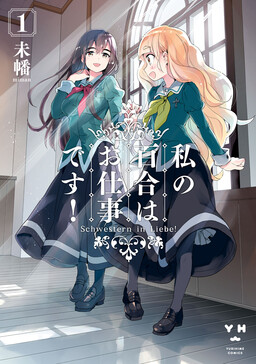
Yuri Is My Job!
Yu's review of Yuri Is My Job! — Hime Shiraki's entire identity is performing perfect femininity for public approval; working at Liebe Girls Academy café requires her to act out romantic yuri relationships with her coworkers for customers; her assigned partner Mitsuki hates her genuinely, and Hime begins to develop feelings that are not performance.
Romance / Comedy
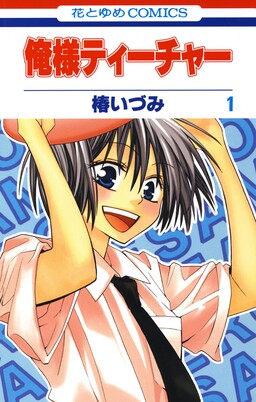
Oresama Teacher
Yu's review of Oresama Teacher — former gang leader Mafuyu Kurosaki transfers to Midorigaoka Academy determined to become a proper lady; her homeroom teacher Takaomi Saeki is her childhood friend and used to be a delinquent himself, and he immediately destroys all her plans.
Romance / Comedy
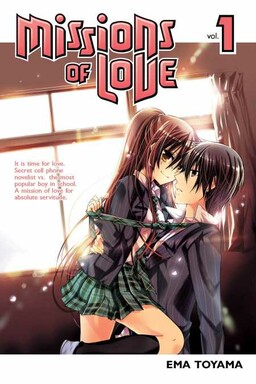
Missions of Love
Yu's review of Missions of Love — Yukina Himuro is a popular anonymous shojo manga creator who lacks real romantic experience; she discovers a classmate's secret and uses it to blackmail him into performing romantic gestures for her research; the arrangement predictably becomes something more complicated.

Romance / Comedy
LDK
Yu's review of LDK — Aoi Nishimori's apartment floods and she ends up temporarily sharing her neighbor Shusei Kugayama's apartment; Shusei is the school's most unapproachable boy who has never shown interest in anyone; the cohabitation produces a relationship that neither expected.

Romance / Comedy
Girlfriend, Girlfriend
Yu's review of Girlfriend, Girlfriend — Naoya Mukai, who has finally started dating his long-time crush Saki, falls in love with a second girl, Nagisa, and proposes that they all date simultaneously; his complete honesty about his feelings collides with everyone's reaction to them in this shamelessly energetic romantic comedy.
Written by
Yu
Manga Enthusiast from Japan
I grew up in Japan and manga literally saved me during a tough time in elementary school. My English isn't perfect, but my love for manga is real — and I want to share it with you.
Disclosure: This post contains affiliate links. As an Amazon Associate, I earn from qualifying purchases at no extra cost to you.