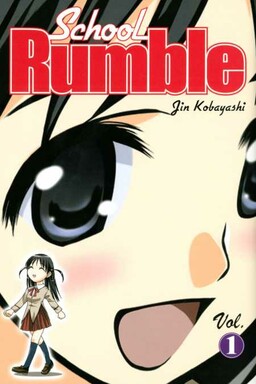
School Rumble Review: A Delinquent Loves a Girl Who Loves a Boy Who Loves Curry
by Jin Kobayashi
Read the first volume. If it doesn't hook you, put it down. It'll hook you.
Buy School Rumble on Amazon →*Affiliate link — I earn a small commission at no extra cost to you.
Quick Take
- The romantic comedy manga built on the most specifically absurd love triangle in the genre — and then expanded to a polygon involving dozens of characters, all somehow coherently managed
- Harima's specific form of lovesick delinquent — massive, intimidating, writing manga about his feelings, completely unable to express himself — is one of manga's great comedic creations
- 22 volumes complete; the definitive school romantic comedy ensemble manga
Who Is This Manga For?
- Readers who want romantic comedy manga with a very large ensemble that manages to give every character a distinct comedic identity
- Anyone who enjoys the escalating absurdity of a love polygon where nobody is actually communicating
- Fans of school comedy manga from the 2000s that defined the genre
- Readers who want completed romance comedy with genuine emotional moments beneath the chaos
Content Warnings & Age Rating
Age Rating: T (Teen) Content Warnings: Slapstick violence — Harima is occasionally violent in the comedic tradition; the love polygon produces increasingly elaborate misunderstandings; some mild romantic content; the comedy occasionally reaches deeply absurd territory
The T rating is accurate. Warm, funny, and appropriate for most readers.
Yu's Rating
| Category | Score |
|---|---|
| Story Depth | ★★★☆☆ |
| Art Style | ★★★★☆ |
| Character Development | ★★★★☆ |
| Accessibility for Non-Japanese Readers | ★★★★★ |
| Reread Value | ★★★★☆ |
Story Overview
Tenma Tsukamoto wants to confess to Karasuma. She has wanted to confess to Karasuma for the entire series. Karasuma is focused on curry. He likes curry.
Kenji Harima is a delinquent. He is large, intimidating, and hopelessly in love with Tenma. He cannot confess. He tries to confess in indirect ways — he writes manga, he does heroic things she misinterprets, he builds elaborate schemes that always go wrong. He expresses his feelings to her younger sister Yakumo, who misunderstands them as feelings for herself.
The series follows this structure across a cast that expands to include most of the class: each with their own romantic targets, their own misunderstandings, their own comedic logic. The ensemble is managed with the care of someone who genuinely likes all of their characters — nobody in School Rumble is just background.
Characters
Kenji Harima — His specific combination of intimidating physical presence and hopeless romantic longing — expressed through manga rather than words — is the series' most consistently funny element. He is drawn as a complete person despite being primarily comedic.
Tenma Tsukamoto — Her specific obliviousness — complete, cheerful, and not the product of stupidity but of being entirely focused on her own goal — is the series' primary comedic engine. She is somehow also genuinely warm and likeable.
Karasuma — His specific relationship to curry and his equally specific non-relationship to romantic feeling is one of manga's most effective comic presences through absence.
Art Style
Kobayashi's art is clean and expressive — the large cast is individually recognizable through distinctive character designs. The comedic timing is handled with effective panel rhythm. The visual humor depends on reading character expressions accurately, and the art delivers this consistently.
Cultural Context
School Rumble ran in Weekly Shonen Magazine from 2002 to 2008 and was among the most popular romantic comedies of its era. Its ensemble approach — managing dozens of characters in simultaneous romantic confusion — influenced the subsequent decade of school romantic comedy manga. The anime adaptation was widely watched internationally.
What I Love About It
The chapters from Harima's perspective. Watching someone of his physical type — a delinquent manga artist with a face that terrifies people — be completely unable to express what he feels to a girl who cannot see what's in front of her is both very funny and occasionally genuinely moving. His manga-within-the-manga sequences, where he draws his feelings because he cannot say them, are the series' most emotionally honest moments.
What English-Speaking Fans Say
Western readers who read School Rumble in the Del Rey era describe it as one of the most densely populated romantic comedies they've encountered — the cast management is cited as impressive for producing distinct characters rather than types. Harima is consistently described as one of the most endearing male leads in romantic comedy manga despite being simultaneously the most outwardly intimidating.
Memorable Scene ⚠️ Spoiler Warning
The sequence late in the series where the love polygon's central question — whether Tenma will ever actually confess and what happens when she does — is finally answered, and what Harima does in response, is the series' most emotionally precise moment and makes the preceding 20 volumes of misunderstanding feel deliberate rather than stalling.
Similar Manga
- Love Hina — School romantic comedy with ensemble, similar era
- Nisekoi — Love polygon romantic comedy, shonen magazine
- My Little Monster — School romance with comedic misunderstanding
- Toradora — School romance with genuine emotional development
Reading Order / Where to Start
Volume 1 — Tenma's plan to confess, Harima's competing plan, and the establishment of the central triangle.
Official English Translation Status
Del Rey Manga published the complete 22-volume run. All volumes available (check for current availability).
Pros & Cons
Pros
- One of the best-managed ensemble romantic comedies in manga
- Harima is a genuinely great comedic protagonist
- The escalating absurdity is consistently funny
- Complete with genuine emotional moments beneath the chaos
Cons
- Del Rey's editions are out of print — availability varies
- The love polygon structure means no romantic resolution for most arcs
- 22 volumes of sustained misunderstanding requires patience
Format Comparison
| Format | Notes |
|---|---|
| Individual Volumes | Del Rey Manga; 22 volumes (check availability) |
| Digital | Limited availability |
Where to Buy
Read the first volume. If it doesn't hook you, put it down. It'll hook you.
This post contains affiliate links. If you purchase through these links, I may earn a small commission at no extra cost to you. As an Amazon Associate, I earn from qualifying purchases.
*Affiliate link — I earn a small commission at no extra cost to you.
More Manga You Might Like
Romance / Comedy
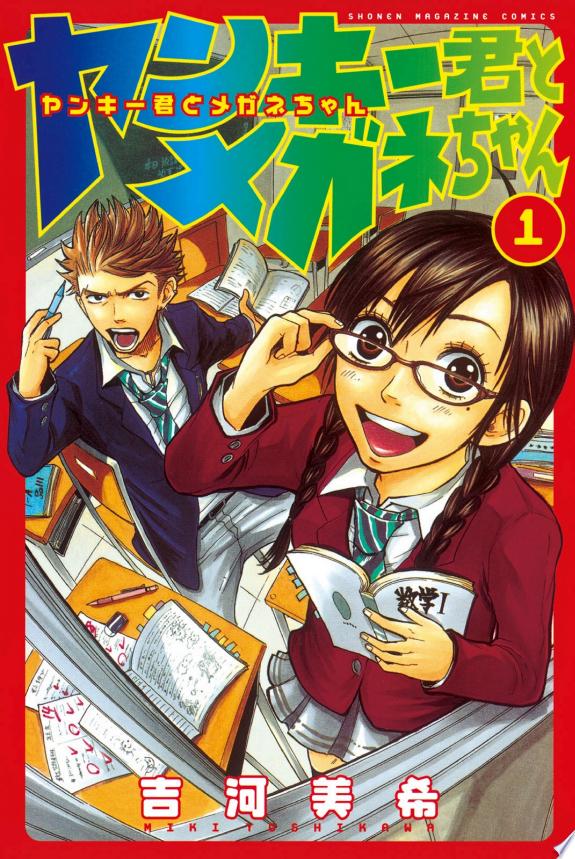
Yankee-kun to Megane-chan
Yankee-kun to Megane-chan follows Daichi Shinagawa, a delinquent who wants to be left alone, and Hana Adachi, the class representative with a secret — a comedy about two people who are both performing a role they didn't choose.
Romance / Comedy
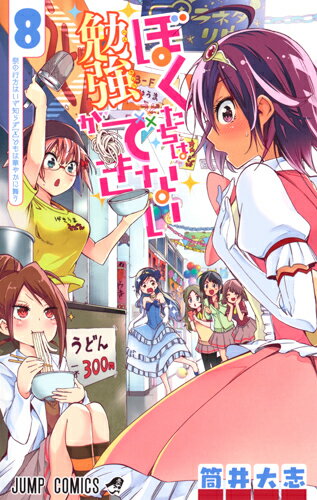
We Never Learn
Yu's review of We Never Learn — a scholarship student agrees to tutor three geniuses, each brilliant in one field but failing in the subjects they want to pursue, while navigating the increasingly complicated feelings everyone develops.

Romance / Comedy
Kaguya-sama: Love Is War
Aka Akasaka's 28-volume romantic comedy (2015–2022) about Miyuki Shirogane and Kaguya Shinomiya, two student council officers at Japan's most elite high school who are both in love and both certain that whoever confesses first loses. Complete in English from VIZ Media.
Romance / Comedy
Toradora!
Yu's review of Toradora! — a delinquent-looking boy and a tiny, terrifying girl make a deal to help each other confess to the other's best friend, and discover they had the wrong target all along.
Romance / Comedy
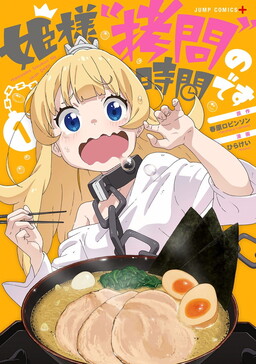
'Tis Time for 'Torture,' Princess
Yu's review of 'Tis Time for 'Torture,' Princess — the Princess is captured by the Demon King's forces; the Three Hell Executives interrogate her to get information about the kingdom's defenses; the 'torture' they use is things she actually enjoys — delicious food, comfortable beds, adorable animals — and she almost gives up information every time.

Romantic Comedy
Kaguya-sama: Love Is War
Yu's review of Kaguya-sama: Love Is War — 28 volumes about two geniuses who are in love but won't admit it. Funnier than it has any right to be, smarter than it looks, and one of the most satisfying romance arcs in manga history.
Written by
Yu
Manga Enthusiast from Japan
I grew up in Japan and manga literally saved me during a tough time in elementary school. My English isn't perfect, but my love for manga is real — and I want to share it with you.
Disclosure: This post contains affiliate links. As an Amazon Associate, I earn from qualifying purchases at no extra cost to you.