
Samurai Harem Review: The Boy Who Fights Like His Ancestors and Has No Idea What to Do About the Rest
by Yu Minamoto
Read the first volume. If it doesn't hook you, put it down. It'll hook you.
Buy Samurai Harem: Asu no Yoichi on Amazon →*Affiliate link — I earn a small commission at no extra cost to you.
He trained alone on a mountain for seventeen years and became a master swordsman. He has no idea what a vending machine is. He has less idea what feelings are.
Quick Take
- A fish-out-of-water martial arts comedy about a mountain-trained swordsman navigating modern life and four sisters
- The harem structure is played for comedy; the martial arts sequences are genuinely good
- Only 8 of 12 volumes in English — incomplete ending
Who Is This Manga For?
- Readers who enjoy action-comedy with genuine martial arts craft
- Fans of the "traditional vs modern" fish-out-of-water premise in romance comedy
- People who can appreciate harem comedy that takes its action sequences seriously
- Anyone who wants an entertaining, uncomplicated read without heavy emotional investment
Content Warnings & Age Rating
Age Rating: T (Teen) Content Warnings: Fan service (consistent but not graphic), harem elements, martial arts combat, comedic violence
Standard Monthly Dragon Age content. Fan service is present but not the only focus.
Yu's Rating
| Category | Score |
|---|---|
| Story Depth | ★★★☆☆ |
| Art Style | ★★★★☆ |
| Character Development | ★★★☆☆ |
| Accessibility for Non-Japanese Readers | ★★★★☆ |
| Reread Value | ★★★☆☆ |
Story Overview
Yoichi Karasuma has trained in the family swordsmanship style for his entire life, alone with his father in the mountains. His father decides it's time for him to go to the city and learn from the world — specifically, to train under the Ikaruga dojo.
The Ikaruga dojo is run by four sisters: Ibuki, the serious eldest who actually teaches; Ayame, the cheerful second sister with her own ideas; Chihaya, the quiet book-smart third; and Kagome, the youngest who is eight and not yet a complication. Yoichi moves in with them.
He is a genuinely excellent swordsman — this is established immediately and the manga doesn't undermine it. He is also completely unprepared for modern life, for female attention, for the specific social architecture of high school, and for the feelings he develops over the course of the series.
The story follows his gradual adjustment to the modern world alongside his training — and the various rivals, antagonists, and complications that arrive to test both his sword and his patience.
Characters
Yoichi Karasuma — The "powerful but socially naive" protagonist done well. His genuine skill is real, his naivety isn't played as stupidity, and his development is paced honestly across the series.
Ibuki Ikaruga — The female lead; serious, responsible, increasingly unable to maintain her composure around Yoichi. Her tsundere arc is better executed than the type usually gets.
Ayame Ikaruga — Comic relief with genuine warmth. The designated trickster whose schemes occasionally produce real outcomes.
Art Style
Minamoto's art is clean and dynamic. The swordsmanship sequences are the visual highlight — the choreography is coherent and the specific techniques feel grounded rather than generic. Character designs are attractive and distinctive across the ensemble. The fan service is handled with consistent visual competence even when it disrupts the otherwise more grounded tone.
Cultural Context
The "traditional martial arts vs modern life" contrast is a recurring theme in Japanese sports and action manga — the tension between inherited tradition and contemporary context. Yoichi's specific confusion about modern life is used for comedy but also as genuine characterization: he's not stupid, he's from a different cultural context entirely, and his adjustments reflect actual learning rather than plot convenience.
What I Love About It
The swordsmanship sequences. Minamoto clearly did research — the forms, the footwork, the specific decisions in combat — and brought something genuine to the action sequences. A harem comedy that also delivers genuinely good sword fights is rarer than it should be.
Yoichi's gradual understanding of what he feels, expressed through the filter of someone who only has martial concepts to apply to emotional situations, is also more touching than you'd expect from the premise.
What English-Speaking Fans Say
Remembered as a pleasant upper-mid-tier entry in the action-harem genre. The sword fights distinguish it from purely comedic competition. The incomplete English release is consistently cited as frustrating — the story ends at volume 8 without resolution. Fans recommend it for the martial arts content more than the romance.
Memorable Scene ⚠️ Spoiler Warning
The combat sequence where Yoichi faces an opponent who has studied his family's style and counters it — and his response, which requires him to adapt techniques he's never used before — is where the series justifies its action investment. His sword work earns the rest of the story's gentler moments.
Similar Manga
| Title | Its Approach | How Samurai Harem Differs |
|---|---|---|
| History's Strongest Disciple Kenichi | Martial arts training with modern school setting | Kenichi is more training-focused and action-forward; Samurai Harem balances more comedy |
| Hayate the Combat Butler | Traditional skills in modern romantic comedy setting | Hayate is more absurdist; Samurai Harem takes its swordsmanship more seriously |
| Inukami! | Similar genre blend | Inukami is more supernatural; Samurai Harem is more grounded in actual martial arts |
Reading Order / Where to Start
Volume 1, straight through. The series front-loads its premise and character establishment effectively.
Official English Translation Status
Tokyopop published 8 volumes in English. The complete Japanese series is 12 volumes. The English release is incomplete.
Pros & Cons
Pros
- The sword fight sequences are genuinely good
- Yoichi's naivety is played as characterization rather than stupidity
- The four sisters are differentiated beyond their archetypes
- Light entertainment that moves quickly
Cons
- English release is incomplete — 8 of 12 volumes
- Fan service is persistent and will deter some readers
- The story doesn't deepen significantly beyond its initial setup
- Harem resolution is not available in English
- Not distinctive enough to be memorable outside its genre
Is Samurai Harem Worth Reading?
For action-harem fans and martial arts comedy readers — yes, accepting the incomplete English release. The sword fights alone make it worth the first few volumes.
Format Comparison
| Format | Pros | Cons |
|---|---|---|
| Physical | Action sequences read well in print | Incomplete; some volumes out of print |
| Digital | More accessible | — |
| Omnibus | No omnibus available | — |
Where to Buy
Read the first volume. If it doesn't hook you, put it down. It'll hook you.
This post contains affiliate links. If you purchase through these links, I may earn a small commission at no extra cost to you. As an Amazon Associate, I earn from qualifying purchases.
*Affiliate link — I earn a small commission at no extra cost to you.
More Manga You Might Like

Romance / Comedy
We Never Learn
Yu's review of We Never Learn — a scholarship student agrees to tutor three geniuses, each brilliant in one field but failing in the subjects they want to pursue, while navigating the increasingly complicated feelings everyone develops.

Romance / Comedy
The 100 Girlfriends Who Really, Really, Really, Really, Really Love You
Yu's review of The 100 Girlfriends Who Really Really Really Really Really Love You — after 100 failed confessions, a god tells Rentaro that he is destined to fall in love with 100 soulmates; refusing to let any of them down, he commits to loving all 100 equally and completely — which results in an expanding group of extremely devoted girlfriends and increasingly absurd situations.
Romance / Comedy
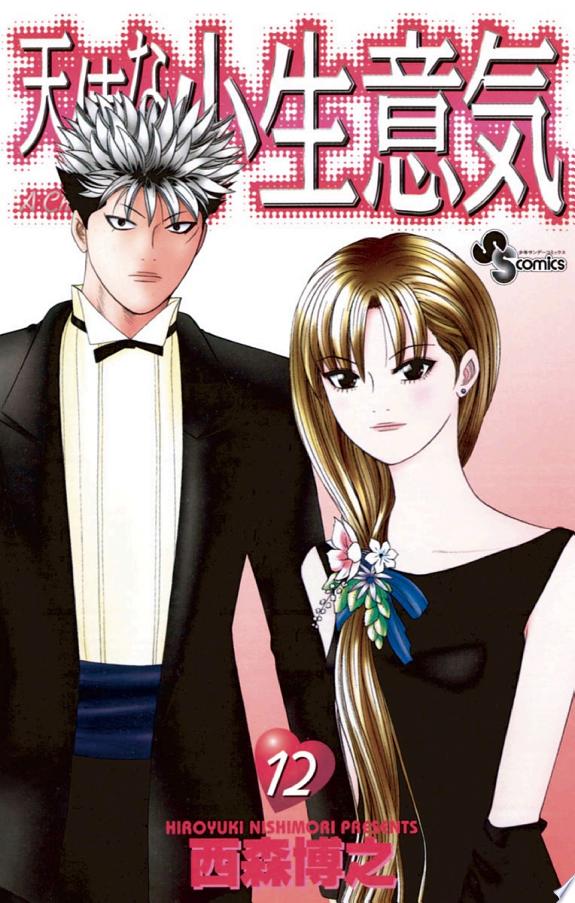
Tenshi Na Konamaiki
Yu's review of Tenshi Na Konamaiki — a boy who was transformed into a girl by a genie as a child has grown up strong, fierce, and determined to find a way to transform back, but life keeps getting complicated.

Romance / Sci-Fi
Heaven's Lost Property
Yu's review of Heaven's Lost Property — Tomoki Sakurai is a boy who just wants to live a peaceful life; when an Angeloid named Ikaros falls from the sky and pledges absolute loyalty to him as her master, his peaceful life ends; the series develops from harem comedy into genuine science fiction about the nature of Angeloids and the world they come from.

Romance / Comedy
Girlfriend, Girlfriend
Yu's review of Girlfriend, Girlfriend — Naoya Mukai, who has finally started dating his long-time crush Saki, falls in love with a second girl, Nagisa, and proposes that they all date simultaneously; his complete honesty about his feelings collides with everyone's reaction to them in this shamelessly energetic romantic comedy.

Romance
Saekano: How to Raise a Boring Girlfriend
A review of Saekano — the manga about a high school otaku who wants to create a dating sim game and recruits his classmates as creative team, including the 'ordinary' girl who inspired the whole project.
Written by
Yu
Manga Enthusiast from Japan
I grew up in Japan and manga literally saved me during a tough time in elementary school. My English isn't perfect, but my love for manga is real — and I want to share it with you.
Disclosure: This post contains affiliate links. As an Amazon Associate, I earn from qualifying purchases at no extra cost to you.