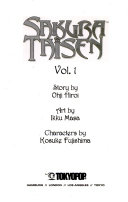
Sakura Wars Review: The Mecha-Musical Where the Feelings Hit Harder Than the Fights
by Ikku Masa (art), Ohji Hiroi (story)
Read the first volume. If it doesn't hook you, put it down. It'll hook you.
Buy Sakura Wars on Amazon →*Affiliate link — I earn a small commission at no extra cost to you.
The theater is the cover story. The mecha are the mechanism. The feelings are the point.
Quick Take
- A manga adaptation of Sega's beloved tactical RPG, set in steampunk 1920s Tokyo
- An all-female combat unit that performs at the Imperial Theater by day and fights demons by night
- Tokyopop released 7 of 10 volumes — the story is incomplete in English
Who Is This Manga For?
- Fans of the Sakura Wars game series who want the manga companion
- Readers who enjoy steampunk settings with a romantic core
- People interested in Taisho-era Japan aesthetics in manga form
- Anyone who enjoys ensemble casts with a mission-and-romance structure
Content Warnings & Age Rating
Age Rating: T (Teen) Content Warnings: Fantasy combat, military themes, mild romantic content
Standard action-romance content. Nothing graphic.
Yu's Rating
| Category | Score |
|---|---|
| Story Depth | ★★★☆☆ |
| Art Style | ★★★★☆ |
| Character Development | ★★★☆☆ |
| Accessibility for Non-Japanese Readers | ★★★☆☆ |
| Reread Value | ★★★☆☆ |
Story Overview
Tokyo, 1920s. The Imperial Steam Navy lieutenant Ichiro Ogami is reassigned to the Imperial Theater — ostensibly as a subordinate staff member, actually as the commander of the Imperial Floral Assault Team, an elite unit of women who pilot steam-powered battle armor to defend the city from demonic forces.
The catch: the unit members are also the theater's performers. Their public face is the stage. Their real work is the battlefield.
Ogami has to earn the trust of each member of his unit — Sakura Shinguji the earnest country girl trying to live up to her father's legacy, Sumire Kanzaki the proud aristocrat who resents him on principle, Iris the child-like girl with overwhelming psychic power — while also fighting whatever dark forces have their eye on Tokyo.
The manga adaptation follows the game's structure: relationship development between missions, with the central question being whether Ogami can become a real leader and whether Sakura can become the fighter she wants to be.
Characters
Ichiro Ogami — The point-of-view character: earnest, occasionally dense about feelings, gradually competent. His growth as a commander is the story's structural spine.
Sakura Shinguji — The title character. She carries enormous expectations from her father's legacy and the weight of not yet knowing if she can meet them. Her arc is the emotional center.
Sumire Kanzaki — A veteran of the unit who made it before Ogami arrived and views his command with justified skepticism. Her slow thaw toward him is the most satisfying relationship arc.
Iris — The unit's youngest member, whose power is proportional to her emotional fragility. Her relationship with Ogami is protective rather than romantic — one of the adaptation's most tender threads.
Art Style
Ikku Masa's art captures the Taisho-era visual world well — the mix of Western and Japanese aesthetics that defined Japan's 1920s culture. Character designs follow the game's Kosuke Fujishima originals faithfully. The mecha designs are detailed and the action sequences dynamic, though the steam armor's distinctive aesthetic translates reasonably rather than perfectly to black and white.
Cultural Context
The Sakura Wars game series (1996 Sega) drew explicitly on Taisho Roman — the cultural movement of 1920s Japan where Western styles mixed with Japanese tradition in fashion, architecture, and art. This period had enormous aesthetic appeal for Japanese audiences: a moment of cosmopolitan possibility before the militarism of the 1930s.
The Imperial Theater setting is directly drawn from the Takarazuka Revue tradition — an all-female theater company that performed Western-style musicals and became a major cultural institution. The manga inherits all of this context, which enriches the setting considerably even when the story itself operates at a surface level.
What I Love About It
The moment that got me was when Sumire — who had every reason to dismiss Ogami, who was right to be skeptical, who had seniority and competence and aristocratic disdain — chose to follow his lead in a crisis not because he'd earned it yet, but because the mission required it, and she was a professional.
That's a specific kind of character: someone who separates their feelings from their function, and does their job even when they haven't decided what they think of the person asking. The manga earns its romantic moments through those kinds of character decisions more than through dramatic confessions.
What English-Speaking Fans Say
Primarily discussed by Sakura Wars game fans. The Taisho aesthetic is consistently praised. The incomplete English release is the main complaint — 7 of 10 volumes means the story ends without resolution. Fans recommend the anime adaptation (also available) as a more complete experience.
Memorable Scene ⚠️ Spoiler Warning
The chapter where Sakura, failing to activate her battle armor in a crisis, has a moment of genuine despair — and Ogami's response, which is not a pep talk but a practical acknowledgment of what she needs to do differently — is where the manga distinguishes itself from a simple game tie-in. It's an honest moment about competence and growth rather than a morale-boosting speech.
Similar Manga
| Title | Its Approach | How Sakura Wars Differs |
|---|---|---|
| Magic Knight Rayearth | Fantasy mecha with female pilots and an emotional core | Rayearth is more focused; Sakura Wars has a larger ensemble and a male point-of-view character |
| Ouran High School Host Club | Ensemble romance with comedy and genuine feelings | Ouran is more comedic; Sakura Wars takes its military mission more seriously |
| Full Metal Panic! | Mecha action with romantic subplot | FMP is more action-heavy; Sakura Wars invests more in the interpersonal ensemble |
Reading Order / Where to Start
Volume 1, straight through. Aware that the English release ends at volume 7 of 10 — the story is not fully resolved in English.
Official English Translation Status
Tokyopop published volumes 1-7 in English. The complete Japanese series is 10 volumes. English release is incomplete.
Pros & Cons
Pros
- Taisho steampunk setting is genuinely distinctive
- Ensemble cast with different relationship arcs
- Sumire's arc is one of the better slow-burn character developments in the genre
- Short chapters make for easy reading
Cons
- English release stops at volume 7 — no resolution
- The game's systems don't fully translate to manga form
- Cultural context (Takarazuka, Taisho aesthetics) requires some background to fully appreciate
- Ogami is a bland point-of-view character compared to the women around him
- Readers unfamiliar with the game may find the premise confusing at first
Is Sakura Wars Worth Reading?
For fans of the game and steampunk romance, yes — with the caveat that the English release is incomplete. The Taisho setting and ensemble cast are the draws; the incomplete release is the frustration.
Format Comparison
| Format | Pros | Cons |
|---|---|---|
| Physical | Art and setting details read well in print | Incomplete English release; some volumes out of print |
| Digital | More accessible | — |
| Omnibus | No omnibus available | — |
Where to Buy
Read the first volume. If it doesn't hook you, put it down. It'll hook you.
This post contains affiliate links. If you purchase through these links, I may earn a small commission at no extra cost to you. As an Amazon Associate, I earn from qualifying purchases.
*Affiliate link — I earn a small commission at no extra cost to you.
More Manga You Might Like
Romance / Historical
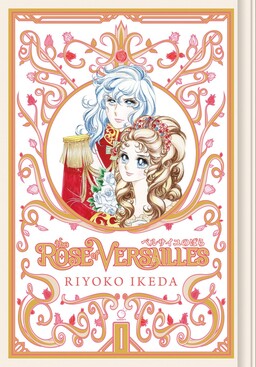
The Rose of Versailles
Yu's review of The Rose of Versailles — Oscar François de Jarjayes is raised by her father as a son and commander of the royal guard; she navigates the court of Louis XVI and Marie Antoinette, torn between duty to the aristocracy and growing awareness of what the common people suffer; as the French Revolution approaches, the world she has served is ending.
Romance
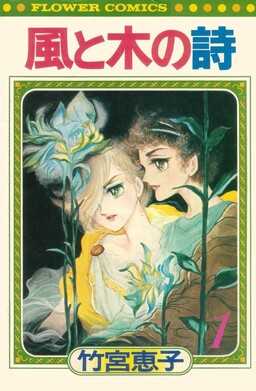
Kaze to Ki no Uta
Yu's review of Kaze to Ki no Uta — set in a 19th century French boarding school, the relationship between Serge, a half-Japanese student with a traumatic past, and Gilbert, a beautiful and sexually promiscuous boy whose behavior conceals something devastating; the manga that essentially created the Boys' Love genre, published between 1976 and 1984.

Romance / Historical
Emma
Yu's review of Emma — Emma is a maid in Victorian England working for a retired governess; William Jones, a young gentleman from an upper-class family, falls in love with her; Victorian class structure stands between them as both an obstacle and a presence in every scene.
Romance / Historical
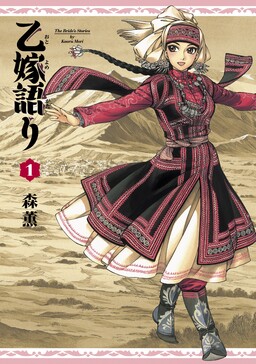
A Bride's Story
Yu's review of A Bride's Story (Otoyomegatari) by Kaoru Mori — set in late-19th-century Central Asia near the Caspian Sea, it follows Amir, a 20-year-old hunter and embroideress, who marries 12-year-old Karluk, then refuses to leave when her own family comes to take her back.
Romance / Historical
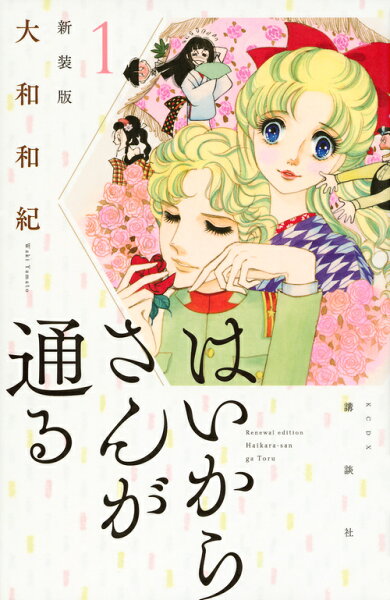
Haikara-san: Here Comes Miss Modern
Haikara-san follows Benio Hanamura, a spirited Taisho-era young woman who defies tradition, loves sake and kendo, and refuses to accept the arranged marriage her father has imposed on her — until she meets her fiancé.
Romance / Historical
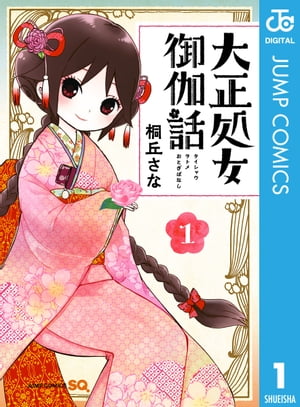
Taisho Otome Fairytale
1921, Chiba prefecture. Tamahiko Shima — 17, son of a wealthy industrialist — has been disinherited and exiled to a remote mountain house after losing his right arm in the accident that killed his mother. He has been told to die alone. Then Yuzuki Tachibana arrives — 14, cheerful, sent by her father as a bride to settle a debt. Sana Kirioka's 5-volume romance is gentle, sad, and complete in English from Yen Press.
Written by
Yu
Manga Enthusiast from Japan
I grew up in Japan and manga literally saved me during a tough time in elementary school. My English isn't perfect, but my love for manga is real — and I want to share it with you.
Disclosure: This post contains affiliate links. As an Amazon Associate, I earn from qualifying purchases at no extra cost to you.