Rough Review: The Swimming Manga Where Love Was the Deeper Water
by Mitsuru Adachi
Read the first volume. If it doesn't hook you, put it down. It'll hook you.
Buy Rough on Amazon →*Affiliate link — I earn a small commission at no extra cost to you.
What if the person you were raised to compete with was the one person you wanted to stop competing against?
Quick Take
- Mitsuru Adachi's swimming romance — same sensibility as Touch and H2, different sport
- The rival-families-turned-rivals-in-competition structure gives the relationship a built-in tension that works
- Compact at 10 volumes — one of Adachi's tightest complete works
Who Is This Manga For?
- Readers of Adachi's other work (Touch, Cross Game, H2) who want his swimming-focused story
- Romance manga fans who want restraint and precision over melodrama
- Sports manga readers who want the emotional dimension foregrounded
- Anyone who liked the Rough anime (2004) and wants the original manga
Content Warnings & Age Rating
Age Rating: T (Teen) Content Warnings: Light romance. Sports competition themes. No concerning content.
Appropriate for all readers.
Yu's Rating
| Category | Score |
|---|---|
| Story Depth | ★★★★☆ |
| Art Style | ★★★★★ |
| Character Development | ★★★★☆ |
| Accessibility for Non-Japanese Readers | ★★★★☆ |
| Reread Value | ★★★★☆ |
Story Overview
Takuya Ninomiya and Ami Ogawa come from families with a generations-long rivalry in traditional Japanese confectionery — a business grudge that has colored both families' attitudes toward the other. They also attend the same high school and swim competitively.
The series follows the gradual dissolution of the inherited rivalry and the emergence of something else — the typical Adachi territory of two people who are increasingly important to each other and who process that importance through everything except direct acknowledgment.
Swimming functions the way baseball does in Adachi's other works: as the medium through which character is expressed, progress is measured, and the relationship develops without requiring anyone to say what they feel directly. The sport sequences are accurate and serve the narrative rather than the other way around.
Characters
Takuya Ninomiya: Adachi's characteristic male protagonist — athletic, not particularly deep in conventional ways, but perceptive about the people around him in the specific way that genuine feeling produces.
Ami Ogawa: A female protagonist whose surface competitiveness (in both business succession and swimming) conceals the genuine person that the series gradually reveals. The inherited rivalry is the casing; the character inside it is different.
Art Style
Adachi's art — the same clean lines, the same economy of expression, the same ability to communicate emotion through minimal facial movement — is applied to swimming sequences with the same care he gives baseball. The pool is a setting he treats with the same visual respect as his sports fields.
Cultural Context
Rough ran in Weekly Shonen Sunday from 1987 to 1989. It is one of Adachi's shorter and less celebrated works — overshadowed by Touch before it and H2 after it — but among readers who seek out his complete output it is consistently described as a complete and satisfying expression of his sensibility.
What I Love About It
I love how the family rivalry is used.
Most Adachi works have an obstacle to the relationship that is internal — misunderstanding, timing, the gap between feeling and speech. Rough adds an inherited external obstacle: these two people are supposed to dislike each other because their families do. The series is interested in the specific experience of discovering that something you were given isn't yours — that the grudge you inherited doesn't belong to you.
What English-Speaking Fans Say
Not known in English-speaking markets. Among readers who seek out Adachi's untranslated works — Miyuki, Rough, Short Program — Rough is described as exactly what you expect from Adachi: competent, precise, and affecting without appearing to try.
Memorable Scene ⚠️ Spoiler Warning
A swim meet where Takuya and Ami are in adjacent lanes — competing in different events but adjacent in the water — and the scene captures the specific confusion of athletic competition and personal feeling coexisting in the same physical space. Adachi doesn't dramatize it. He shows it and moves on.
Similar Manga
- Touch: Adachi's most celebrated work — baseball, 26 volumes, same sensibility
- H2: His second great baseball romance — comparable length and depth
- Cross Game: His most recent major work — available in English
Reading Order / Where to Start
Volume 1. The story develops chronologically.
Official English Translation Status
Rough has no official English translation.
Pros & Cons
Pros
- Complete Adachi in 10 volumes — short commitment for the full experience
- The family rivalry structure adds dimension missing from his simpler works
- Swimming as a sport is depicted with Adachi's characteristic care
Cons
- No English translation
- Less celebrated than his landmark works for reasons that are slightly arbitrary
- Readers unfamiliar with Adachi's style may find the restraint frustrating
Format Comparison
| Format | Notes |
|---|---|
| Physical | Japanese editions available |
| Digital | Available in Japanese |
| Omnibus | Collected editions available |
Where to Buy
No English release yet. That just means you find it before everyone else does.
*Affiliate link — I earn a small commission at no extra cost to you.
More Manga You Might Like
Romance / Drama
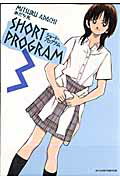
Short Program
Short Program collects Mitsuru Adachi's short story manga — brief, precise studies of the moment when two people almost connect, or do connect, or miss each other by a margin that changes everything.

Sports / Romance
Jajabako Groomin UP!
Jajabako Groomin UP! follows Yuu Kasugano, a city boy who comes to work at a horse ranch and falls into the world of horse grooming — and into the orbit of the ranch owner's daughter, a tomboyish girl named Chizuru whose relationship with horses is more natural than her relationship with people.
Romance / Comedy
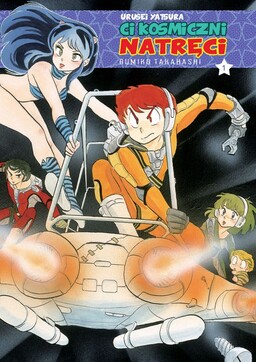
Urusei Yatsura
Yu's review of Urusei Yatsura — Earth is invaded by aliens; a random lottery selects Ataru Moroboshi to compete against the alien princess Lum in a game of tag; he wins by grabbing her horns; his victory declaration is mistaken for a marriage proposal; Lum moves into his house; Ataru continues to chase every other girl he sees while Lum insists on being his wife.
Romance / Comedy
Toradora!
Yu's review of Toradora! — a delinquent-looking boy and a tiny, terrifying girl make a deal to help each other confess to the other's best friend, and discover they had the wrong target all along.
Romance / Historical
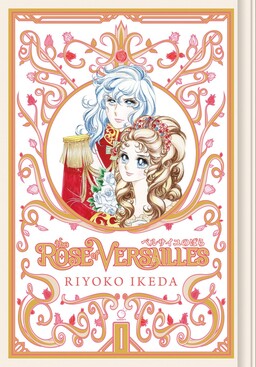
The Rose of Versailles
Yu's review of The Rose of Versailles — Oscar François de Jarjayes is raised by her father as a son and commander of the royal guard; she navigates the court of Louis XVI and Marie Antoinette, torn between duty to the aristocracy and growing awareness of what the common people suffer; as the French Revolution approaches, the world she has served is ending.
Romance / Drama
Paradise Kiss
Yu's review of Paradise Kiss — Yukari, a high-achieving student who has never questioned her path, is spotted by fashion students and asked to model their graduation collection; George, the designer, becomes the first person who sees who she might actually be.
Written by
Yu
Manga Enthusiast from Japan
I grew up in Japan and manga literally saved me during a tough time in elementary school. My English isn't perfect, but my love for manga is real — and I want to share it with you.