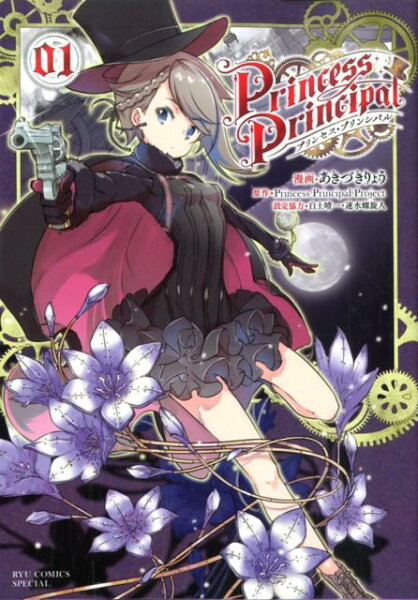
Princess Princess Review: An All-Boys School Where the Three Prettiest Boys Are Drafted as Mascots — And It's the Sweetest Manga of 2002
by Mikiyo Tsuda
Read the first volume. If it doesn't hook you, put it down. It'll hook you.
Buy Princess Princess on Amazon →*Affiliate link — I earn a small commission at no extra cost to you.
I read Princess Princess in the DMP English editions during my college years, in the back of a manga café that didn't have most of what I was looking for and had the entire five-volume run of this instead. I was expecting a one-joke gag manga. I closed the last volume on a bench outside, a little surprised, a little embarrassed at how moved I was.
I'm Yu, and I am here to tell you that the comedy manga about boys forced to dress like princesses is, in fact, mostly about being a teenager who hasn't had a family that worked in a long time and finding one in a strange place. The dresses are real. The actual story underneath is realer.
Quick Take
- Mikiyo Tsuda's five-volume comedy ran in Wings from August 2002 to April 2006 — short, complete, and one of the more underrated Shinshokan titles of its decade.
- The "Hime/Princess" school system premise is played completely straight by the cast, which is what makes it funny — and then quietly stops being just funny.
- Rated T (Teen) — no on-page sexual content, mild BL subtext, and bittersweet family backstories handled with restraint.
Story Overview
Tohru Kouno transfers into the prestigious all-boys Fujimori Academy mid-year. Within hours he's been told about, and conscripted into, the school's "Hime" tradition: each year, three first-years deemed pretty enough are selected to dress as girls at major school events. The Hime get scholarships, meal vouchers, and exclusive funding. In exchange, they show up to assemblies in elaborate dresses and act as a morale system for a campus with no actual girls in it.
Tohru horrified-accepts, mostly because the financial perks would lift a weight off the uncle's family raising him. He joins Yuujirou Shihoudani — easy, charming, openly mercenary about the role — and Mikoto Yutaka, who genuinely hates this and has a girlfriend from his middle school days, Megumi, to worry about.
The five volumes follow the three through a school year of festivals, sports days, beach trips, drama club productions, and a graduation that quietly turns into a story about whether Tohru ever had a home before this one.
Characters
Tohru Kouno — The newest Hime and the manga's protagonist. Orphaned young; his parents died in an accident and he was raised by his uncle's family. His decision to take the Hime role isn't vanity, it's accounting — the scholarship lifts a real financial burden. Watching him slowly let himself want to stay at Fujimori is the heart of the book.
Yuujirou Shihoudani — Effortlessly the prettiest of the three, the one who treats Hime duties as a job he's well-suited for. His backstory is the gentlest gut-punch in the series: his father died young, his mother remarried his elementary school teacher, and they had a son together. Yuujirou sees the new family as "perfect" and quietly refuses to come home for breaks because he thinks his presence ruins the picture.
Mikoto Yutaka — A pre-existing character from Tsuda's earlier manga The Day of Revolution; the one Hime who already has someone outside the school. His girlfriend Megumi finds out he's wearing a dress as part of his official duties and tells him, with the calm of a person who already loved him, that she doesn't care — he's still the person she fell for. It's the one major straight-romance beat in the book, and it lands cleanly.
The upperclassmen Hime (Sakamoto, Arisada, etc.) — Last year's Princesses, now in charge of training the new ones. The book treats them with the gravity of a senpai system in a real club; there's a lot of quiet kindness in how they look after these boys.
What I Love About It
The premise is the joke; the structure isn't. What I love about Princess Princess is the third time you read a chapter where Tohru, in costume, looks at the assembled student body cheering and realizes — without saying so — that for the first time in years a roomful of people are happy he exists.
The book doesn't underline this. It plays the whole scene as comedy: the elaborate dress, the cheers, the official school photographer. But there's a beat at the edge of those chapters, usually a single panel of Tohru looking out at the crowd, where the joke pauses and you can see the thing underneath. He didn't have anywhere to belong before this stupid school chose him to wear a dress. Now he does. The fact that the membership criterion is ridiculous doesn't make the membership not real.
Tsuda trusts the reader to feel this without ever staging it. That restraint is what made the last volume make me cry on a manga café bench.
Memorable Scene ⚠️ Spoiler Warning
Near the end of the series, Tohru's family makes the case for him to come home — the family business is there for him; the financial argument that originally brought him to Fujimori has shifted. Tohru, who has spent the entire run quietly compliant with whatever the adults around him decide, refuses. He says he wants to stay. He wants to graduate here, with these people.
What makes it land is everything before it. The book has spent five volumes letting Tohru be passive — letting the school choose him, letting his uncle decide for him, letting Yuujirou and Mikoto carry the energy of every scene. The first independent decision he makes in the whole manga is choosing to stay at the place that gave him a family. It is the smallest, most earned character moment in a comedy about boys in dresses, and I have never forgotten it.
Pros & Cons
Pros:
- Five volumes, finished, available in English from DMP — a complete read you can finish in a weekend.
- The premise's comedy doesn't cover for the actual storytelling; it amplifies it.
- Side cast (the upperclassman Hime, Mikoto's girlfriend) are written with surprising care for a comedy this short.
Cons:
- The early chapters lean hard on gag-manga rhythms and may read dated to readers used to current shoujo/BL pacing.
- The English DMP editions are out of print and can be hard to find new — used market only for some volumes.
- If the premise actively bothers you on principle, the book is unlikely to win you over by volume 2.
Is Princess Princess Worth Reading?
Yes, if you want a tightly contained five-volume comedy with more heart than the cover would suggest. Skip it if institutional cross-dressing as comedy premise is a hard no — the book doesn't apologize for its conceit.
Who Is This Manga For?
- Readers of Ouran High School Host Club who want a shorter, quieter cousin.
- BL-adjacent readers who like subtext over text — the manga is not BL but lives in its breeze.
- Fans of The Day of Revolution (Tsuda's earlier work) — Mikoto's plotline functions as a follow-up.
- Anyone in the mood for early-2000s Wings magazine vibes.
Official English Translation Status
Digital Manga Publishing (DMP) released all five English volumes between 2006 and 2009. There is also a short sequel, Princess Princess + (one volume), licensed by DMP. The DMP editions are currently out of print; you'll find them through used-book sellers and the secondary market.
Where to Buy
Used copies of the DMP volumes are still circulating, and Amazon's third-party sellers tend to carry the full run. If you find the first volume, the others are usually nearby.
Browse Princess Princess on Amazon →
This post contains affiliate links. If you purchase through these links, I may earn a small commission at no extra cost to you. As an Amazon Associate, I earn from qualifying purchases.
*Affiliate link — I earn a small commission at no extra cost to you.
More Manga You Might Like
Comedy / Romance
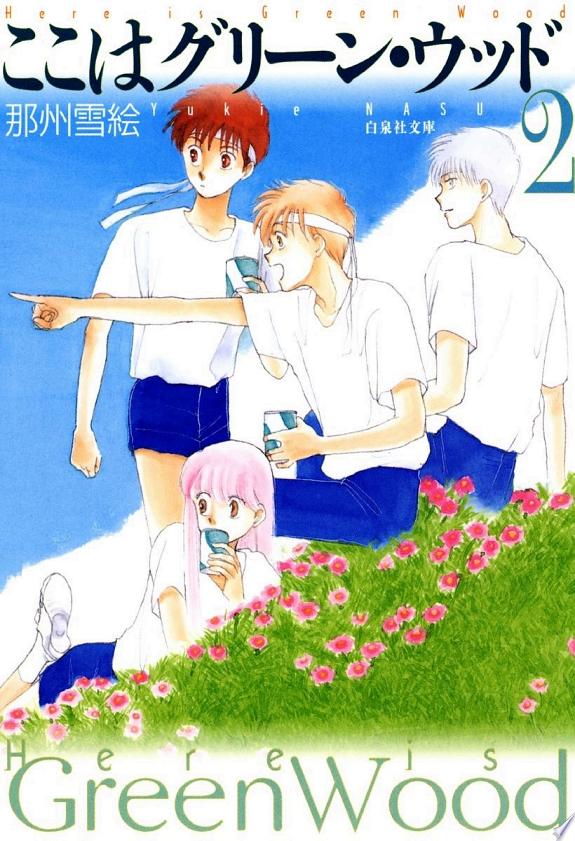
Here Is Greenwood
Yu's review of Here Is Greenwood — a high school boy moves into a school dormitory to escape his brother's wife (his first love), and finds the dormitory is populated entirely by eccentric misfits.
Romance / Comedy
Senryū Girl
A review of Masakuni Igarashi's Senryū Girl — 173 chapters in Weekly Shōnen Magazine from October 2016 to April 2020, collected in 13 tankōbon volumes. Kodansha USA's English edition is complete.
Romance / Comedy
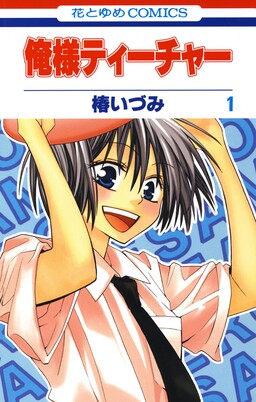
Oresama Teacher
Yu's review of Oresama Teacher — former gang leader Mafuyu Kurosaki transfers to Midorigaoka Academy determined to become a proper lady; her homeroom teacher Takaomi Saeki is her childhood friend and used to be a delinquent himself, and he immediately destroys all her plans.
Romance / Comedy
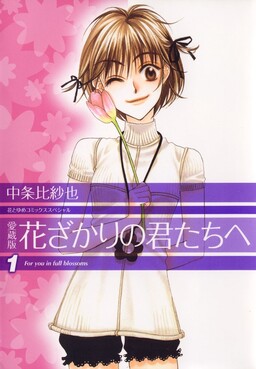
Hana-Kimi (Hanazakari no Kimitachi e)
Yu's review of Hana-Kimi — Mizuki Ashiya, an American-Japanese girl who is a fan of high jumper Izumi Sano, disguises herself as a boy and enrolls at his all-male boarding school in Japan to be close to him; she must maintain the disguise while navigating school life and developing genuine feelings.

Romance / Comedy
Moe Kare!!
A review of Moe Kare!! — Ikuemi Ryo's eight-volume shojo comedy about a girl who is obsessed with bishounen anime characters and the real boy who appears to be her ideal type in person — and then turns out to be considerably more complicated than a 2D character.
Romance / Comedy
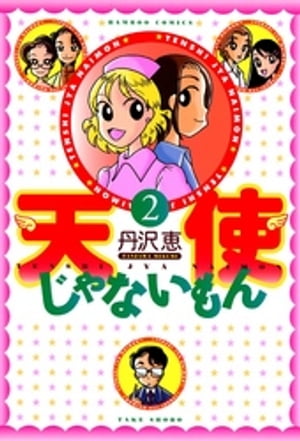
Tenshi Ja Nai!!
A review of Tenshi Ja Nai!! — the shojo comedy about a girl who shares a dorm room with the school's most popular idol, discovers the idol is secretly a boy, and gets caught in the comedic spiral that follows.
Written by
Yu
Manga Enthusiast from Japan
I grew up in Japan and manga literally saved me during a tough time in elementary school. My English isn't perfect, but my love for manga is real — and I want to share it with you.
Disclosure: This post contains affiliate links. As an Amazon Associate, I earn from qualifying purchases at no extra cost to you.