
Papillon Review: A Plain Twin Sister Finds Her Own Path After Living in Her Popular Sibling's Shadow
by Miwa Ueda
Read the first volume. If it doesn't hook you, put it down. It'll hook you.
Buy Papillon on Amazon →*Affiliate link — I earn a small commission at no extra cost to you.
Quick Take
- A twin-rivalry romance that takes the less-popular sister's psychology seriously — Hana's self-erasure has a specific origin and the series traces her becoming herself with genuine attention
- Ryusei's role as school counselor and love interest is handled with awareness of the dynamic it creates
- 8 volumes complete; emotionally substantial shojo romance
Who Is This Manga For?
- Readers who want shojo romance with genuine self-discovery themes
- Anyone interested in the twin-shadow dynamic examined seriously
- Fans of romance that starts from a character developing their own identity
- Readers looking for complete mid-length shojo with emotional depth
Content Warnings & Age Rating
Age Rating: T (Teen) Content Warnings: Self-esteem and self-worth themes; twin rivalry; school counselor romantic interest dynamic
T rating — appropriate for most readers.
Yu's Rating
| Category | Score |
|---|---|
| Story Depth | ★★★★☆ |
| Art Style | ★★★★☆ |
| Character Development | ★★★★★ |
| Accessibility for Non-Japanese Readers | ★★★★★ |
| Reread Value | ★★★★☆ |
Story Overview
Hana Mizuki and Ageha Mizuki are twins. Ageha has the looks, the confidence, and the social ease. Hana has spent her life being the other one — the quieter one, the less noticed one, the one who learned to stay small because there was not enough room for two.
Ryusei Ohjima is a school counselor who sees Hana with more clarity than she has given anyone permission to. He challenges her not to become confident — not to perform confidence — but to become actually herself, whatever that turns out to be.
The series follows Hana's emergence: what she discovers she likes, what she discovers she wants, what her relationship with Ageha becomes when she stops disappearing, and what develops between her and Ryusei.
Characters
Hana Mizuki — A protagonist whose quiet is a learned behavior rather than a personality; the series tracks what she discovers about herself with genuine attention.
Ryusei Ohjima — A character whose perception of Hana is the series' catalyst; his role raises genuine questions about the counselor-student dynamic that the series addresses.
Ageha Mizuki — The twin whose appeal is depicted without making her a villain; the series is genuinely interested in what the sisters are to each other.
Art Style
Ueda's art is elegant and emotionally expressive — Hana's visual transformation across the series is handled with attention, and the character designs differentiate the twins clearly.
Cultural Context
Papillon ran in Bessatsu Friend from 2007 to 2009. The series participates in the shojo tradition of self-discovery romance while engaging more seriously than average with the psychological content of what it means to exist in a sibling's shadow.
What I Love About It
Hana discovering specific preferences. The series does not have her simply become more confident — it has her discover that she actually likes specific things, has specific opinions, wants specific things. The self-discovery is made of particular details rather than abstract self-acceptance.
What English-Speaking Fans Say
Western readers describe Papillon as one of the more emotionally intelligent twin-rivalry shojo romances available in English — specifically noted for Hana's development being specific rather than vague, for Ageha not being simply antagonistic, and for the romance developing from a genuine character transformation rather than external catalyst alone.
Memorable Scene ⚠️ Spoiler Warning
The scene where Hana expresses a strong opinion — about something specific — for the first time without softening or qualifying it, and experiences the reaction as different from what she expected, is the series' most precise moment of character development.
Similar Manga
- Special A — School romance with similar self-discovery and rivalry structure
- High School Debut — Self-discovery romance with similar warmth
- Kimi ni Todoke — School romance with similar shy protagonist transformation
- Fruits Basket — Self-discovery in family shadow with similar emotional depth
Reading Order / Where to Start
Volume 1 — Hana's situation, Ageha, and Ryusei's first challenge establish everything.
Official English Translation Status
Del Rey/Kodansha published the complete English series. All 8 volumes available.
Pros & Cons
Pros
- Hana's development is specific and earned
- Ageha is not simply antagonistic
- Complete at 8 volumes
- Art is elegant
Cons
- Counselor-student romantic dynamic requires reader awareness
- Pacing in middle volumes
- Twin rivalry premise is familiar
Format Comparison
| Format | Notes |
|---|---|
| Individual Volumes | Del Rey/Kodansha; complete series |
| Digital | May be available |
Where to Buy
Read the first volume. If it doesn't hook you, put it down. It'll hook you.
This post contains affiliate links. If you purchase through these links, I may earn a small commission at no extra cost to you. As an Amazon Associate, I earn from qualifying purchases.
*Affiliate link — I earn a small commission at no extra cost to you.
More Manga You Might Like
Romance / Comedy
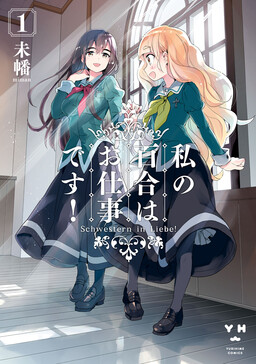
Yuri Is My Job!
Yu's review of Yuri Is My Job! — Hime Shiraki's entire identity is performing perfect femininity for public approval; working at Liebe Girls Academy café requires her to act out romantic yuri relationships with her coworkers for customers; her assigned partner Mitsuki hates her genuinely, and Hime begins to develop feelings that are not performance.
Romance
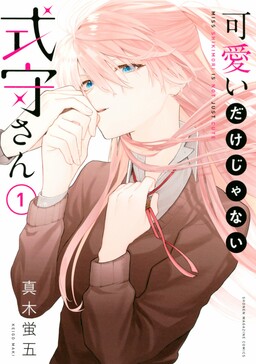
Shikimori's Not Just a Cutie
Yu's review of Shikimori's Not Just a Cutie — Izumi is a boy with the worst luck who is dating Shikimori, a girl who is sweet and feminine most of the time; but when Izumi is in danger, Shikimori shifts into a cool, intense mode that is completely different from her usual self, and which Izumi finds extremely appealing.

Romance / Slice of Life
Love in Focus
Yu's review of Love in Focus — Mako moves to a new city after her grandfather's death and joins the photography club; she keeps encountering and photographing Kei, a boy from a different school who seems to appear wherever she points her camera; what starts as coincidence becomes something deliberate.

Romance / Drama
From Now On We Begin Ethics
Yu's review of From Now On We Begin Ethics — Takayanagi Ayumu is a high school ethics teacher who delivers textbook morality without personal investment; Skye is a half-Japanese transfer student who challenges him to engage honestly with the subjects he teaches; the relationship is academic and then something more complicated.
Romance / Comedy
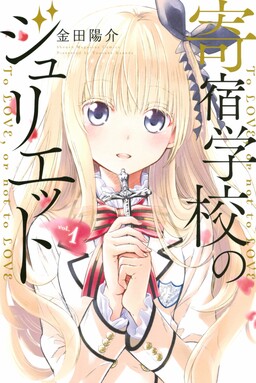
Boarding School Juliet
Yu's review of Boarding School Juliet — at Dahlia Academy two rival nations share a campus through the Black Dog and White Cat dorms, and Black Dog leader Romio Inuzuka and White Cat leader Juliet Persia fall in love in chapter one, then spend 16 volumes trying to keep it secret long enough to change the world that would tear them apart.
Romance / Slice of Life
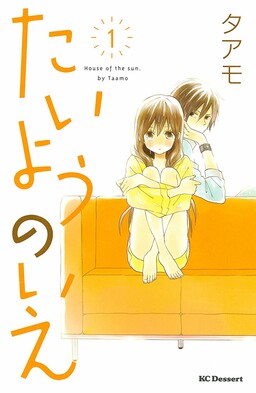
House of the Sun (Taiyou no Ie)
Yu's review of House of the Sun (Taiyou no Ie) — Mao Motomiya, whose home life fell apart when her father remarried, finds herself staying at the house of Hiro, her cheerful childhood friend; his large, warm family gradually becomes the home she didn't know she needed, and the romance that develops is built on that foundation.
Written by
Yu
Manga Enthusiast from Japan
I grew up in Japan and manga literally saved me during a tough time in elementary school. My English isn't perfect, but my love for manga is real — and I want to share it with you.
Disclosure: This post contains affiliate links. As an Amazon Associate, I earn from qualifying purchases at no extra cost to you.