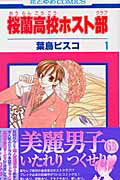
Ouran High School Host Club Review: The Manga That Knows It's Ridiculous and Loves It
by Bisco Hatori
Read the first volume. If it doesn't hook you, put it down. It'll hook you.
Buy Ouran High School Host Club on Amazon →*Affiliate link — I earn a small commission at no extra cost to you.
Quick Take
- A scholarship student accidentally breaks an expensive vase and is press-ganged into being the Host Club's "natural" host to pay off the debt
- A manga that knows every shojo trope it is using, winks at you, and then uses them anyway because they are genuinely charming
- 18 volumes, complete, with an ending that earns the warmth it has been building
Who Is This Manga For?
- Readers who want romance manga with a strong comedic voice
- Anyone who loves ensemble casts where every character gets their moment
- Fans of shojo manga who also enjoy watching those conventions get gently mocked
- Readers who want pure fun alongside their feelings
Content Warnings & Age Rating
Age Rating: T (Teen) Content Warnings: Mild suggestive content (fanservice is limited and mostly comedic), some gender identity themes, dysfunctional family backgrounds for several characters
Very accessible. One of the more broadly appropriate romance manga on this list.
Yu's Rating
| Category | Score |
|---|---|
| Story Depth | ★★★☆☆ |
| Art Style | ★★★★☆ |
| Character Development | ★★★★☆ |
| Accessibility for Non-Japanese Readers | ★★★★★ |
| Reread Value | ★★★★☆ |
Story Overview
Haruhi Fujioka attends Ouran Academy on a scholarship. She is practical, direct, and spectacularly unimpressed by wealth and status. When she stumbles into Music Room 3 looking for a quiet place to study and breaks an 8 million yen vase, she finds herself recruited into the school's Host Club — a group of beautiful boys who entertain female clients for fun.
Haruhi's lack of interest in the pageantry around her is the manga's comic engine. The Host Club's elaborate schemes, dramatic poses, and baroque emotional performances run directly into her "please just explain what you actually want from me" practicality. The results are frequently hilarious.
But underneath the comedy, each Host Club member has a real backstory. The twins' isolation before the Host Club. Kyoya's position as the overlooked third son. Mori and Honey's complicated friendship-with-obligation history. Tamaki's absent mother and the family politics around her. The manga takes these seriously even while keeping its comedic tone.
Characters
Haruhi Fujioka — A masterpiece of a protagonist. Her gender non-conformity is handled without making it a crisis — she wears what is comfortable, presents however is convenient, and finds everyone's obsession with gender categories confusing. Her straightforwardness cuts through every dramatic scenario.
Tamaki Suoh — The Host Club king, extravagant and emotional and somehow also kind beneath the theater. His arc about his mother and his family is the most emotionally substantive part of the manga.
Kyoya Ootori — Intelligent, measured, and in on the joke. His genuine friendship with Tamaki is more interesting than any romance in the series.
Hikaru and Kaoru Hitachiin — The twins, whose "forbidden love" act for clients is a tool they have used to keep everyone at a distance; their arc about what it means to be individuals rather than a unit is given real care.
Honey-senpai and Mori-senpai — The senior members; their dynamic and backstory are given more space than you might expect.
Art Style
Hatori's art is the expressive, character-forward style of 2000s shojo — large eyes, detailed hair, plenty of sparkle effects used ironically as often as sincerely. The comedic visual gags are well-timed. The character designs are distinctive and the six Host Club members are easy to tell apart even in crowd scenes.
Cultural Context
The Host Club concept is more familiar to Japanese readers — host clubs (where people pay to spend time with attractive employees who flatter and entertain them) are real establishments in Japan, and a high school version as a private school's pastime is very specifically silly. The class dynamics between Haruhi and the wealthy students around her are part of what the manga is commenting on.
What I Love About It
I love that Ouran is smarter than it looks. It is funny, which is easy to see. What is less obvious at first is that it is also thoughtful — about class, about what it means to be yourself in a world that wants you to perform, about how people use humor to protect themselves from intimacy. Hatori is telling jokes and also telling the truth.
Haruhi's gender presentation is handled so matter-of-factly that I did not fully appreciate what a deliberate choice it was until I thought about it later. The manga just accepts her as she is, and treats everyone's confusion as their problem to sort out, not hers.
What English-Speaking Fans Say
Ouran is one of the most beloved shojo manga in Western fandom, with a reputation that has held up since the mid-2000s. The anime adaptation introduced it to many Western readers, and the manga is generally seen as more complete — the anime ends before several major character arcs are resolved. Fans consistently praise Haruhi as an exceptional protagonist and the comedy as genuinely funny rather than just cute.
Memorable Scene ⚠️ Spoiler Warning
The arc involving Tamaki's mother and the Suoh family's attempt to remove Haruhi from the group — the moment where the Host Club, led by Haruhi, decides to actually fight for each other rather than accept the situation — is where the manga earns everything it built.
Similar Manga
- Kaguya-sama: Love Is War — Also comedic, also sharp about its genre
- Monthly Girls' Nozaki-kun — Comedy-forward with romance; similarly meta about shojo conventions
- Skip Beat! — Female protagonist navigating a strange world with excellent character development
Reading Order / Where to Start
Volume 1 — the setup is fast and the comedy starts immediately. The manga gets more emotionally complex in its second half but the first volume establishes everything you need.
Official English Translation Status
VIZ Media published the complete 18-volume series, plus a side story volume. All volumes are available in print and digital.
Pros & Cons
Pros
- Consistently funny across its full run
- Each ensemble member gets real development
- Haruhi is one of the most distinctive shojo protagonists
- Complete series with a satisfying ending
Cons
- Light on plot between character arcs
- Some comedy relies heavily on repeated gags that wear thin in later volumes
- Tamaki's romantic arc develops very slowly
Format Comparison
| Format | Notes |
|---|---|
| Individual Volumes | Standard release; fine |
| Digital | Works well — the comedy timing is in the art, which reads fine on screen |
| Collector's Edition | VIZ has released some editions; check for current availability |
Where to Buy
Read the first volume. If it doesn't hook you, put it down. It'll hook you.
This post contains affiliate links. If you purchase through these links, I may earn a small commission at no extra cost to you. As an Amazon Associate, I earn from qualifying purchases.
*Affiliate link — I earn a small commission at no extra cost to you.
More Manga You Might Like
Romance / Comedy
Toradora!
Yu's review of Toradora! — a delinquent-looking boy and a tiny, terrifying girl make a deal to help each other confess to the other's best friend, and discover they had the wrong target all along.
Romance / Comedy
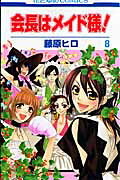
Kaichou wa Maid-sama!
Yu's review of Kaichou wa Maid-sama! — Misaki Ayuzawa is the strict student council president of a recently co-ed school; she secretly works at a maid cafe to support her family; when the most popular boy at school, Usui Takumi, discovers her secret, he keeps it — and keeps showing up at her workplace across 18 volumes.

Romance / Comedy
Yuukan Club
Yuukan Club follows six ultra-wealthy high school students who form the Leisure Club and stumble into mysteries, adventures, and romantic entanglements while maintaining an existence so extravagant it functions as its own genre of comedy.
Romance / Comedy
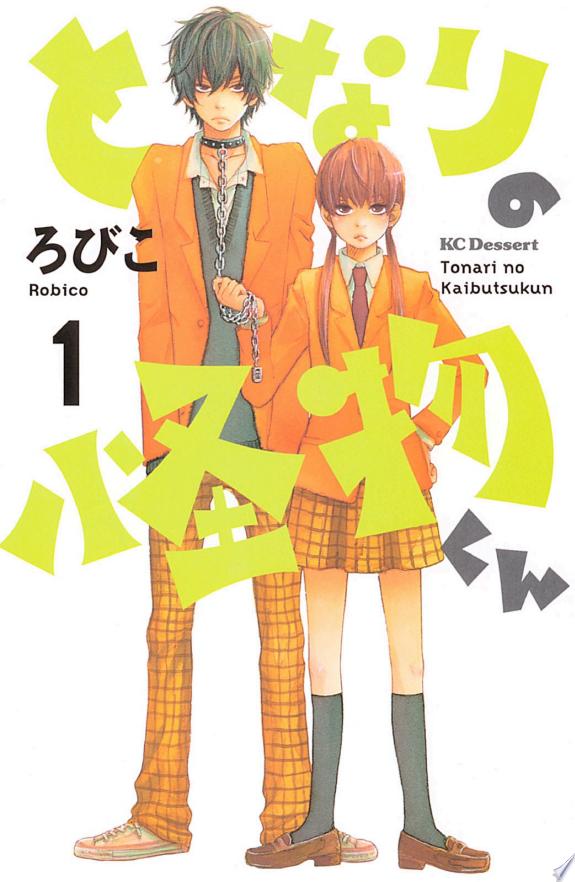
My Little Monster
Yu's review of My Little Monster — a studious girl focused entirely on grades is disrupted when she is asked to deliver notes to a classmate who stopped coming to school, a boy who fights constantly and has no idea how human interaction works.
Romance / Comedy
Maid Sama!
Yu's review of Maid Sama! — Misaki Ayuzawa is the iron-fisted student council president of a formerly all-boys school; she works secretly at a maid café to support her family; the school's most popular boy discovers her secret and holds it over her, but not in the way she expects.

Romance / Comedy
Lovely Complex
Yu's review of Lovely Complex — the tallest girl in class and the shortest boy in class are constantly mistaken for a comedy duo, gradually realizing the comedy might actually be love.
Written by
Yu
Manga Enthusiast from Japan
I grew up in Japan and manga literally saved me during a tough time in elementary school. My English isn't perfect, but my love for manga is real — and I want to share it with you.
Disclosure: This post contains affiliate links. As an Amazon Associate, I earn from qualifying purchases at no extra cost to you.