
Our Dining Table Review: A Man Who Cannot Eat with Others Discovers the Healing Power of Shared Meals
by Mita Ori
Read the first volume. If it doesn't hook you, put it down. It'll hook you.
Buy Our Dining Table on Amazon →*Affiliate link — I earn a small commission at no extra cost to you.
Quick Take
- A boys' love manga that earns its rating through emotional content rather than physical content — the gentle found-family warmth is the series' entire register
- The food-as-connection theme is handled with specificity and warmth that makes the shared meals genuinely moving
- 2 volumes complete; one of the most emotionally satisfying short BL manga available in English
Who Is This Manga For?
- Boys' love readers who want warmth and found family without explicit content
- Anyone interested in food-themed manga with emotional depth
- Readers who want gentle healing romance with social anxiety representation
- Adult readers who want complete very short BL with substance
Content Warnings & Age Rating
Age Rating: T (Teen) Content Warnings: Social anxiety around eating; gentle boys' love romance; found family with a child; no explicit sexual content
T rating — appropriate for most readers; notably gentle for a boys' love series.
Yu's Rating
| Category | Score |
|---|---|
| Story Depth | ★★★★★ |
| Art Style | ★★★★☆ |
| Character Development | ★★★★★ |
| Accessibility for Non-Japanese Readers | ★★★★★ |
| Reread Value | ★★★★★ |
Story Overview
Yutaka Uedera cannot eat with other people. The presence of others while eating creates anxiety that removes the pleasure from food entirely. He eats alone, quickly, without enjoyment.
At a park, he encounters a young boy named Minoru who is eating alone because his bento fell and he is trying to share Yutaka's food. Minoru's father Tsubasa arrives — a cheerful, unguarded man who turns the awkward encounter into an invitation.
The Tsubasa household operates around food with warmth and generosity. Minoru wants Yutaka to come back. Tsubasa is happy to cook for anyone who wants to eat. And Yutaka finds, for the first time, that eating with these two specific people produces something other than anxiety.
Characters
Yutaka Uedera — A character whose eating anxiety is depicted as a genuine limitation with genuine emotional roots; his experience of the shared table changing is the series' central transformation.
Tsubasa — A character whose warmth is without agenda — he is not performing hospitality, he simply experiences feeding people as a natural and pleasurable thing.
Minoru — The child who is the series' most immediately accessible emotional anchor; his uncomplicated attachment to Yutaka is the first indicator that the family connection is real.
Art Style
Ori's art is warm and gentle — the food is drawn with attention, the character expressions are clear and emotionally communicative, and the domestic settings have the specific warmth of spaces that are actually lived in.
Cultural Context
Our Dining Table draws from the deep Japanese cultural significance of shared meals — the idea that eating together is a form of family and community formation. The food Tsubasa prepares is specifically Japanese home cooking, and the series treats these meals as genuine acts of care.
What I Love About It
The first meal Yutaka enjoys. The series depicts the experience of eating with anxiety accurately enough that when Yutaka finishes a meal and realizes it was good — that he was present for it in a way he has not been before — the moment is genuinely moving.
What English-Speaking Fans Say
Western readers describe Our Dining Table as one of the most emotionally perfect short BL manga available — specifically noted for the found-family warmth being genuine rather than performed, for the food theme being integrated rather than decorative, and for the two-volume format containing more emotional substance than many longer series. Frequently cited as a series that produces unexpectedly strong reader response.
Memorable Scene ⚠️ Spoiler Warning
The scene where Minoru, with complete seriousness, tells Yutaka that their table has his seat — that there is a specific place at this family's table that belongs to him — is the series' most precisely devastating moment.
Similar Manga
- What Did You Eat Yesterday? — Food-focused BL with similar warmth and domestic detail
- A Man and His Cat — Healing found-family slice-of-life with similar emotional gentleness
- Sweetness & Lightning — Food-as-family-connection in different register
- Deaimon — Sweets shop and found family with similar emotional core
Reading Order / Where to Start
Volume 1 — Yutaka's first encounter with Minoru and Tsubasa establishes everything in the first chapter.
Official English Translation Status
SuBLime (Viz Media imprint) published the complete English series. Both volumes available.
Pros & Cons
Pros
- Emotionally complete in 2 volumes
- Found-family warmth is genuine
- Food theme is specific and meaningful
- Appropriate for readers who want BL without explicit content
Cons
- Very short — complete in 2 volumes, which may feel insufficient for readers who want more
- No explicit content for readers who want M-rated BL
Format Comparison
| Format | Notes |
|---|---|
| Individual Volumes | SuBLime (Viz imprint); complete series |
| Digital | Available |
Where to Buy
Read the first volume. If it doesn't hook you, put it down. It'll hook you.
This post contains affiliate links. If you purchase through these links, I may earn a small commission at no extra cost to you. As an Amazon Associate, I earn from qualifying purchases.
*Affiliate link — I earn a small commission at no extra cost to you.
More Manga You Might Like

Romance
Super Lovers
Yu's review of Super Lovers — Haru Kaido is sent to Canada to meet his younger half-brother Ren, a feral, untrusting child raised in the wilderness; Haru promises Ren that they will live together in Japan; years later, Ren arrives in Tokyo and the promise must be kept.
Romance / Comedy
'Tis Time for 'Torture,' Princess
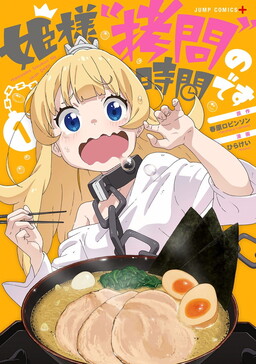
Yu's review of 'Tis Time for 'Torture,' Princess — the Princess is captured by the Demon King's forces; the Three Hell Executives interrogate her to get information about the kingdom's defenses; the 'torture' they use is things she actually enjoys — delicious food, comfortable beds, adorable animals — and she almost gives up information every time.

Romance / Slice of Life
House of the Sun (Taiyou no Ie)
Yu's review of House of the Sun (Taiyou no Ie) — Mao Motomiya, whose home life fell apart when her father remarried, finds herself staying at the house of Hiro, her cheerful childhood friend; his large, warm family gradually becomes the home she didn't know she needed, and the romance that develops is built on that foundation.

Romance / Comedy
My Love Mix-Up!
Yu's review of My Love Mix-Up! — Aoki has a crush on his classmate Hashimoto; he borrows her eraser and notices it says 'Ida' on it, which he assumes means she likes their classmate Ida; when Ida catches him looking at the eraser, he assumes Aoki likes him; Aoki, rather than correct this misunderstanding, goes along with it — and discovers his feelings are more complicated than he thought.

Romance / Drama
I Cannot Reach You
Yu's review of I Cannot Reach You — Kakeru is perfect: good at everything, well-liked, seemingly without needs; his best friend Yamato has been in love with him since childhood but has convinced himself that someone like Kakeru is beyond his reach; the series is about the gap between who Yamato thinks Kakeru is and who Kakeru actually is.

Romance
Ten Count
Yu's review of Ten Count — Tadaomi Shirotani, a corporate secretary with mysophobia and OCD, meets Riku Kurose, a therapist who recognizes his condition and offers to help him through a ten-step desensitization process; what develops between them is the series' central moral complication.
Written by
Yu
Manga Enthusiast from Japan
I grew up in Japan and manga literally saved me during a tough time in elementary school. My English isn't perfect, but my love for manga is real — and I want to share it with you.
Disclosure: This post contains affiliate links. As an Amazon Associate, I earn from qualifying purchases at no extra cost to you.