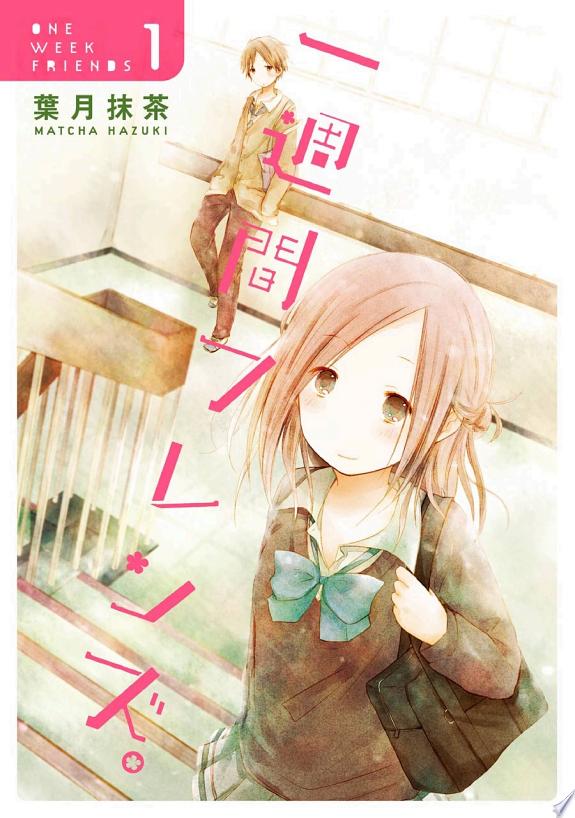
One Week Friends Review: A Girl Forgets Her Friends Every Monday and a Boy Decides to Become Her Friend Again Every Week
by Matcha Hazuki
Read the first volume. If it doesn't hook you, put it down. It'll hook you.
Buy One Week Friends on Amazon →*Affiliate link — I earn a small commission at no extra cost to you.
Quick Take
- One of manga's most gentle and emotionally precise premises: a boy who becomes the same girl's friend every single week because she forgets him every Monday
- The diary mechanic — Yuki records their friendship so Kaori can read it each week — is the series' most affecting element
- Complete at 7 volumes; short enough to read in a day; the emotional accumulation is real
Who Is This Manga For?
- Readers who want quiet, gentle romance manga without dramatic conflict
- Fans of unconventional romance premises with emotional depth
- Anyone who wants a short, complete series they can finish in one sitting
- Readers who want romance manga that takes its characters' inner lives seriously
Content Warnings & Age Rating
Age Rating: T (Teen) Content Warnings: Memory loss themes that are emotionally affecting; the series explores what it means to lose relationships repeatedly
Gentle content; the emotional weight is real but the series handles it carefully.
Yu's Rating
| Category | Score |
|---|---|
| Story Depth | ★★★★☆ |
| Art Style | ★★★★☆ |
| Character Development | ★★★★☆ |
| Accessibility for Non-Japanese Readers | ★★★★★ |
| Reread Value | ★★★★☆ |
Story Overview
Kaori Fujimiya forgets the people she becomes friends with every Monday. She has spent her school years keeping everyone at a distance to protect them from this.
Yuki Hase notices she eats alone and wants to become her friend. She tells him the truth about her memory. He decides it does not matter.
Every Monday he approaches her again. He keeps a diary of the weeks they share so she can read what she has forgotten. Their friendship rebuilds and deepens even through the weekly reset.
The 7 volumes follow this cycle and eventually the discovery of why Kaori's memory works this way.
Characters
Kaori Fujimiya — Her specific loneliness — chosen to protect others, not just experienced — makes her isolation feel active rather than passive. Her response to Yuki's persistence, and the gradual trust she develops knowing it will reset, is the series' central emotional thread.
Yuki Hase — His specific quality — not pity, but genuine interest in Kaori as a person — is what makes his weekly persistence feel like affection rather than obsession. The diary is his love language before either character acknowledges that is what is happening.
Saki and Shogo — The secondary pair whose own developing relationship mirrors and comments on Yuki and Kaori's.
Art Style
Hazuki's art is soft and precise — the visual register matches the series' emotional tone exactly. The recurring scenes of Yuki and Kaori together (lunch, walking home, the diary exchange) develop visual familiarity that makes the weekly resets feel like genuine loss.
Cultural Context
The Japanese school lunch setting — eating together in the classroom — is the series' primary location, and the specific loneliness of eating alone in that context is something Japanese readers understand immediately. It is a visible social marker that Kaori has made herself separate.
What I Love About It
The diary. Yuki writing down what they did, what she said, how she laughed — and Kaori reading it each Monday morning before she sees him — is the series' most affecting recurring element. The diary is not just a plot device; it is evidence of what someone's attention looks like when it persists through loss.
What English-Speaking Fans Say
Western readers describe One Week Friends as the manga they give to people who say they do not read romance — the premise has enough emotional novelty to bring in readers who would not pick up a standard romance, and the execution is gentle enough to keep them. The short length (7 volumes) is consistently cited as both a virtue and occasionally a limitation.
Memorable Scene ⚠️ Spoiler Warning
The chapter where Kaori reads the early diary entries — learning who she was to Yuki before the reader met her, seeing the beginning from the outside — is the series' most structurally surprising and emotionally affecting single chapter.
Similar Manga
- A Silent Voice — Emotional repair and connection, similar gentle register
- Bloom Into You — Emotional self-knowledge romance, similar depth
- Horimiya — School romance, complete, similar warmth
- Your Lie in April — Emotional weight, different genre elements
Reading Order / Where to Start
Volume 1 — the premise is established in the first chapter; the weekly reset makes the opening chapters immediately meaningful.
Official English Translation Status
Square Enix Manga published the complete 7-volume series. All volumes available.
Pros & Cons
Pros
- 7 volumes, complete — minimal commitment with full emotional payoff
- The diary mechanic is genuinely inventive
- The gentleness is consistent without being saccharine
- The ending resolves the memory situation appropriately
Cons
- Some readers want more explanation of the memory condition's mechanism
- The secondary pair's arc takes time from the main romance
- Short length means some readers want more time with the characters
Format Comparison
| Format | Notes |
|---|---|
| Individual Volumes | Square Enix Manga; standard |
| Digital | Available |
Where to Buy
Read the first volume. If it doesn't hook you, put it down. It'll hook you.
This post contains affiliate links. If you purchase through these links, I may earn a small commission at no extra cost to you. As an Amazon Associate, I earn from qualifying purchases.
*Affiliate link — I earn a small commission at no extra cost to you.
More Manga You Might Like

Romance / Drama
Sweet Blue Flowers
Yu's review of Sweet Blue Flowers — Fumi Manjoume and Akira Okudaira were childhood best friends who lost contact; they meet again in high school; Fumi is going through a heartbreak and beginning a new relationship with a senior girl while discovering who she is; Akira watches, loves, and cannot yet name it.
Romance / Drama
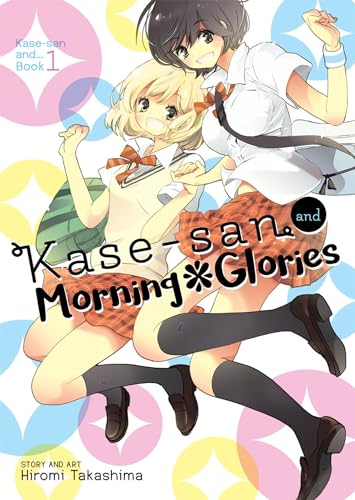
Kase-san and Morning Glories
Yu's review of Kase-san and Morning Glories — Yamada is a soft, gardening-focused girl; Kase-san is the school's star runner; they fall in love; the series follows their high school relationship with warmth and honest physical and emotional development.

Romance / Drama
Girl Friends
Yu's review of Girl Friends — Mari Kumakura is a quiet, bookish girl with no real friends; Akko Oohashi is pretty, popular, and inexplicably interested in her; their friendship grows into something more complicated than either of them has words for, which is the point.
Romance / Drama
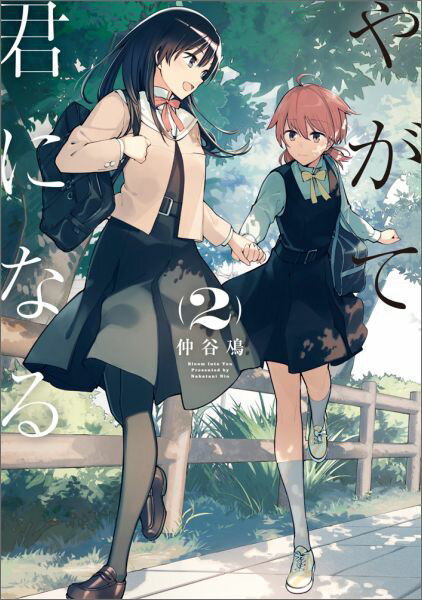
Bloom Into You
Yu's review of Bloom Into You — Yuu Koito has never felt the romantic love everyone describes, and Touko Nanami confesses to her precisely because Yuu can't love her back. The series follows what happens when that arrangement quietly becomes a lie.

Romance / Drama
The Gentleman's Alliance Cross
Yu's review of The Gentleman's Alliance Cross — Haine Otomiya was sold to the Kamiya family as a child by her own father; she fell in love with Shizumasa Kamiya after he showed her kindness in a moment of despair; she joins her elite school's student council to get close to him, but Shizumasa does not remember her.

Romance / Drama
From Now On We Begin Ethics
Yu's review of From Now On We Begin Ethics — Takayanagi Ayumu is a high school ethics teacher who delivers textbook morality without personal investment; Skye is a half-Japanese transfer student who challenges him to engage honestly with the subjects he teaches; the relationship is academic and then something more complicated.
Written by
Yu
Manga Enthusiast from Japan
I grew up in Japan and manga literally saved me during a tough time in elementary school. My English isn't perfect, but my love for manga is real — and I want to share it with you.
Disclosure: This post contains affiliate links. As an Amazon Associate, I earn from qualifying purchases at no extra cost to you.