
Nagareboshi Lens Review: A Girl Who Has Never Had Friends Meets a Boy Through a Lens
by Yayoi Ogawa
Read the first volume. If it doesn't hook you, put it down. It'll hook you.
Buy Nagareboshi Lens on Amazon →*Affiliate link — I earn a small commission at no extra cost to you.
Quick Take
- The photography/lens metaphor is sustained and not overwrought
- Risa's social isolation as character trait is handled with care
- 5 volumes complete; a gentle first-love story
Who Is This Manga For?
- Readers who want gentle first-love romance without drama machinery
- Anyone who has experienced social isolation and the specific feeling of being seen
- Fans of Viz shojo with unusual protagonist characteristics
- Readers looking for short complete romance manga
Content Warnings & Age Rating
Age Rating: T (Teen) Content Warnings: Social isolation themes; first love; photography as content; gentle romance throughout
T rating — appropriate for most readers.
Yu's Rating
| Category | Score |
|---|---|
| Story Depth | ★★★★☆ |
| Art Style | ★★★★☆ |
| Character Development | ★★★★★ |
| Accessibility for Non-Japanese Readers | ★★★★★ |
| Reread Value | ★★★★☆ |
Story Overview
Risa Hoshino has always experienced the world as if through glass — something between her and other people. She doesn't have close friends. She isn't sure how to let anyone close.
At school, she encounters Touga Okamoto through an actual lens — a photography club viewfinder, or a similar moment. She sees him clearly. Unexpectedly, he sees her back.
The series follows their developing connection as Risa learns what it feels like to have someone see through her glass rather than being stopped by it.
Characters
Risa Hoshino — Her isolation is not shyness exactly; it's a particular way of experiencing the world; the series is careful to make this specific rather than a vague character flaw.
Touga Okamoto — His ability to see Risa is the series' central romance premise; his own character is developed enough to make this a mutual relationship rather than a rescue.
Art Style
Ogawa's art is clean and expressive — the lens and photography imagery is integrated into the visual style without being overdone, and Risa's internal experience is conveyed through visual metaphor.
Cultural Context
Nagareboshi Lens ran in Bessatsu Shōjo Comic. The photography club setting and the lens metaphor draw on the Japanese shojo tradition of finding beauty in specific, clearly seen moments. The title translates roughly as "Shooting Star Lens."
What I Love About It
The isolation specificity. Risa's experience of the world through glass is described precisely enough to be recognizable rather than generic — readers who have felt this distance will find her accurate.
What English-Speaking Fans Say
Western readers describe Nagareboshi Lens as a quiet, precise first-love story — specifically noted for Risa's social isolation being handled with care rather than played for drama, for the lens metaphor being sustained gracefully, and for the short length fitting the story well.
Memorable Scene ⚠️ Spoiler Warning
The first moment Risa experiences being seen by Touga without the glass — when the isolation breaks briefly and unexpectedly — is the series' most emotionally precise moment.
Similar Manga
- Kimi ni Todoke — Social isolation first love in longer form
- Kare Kano — First love with similar precision
- My Love Story!! — First love without isolation element
- Say I Love You — Social isolation romance in longer form
Reading Order / Where to Start
Volume 1 — Risa's world-through-glass life and her first encounter with Touga.
Official English Translation Status
Viz Media published the complete 5-volume English series.
Pros & Cons
Pros
- Isolation metaphor handled with precision
- Short and focused
- Complete at 5 volumes
- Emotional accuracy
Cons
- Brief run limits secondary character development
- Gentle pace throughout
- Simple romantic arc
Format Comparison
| Format | Notes |
|---|---|
| Individual Volumes | Viz Media; complete 5 volumes |
| Digital | Available |
Where to Buy
Read the first volume. If it doesn't hook you, put it down. It'll hook you.
This post contains affiliate links. If you purchase through these links, I may earn a small commission at no extra cost to you. As an Amazon Associate, I earn from qualifying purchases.
*Affiliate link — I earn a small commission at no extra cost to you.
More Manga You Might Like

Romance
Cactus's Secret
Yu's review of Cactus's Secret (サボテンの秘密) by Nana Haruta — Miku Yamada has crushed on clueless Kyohei Fujioka since middle school, but when she tries to confess he treats it as a joke and nicknames her 'cactus' for being so prickly around him. A breezy four-volume Ribon romance where the girl makes the first move.
Romance / Fantasy
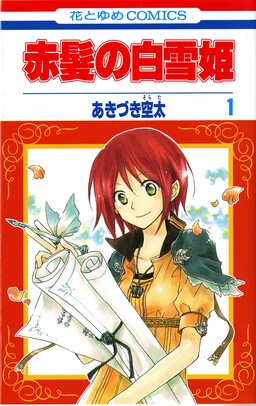
Snow White with the Red Hair
Yu's review of Snow White with the Red Hair — Shirayuki is an herbalist with distinctive red hair who flees her country when its prince demands her as his concubine; she crosses into the neighboring kingdom of Clarines and meets Prince Zen, who helps her without expecting anything in return; the series follows her life in Clarines as she trains to become a court herbalist while her relationship with Zen develops.
Romance
Kare First Love
Yu's review of Kare First Love — Karin Karino believes she is too plain to be seen — until Kiriya Aoi, the most popular boy at a nearby school, begins pursuing her with genuine interest; a shojo romance about a girl who has to learn to believe she's worth being chosen.

Romance
Dawn of the Arcana
Yu's review of Dawn of the Arcana — Princess Nakaba of Senan is married to Prince Caesar of the rival kingdom Belquat as a political settlement; Caesar despises her for her red hair, which marks her people as inferior; she possesses the Arcana of Time, a power that shows her moments of other people's lives; Rei Toma's fantasy romance about power and genuine connection across political enmity.
Romance / Slice of Life
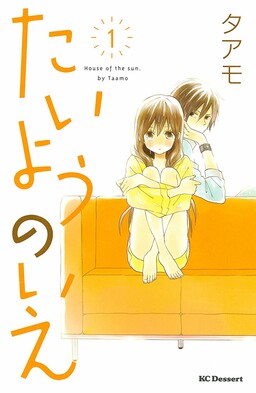
House of the Sun (Taiyou no Ie)
Yu's review of House of the Sun (Taiyou no Ie) — Mao Motomiya, whose home life fell apart when her father remarried, finds herself staying at the house of Hiro, her cheerful childhood friend; his large, warm family gradually becomes the home she didn't know she needed, and the romance that develops is built on that foundation.

Romance / Drama
Sand Chronicles
Yu's review of Sand Chronicles — Ann Uekusa moves from Tokyo to rural Shimane after her parents' separation; her mother's death by suicide shapes everything that follows; the series follows Ann from childhood through adulthood with unflinching attention to grief, depression, and the slow work of becoming a whole person.
Written by
Yu
Manga Enthusiast from Japan
I grew up in Japan and manga literally saved me during a tough time in elementary school. My English isn't perfect, but my love for manga is real — and I want to share it with you.
Disclosure: This post contains affiliate links. As an Amazon Associate, I earn from qualifying purchases at no extra cost to you.