My Love Mix-Up! Review: A Boy Accidentally Reveals His Crush to the Wrong Person and Then Everything Gets Better
by Aruko (Art) / Wataru Hinekure (Story)
Read the first volume. If it doesn't hook you, put it down. It'll hook you.
Buy My Love Mix-Up! on Amazon →*Affiliate link — I earn a small commission at no extra cost to you.
Quick Take
- The romance comedy that earns its genre switch — Aoki begins with a crush on a girl and discovers something different about himself through genuine character development rather than contrivance
- The misunderstanding premise is resolved early; the series is interested in what happens after the characters understand each other, which is where most romance manga ends
- 8 volumes complete; one of the most warmly satisfying romance manga published in recent years
Who Is This Manga For?
- Readers who want romance manga with genuine character development and warm tone
- Anyone interested in boys-love manga that is accessible and emotionally resonant
- Fans of completed romance with a satisfying resolution
- Readers who want romance comedy where the comedy is genuine and the romance is equally genuine
Content Warnings & Age Rating
Age Rating: T (Teen) Content Warnings: Boys-love romance; teen identity exploration; misunderstanding-based comedy
The T rating is accurate. This is warm, accessible content.
Yu's Rating
| Category | Score |
|---|---|
| Story Depth | ★★★★★ |
| Art Style | ★★★★★ |
| Character Development | ★★★★★ |
| Accessibility for Non-Japanese Readers | ★★★★★ |
| Reread Value | ★★★★★ |
Story Overview
Aoki likes Hashimoto. He borrows her eraser to help her pick it up. On the eraser, he sees the name "Ida" written — and assumes this means Hashimoto likes their classmate Ida. While he is processing this, Ida catches him looking at the eraser and concludes Aoki has a crush on him.
Aoki does not correct this. He is not sure why he does not correct it.
The series develops from this misunderstanding through the genuine feelings that emerge as Aoki and Ida spend time together, as Hashimoto's own situation becomes clearer, and as Aoki processes what his feelings actually are.
Characters
Aoki — His quality is a specific gentle confusion — he is not in denial, he is not performing innocence, he genuinely does not know what he is feeling until the series develops it carefully. His development is one of the most honest identity explorations in recent manga.
Ida — His response to the misunderstanding — taking it seriously, being honest about his own uncertainty, engaging genuinely with a situation that could have been dismissed — establishes his character as someone worthy of the story that develops around him.
Hashimoto — Her situation is not forgotten as Aoki's feelings shift; the series develops her own story alongside the main romance with enough care that she is a character rather than a device.
Art Style
Aruko's art is warm and expressive — the character designs are immediately endearing, and the visual language for the comedy and the romance is equally developed. The series is beautifully drawn throughout.
Cultural Context
My Love Mix-Up! was published in Bessatsu Margaret, a shojo magazine, rather than a boys-love specialized magazine — its accessibility to readers who might not normally seek out boys-love content reflects its specific tone. The Japanese high school setting is used to let identity questions develop naturally within an age-appropriate context.
What I Love About It
The chapters where both Aoki and Ida are genuinely uncertain about their feelings and genuinely honest with each other about that uncertainty — where the romance develops through mutual honesty rather than dramatic misunderstanding — are the series' most exceptional content. Romance manga that trusts its characters to communicate is rare.
What English-Speaking Fans Say
Western readers describe My Love Mix-Up! as one of the most joyful manga they have read — the warmth of the character relationships, the genuine comedy, and the romance are consistently cited as producing something that made readers smile while reading. The complete 8-volume run is described as perfectly calibrated.
Memorable Scene ⚠️ Spoiler Warning
The moment Aoki admits to himself — and then to Ida — what his actual feelings are, in the specific, uncertain, honest way that matches how the series has developed him, is the series' most complete emotional moment. It arrives when both characters are ready for it.
Similar Manga
- Given — Boys-love romance with music, more melancholic tone
- Sasaki and Miyano — Boys-love with genre meta-awareness, similar warmth
- Blue Flag — High school identity and romance, different structure
- Our Dreams at Dusk — LGBTQ+ community and identity, different register
Reading Order / Where to Start
Volume 1 — The eraser misunderstanding.
Official English Translation Status
VIZ Media published all 8 volumes. Complete and available.
Pros & Cons
Pros
- One of the most warmly satisfying romance manga in recent memory
- Complete 8-volume arc with perfect resolution
- Both leads are developed genuinely
- The series trusts its characters to be honest with each other
Cons
- Readers who want dramatic romantic tension may find the honest communication approach too smooth
- 8 volumes is short — some readers will want more
- Boys-love readers who want more intensity may find the tone too gentle
Format Comparison
| Format | Notes |
|---|---|
| Individual Volumes | VIZ Media; complete |
| Digital | Available |
Where to Buy
Read the first volume. If it doesn't hook you, put it down. It'll hook you.
This post contains affiliate links. If you purchase through these links, I may earn a small commission at no extra cost to you. As an Amazon Associate, I earn from qualifying purchases.
*Affiliate link — I earn a small commission at no extra cost to you.
More Manga You Might Like
Romance / Drama
I Cannot Reach You
Yu's review of I Cannot Reach You — Kakeru is perfect: good at everything, well-liked, seemingly without needs; his best friend Yamato has been in love with him since childhood but has convinced himself that someone like Kakeru is beyond his reach; the series is about the gap between who Yamato thinks Kakeru is and who Kakeru actually is.
Romance
Ultra Romantic
Yu's review of Ultra Romantic — Tsurezure Ito is so shy his face literally overheats when flustered; Rika Yakumo is so direct she'll say anything she's thinking; together they are trying to figure out their feelings; Bolze's Jump romance comedy about two extremes finding each other.

Romance / Comedy
Romantic Killer
Yu's review of Romantic Killer — Anzu Hoshino wants games, her cat, and chocolate; a wizard named Riri strips these from her and gives her an otome-game reality where handsome men are introduced into her life; she has no interest in any of them, which the series plays as comedy while developing genuine romantic content through Anzu's resistance.
Romance / Comedy
Masamune-kun's Revenge
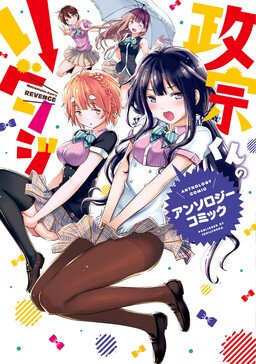
Yu's review of Masamune-kun's Revenge — Masamune Makabe was a chubby child who was cruelly rejected by the beautiful Adagaki Aki with the nickname 'Piggy'; he spent years transforming himself into a handsome, fit boy; now they are in the same high school, and his plan is to make her fall in love with him and then reject her; the plan does not survive contact with actual feelings.
Romance / Comedy
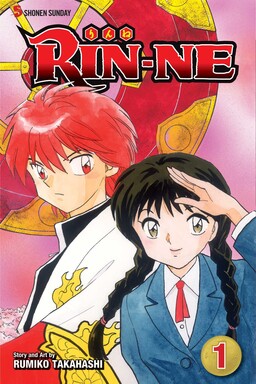
Rin-ne
Yu's review of Rin-ne — Sakura Mamiya has seen ghosts since childhood; at her new school she notices a classmate, Rinne Rokudo, who appears and disappears mysteriously and who she eventually learns is a half-human, half-shinigami boy desperately short on money.
Romance / Comedy
Penguin Revolution
Yu's review of Penguin Revolution — Yukari Fujimaru can see floating wings on talented people; she spots Ryou Katou's enormous wings and ends up as his personal manager in the idol agency he belongs to, while he hides the fact that his famous persona is female.
Written by
Yu
Manga Enthusiast from Japan
I grew up in Japan and manga literally saved me during a tough time in elementary school. My English isn't perfect, but my love for manga is real — and I want to share it with you.
Disclosure: This post contains affiliate links. As an Amazon Associate, I earn from qualifying purchases at no extra cost to you.