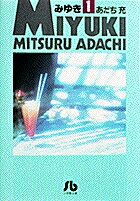
Miyuki Review: Mitsuru Adachi's Sweet Story About Love and the Girl Next Door
by Mitsuru Adachi
Read the first volume. If it doesn't hook you, put it down. It'll hook you.
Buy Miyuki on Amazon →*Affiliate link — I earn a small commission at no extra cost to you.
Quick Take
- Pure, gentle Mitsuru Adachi — the master of bittersweet romance at his most accessible
- Two girls named Miyuki, one boy who loves the wrong one (or does he?) — perfect structural premise
- Short and complete at eight volumes; a lovely weekend read
Who Is This Manga For?
- Mitsuru Adachi fans looking for his earlier, lighter work before Touch
- Romance manga readers who prefer understated feelings over melodrama
- Fans of 80s shonen manga with warmth and humor
- Those who enjoy "slow realization" romance where characters figure out their feelings gradually
Content Warnings & Age Rating
Age Rating: T (Teen) Content Warnings: Mild romantic content, step-sibling relationship theme
The step-sibling dynamic is central but handled with appropriate sensitivity. Nothing inappropriate.
Yu's Rating
| Category | Score |
|---|---|
| Story Depth | ★★★☆☆ |
| Art Style | ★★★★☆ |
| Character Development | ★★★★☆ |
| Accessibility for Non-Japanese Readers | ★★★☆☆ |
| Reread Value | ★★★☆☆ |
Story Overview
Masato Wakamatsu has been in love with Miyuki Kashima for as long as he can remember. She lives next door. She's cheerful, warm, and completely unaware of his feelings. He's too shy to say anything.
When Masato's father remarries, a stepsister moves in. Her name is also Miyuki — Miyuki Wakamatsu. She's quieter than the neighbor Miyuki, more reserved, and clearly nervous about how Masato will receive her as a new family member.
Masato, fully occupied with his feelings for his neighbor Miyuki, barely notices his stepsister Miyuki at first. But she's there. And she's watching. And she has her own feelings that she's not prepared to examine.
Across eight volumes, two relationships develop: Masato's increasingly complicated pursuit of neighbor Miyuki, and his slow, largely unconscious understanding that the person he actually sees — really sees — is the one living in his house.
Characters
Masato Wakamatsu: Thoroughly ordinary in the best possible way. He's not spectacularly talented or tragically burdened. He's a high school boy with a crush who is also unexpectedly decent to the people around him.
Neighbor Miyuki (Miyuki Kashima): Bright, outgoing, surrounded by admirers. She's not a simple character despite the "popular girl" surface — her own feelings are more complicated than they initially appear.
Stepsister Miyuki (Miyuki Wakamatsu): The emotional heart of the series. Her quietness isn't coldness but caution — she doesn't know where she belongs in this new family, and she's learned not to expect much. Watching her slowly relax, slowly allow herself to hope, is the manga's most affecting thread.
Masato's Father: Gently rendered, absent when needed for plot reasons, present enough to feel real.
Art Style
This is early Mitsuru Adachi — his signature style is already present but less refined than his later work. The girls are drawn with particular care; the baseball manga artist who would become famous for Touch is already evident in the sport background scenes. His faces are expressive in the understated way he perfected — characters communicate enormous feeling through small shifts in expression.
The 1980s setting is ambient rather than explicit, visible in fashions and technology without being nostalgic wallowing.
Cultural Context
Mitsuru Adachi is one of the defining voices of Japanese romance and coming-of-age manga. His work — Touch, Rough, Cross Game — shares a common emotional vocabulary: quiet feelings, missed connections, the way the people we love most are sometimes the ones we take longest to recognize.
Miyuki is an early example of this vocabulary in development. The "two characters with the same name causing confusion while the protagonist learns to see clearly" premise is a clever structural choice that externalizes the protagonist's emotional blindness.
The step-sibling relationship is treated with more care than the premise might suggest — Adachi consistently chooses emotional truth over easy drama.
What I Love About It
Mitsuru Adachi understands something that very few manga artists understand: the most powerful romantic moment is often not the confession, or the kiss, but the instant just before — when someone realizes what they feel but doesn't yet know what to do about it.
There's a scene in Miyuki where Masato is watching his stepsister Miyuki across a room, and she doesn't know he's looking. She's doing something ordinary. And the reader sees it happen — the moment of recognition, the shift in how he sees her — before Masato himself understands what he's experiencing.
That gap between feeling and understanding. Adachi lives in that gap. He makes manga from it. And in those quiet, liminal moments, he's one of the best in the medium.
What English-Speaking Fans Say
Miyuki is not well-known in English-speaking communities because it was never officially translated. Adachi fans who read it (through fan translations or Japanese editions) tend to describe it affectionately as "minor Adachi" — not his masterpiece, but unmistakably his work and deeply enjoyable.
The most common observation is that stepsister Miyuki should clearly have been the protagonist's choice all along, and the satisfaction when the story moves in that direction is genuine.
Memorable Scene ⚠️ Spoiler Warning
The moment when stepsister Miyuki, having carefully maintained her distance throughout the series, finally lets herself express what she actually feels — quietly, without drama, without demanding anything — is the series' emotional peak. It's classically Adachi: huge feelings, small expression. The restraint makes it devastatingly effective.
Similar Manga
- Touch: Adachi's masterwork — more complex, more baseball, more profound
- Cross Game: Similar emotional structure, widely considered his finest late-career work
- Maison Ikkoku: Rumiko Takahashi's equivalent of the "slow realization" romance
Reading Order / Where to Start
Volume 1. Short enough to read beginning-to-end in one sitting if you're engaged.
Official English Translation Status
Miyuki has no official English translation. The series is beloved in Japan but has not been licensed for English release.
Pros & Cons
Pros
- Perfect early Adachi — the emotional DNA of Touch is already present
- Eight volumes makes it a low-commitment read
- The stepsister Miyuki is a quietly wonderful character
- Gentle and warm from beginning to end
Cons
- No English translation — requires Japanese or fan translation
- Less ambitious than his later works
- Some readers find the pace too slow
Format Comparison
| Format | Notes |
|---|---|
| Physical | Japanese editions readily available |
| Digital | Available in Japanese |
| Omnibus | Not available |
Where to Buy
No English release yet. That just means you find it before everyone else does.
*Affiliate link — I earn a small commission at no extra cost to you.
More Manga You Might Like
Romance / Comedy
Toradora!
Yu's review of Toradora! — a delinquent-looking boy and a tiny, terrifying girl make a deal to help each other confess to the other's best friend, and discover they had the wrong target all along.
Romance / Comedy
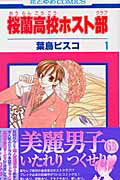
Ouran High School Host Club
Yu's review of Ouran High School Host Club — a scholarship student at an elite school accidentally breaks a vase and must join the Host Club to pay off the debt, in a manga that satirizes shojo tropes while being genuinely charming.

Romance / Comedy
Kaguya-sama: Love Is War
Aka Akasaka's 28-volume romantic comedy (2015–2022) about Miyuki Shirogane and Kaguya Shinomiya, two student council officers at Japan's most elite high school who are both in love and both certain that whoever confesses first loses. Complete in English from VIZ Media.
Romance / Comedy
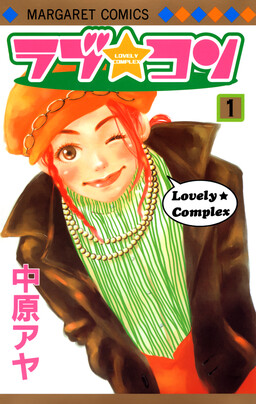
Love★Com
Love★Com follows tall girl Risa and short boy Otani, always mistaken for a comedy duo, as they help each other with their love lives and slowly realize their feelings for each other.
Romance / Drama
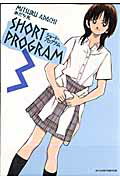
Short Program
Short Program collects Mitsuru Adachi's short story manga — brief, precise studies of the moment when two people almost connect, or do connect, or miss each other by a margin that changes everything.
Romance / Comedy
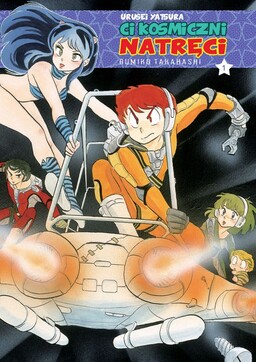
Urusei Yatsura
Yu's review of Urusei Yatsura — Earth is invaded by aliens; a random lottery selects Ataru Moroboshi to compete against the alien princess Lum in a game of tag; he wins by grabbing her horns; his victory declaration is mistaken for a marriage proposal; Lum moves into his house; Ataru continues to chase every other girl he sees while Lum insists on being his wife.
Written by
Yu
Manga Enthusiast from Japan
I grew up in Japan and manga literally saved me during a tough time in elementary school. My English isn't perfect, but my love for manga is real — and I want to share it with you.