
Mixed Vegetables Review: Two People Who Want Each Other's Lives and End Up Wanting Each Other
by Ayumi Komura
Read the first volume. If it doesn't hook you, put it down. It'll hook you.
Buy Mixed Vegetables on Amazon →*Affiliate link — I earn a small commission at no extra cost to you.
They started dating for strategic reasons. Neither of them expected feelings to be part of the deal.
Quick Take
- A shojo romance built around culinary ambition: two students from competing food families fall in love while each trying to use the other to access a different food career
- The culinary passion is genuine; the romance develops authentically from the false start
- 8 complete volumes — one of the better food-romance combinations in shojo manga
Who Is This Manga For?
- Shojo readers who want romance with genuine external stakes beyond the relationship itself
- Food manga fans who want romance alongside the culinary content
- People who enjoy "wrong reasons that become right reasons" romance premises
- Anyone who wants a complete story with a satisfying arc about identity and choice
Content Warnings & Age Rating
Age Rating: T (Teen) Content Warnings: Family pressure, culinary competition themes
Light content throughout. The tensions are between aspirations and expectations, not dramatic conflict.
Yu's Rating
| Category | Score |
|---|---|
| Story Depth | ★★★★☆ |
| Art Style | ★★★★☆ |
| Character Development | ★★★★★ |
| Accessibility for Non-Japanese Readers | ★★★★☆ |
| Reread Value | ★★★★☆ |
Story Overview
Hanayu Ashitaba has grown up in her family's pastry shop — but she wants to be a sushi chef. The detail work, the craft, the specific precision of sushi is what she actually loves. She's been suppressing this to avoid disappointing her family.
Hayato Hyuga has grown up in his family's sushi restaurant — but he wants to be a pastry chef. The creativity, the delicacy, the art of confectionery is where his passion lies. He's been suppressing this for the same reasons.
When they meet at culinary school and discover each other's families, both immediately arrive at the same calculation: dating the other person means access to the family business they actually want. They start dating for strategic reasons.
Komura's insight is that starting a relationship for wrong reasons doesn't prevent real feelings from developing — and that real feelings, once present, force a reckoning with the wrong reasons. The series follows how that reckoning happens and what it costs.
Characters
Hanayu Ashitaba — A protagonist defined by a specific and genuine passion that conflicts with her circumstances. Her development is about learning that what she wants has value even when it complicates things.
Hayato Hyuga — The more reserved half of the couple whose inner life is more complex than his surface suggests. His eventual honesty about what he actually wants is the series' central dramatic moment.
The families — Komura gives both families enough depth to make the family-expectation conflict real. These aren't obstacles; they're people with their own reasonable expectations.
Art Style
Komura's art is clean shojo with expressive character work. The culinary sequences are drawn with attention — specific dishes, actual techniques, the physical work of cooking and baking rendered with visual care. Character designs are attractive and the romantic chemistry is communicated effectively. The eight-volume run shows consistent quality.
Cultural Context
Mixed Vegetables connects to the Japanese food manga tradition — the serious treatment of culinary craft that runs from Oishinbo through contemporary works — while filtering it through shojo romance conventions. The specific tension between pastry and sushi as competing culinary traditions resonates in a food culture where both are taken with complete seriousness.
The "follow your true calling vs. family obligation" theme is a staple of both food manga and shojo romance, and Mixed Vegetables is smart about the intersection: the culinary passion and the family expectation are inseparable from the romance in ways that make the story's resolution matter.
What I Love About It
The chapter where Hanayu watches Hayato work — actually work, doing the thing he loves rather than the thing he's supposed to love — and recognizes in his expression what she sees in herself when she's doing the same. That recognition, before any confession, is where the relationship becomes real.
What English-Speaking Fans Say
A consistent recommendation in shojo romance lists and food manga discussions. The dual culinary ambition premise is praised as distinctive. Hayato and Hanayu's relationship is considered one of the genre's better slow-burn developments. The eight-volume length is appreciated as complete without being padded.
Memorable Scene ⚠️ Spoiler Warning
The scene where Hanayu tells Hayato the actual truth — not the strategic version, not the half-true version, but what she actually wanted from the beginning and what has changed — is the series' defining moment. Komura earns it by having both characters hide themselves throughout, and the honesty is all the more impactful for the waiting.
Similar Manga
| Title | Its Approach | How Mixed Vegetables Differs |
|---|---|---|
| Kitchen Princess | Culinary prodigy romance | Kitchen Princess is more dramatic and fantastical; Mixed Vegetables is more grounded |
| Yakitate!! Japan | Culinary competition manga | Yakitate is more action-focused; Mixed Vegetables centers the romance |
| Oishinbo | Food manga as cultural document | Oishinbo is more educational; Mixed Vegetables uses food as emotional language |
Reading Order / Where to Start
Volume 1, straight through. The premise establishes immediately and the story builds consistently.
Official English Translation Status
Viz Media (Shojo Beat) published all 8 volumes in English. Complete and available.
Pros & Cons
Pros
- The culinary passion in both characters is genuine and well-depicted
- The "wrong reasons become right reasons" premise is well-executed
- Both characters have real arcs
- Complete 8-volume story with a satisfying resolution
Cons
- The strategic beginning makes some readers impatient for the genuine relationship
- The culinary content is detailed enough to slow pace for readers not interested in it
- Not distinctive outside its genre overlap
- The pacing slightly drags in the middle volumes before the final arc
Is Mixed Vegetables Worth Reading?
For shojo readers and food manga fans — yes. The combination of genuine culinary passion and honest romance development makes it one of the better examples of both.
Format Comparison
| Format | Pros | Cons |
|---|---|---|
| Physical | Complete 8-volume set | — |
| Digital | Convenient | — |
| Omnibus | No omnibus available | — |
Where to Buy
Read the first volume. If it doesn't hook you, put it down. It'll hook you.
This post contains affiliate links. If you purchase through these links, I may earn a small commission at no extra cost to you. As an Amazon Associate, I earn from qualifying purchases.
*Affiliate link — I earn a small commission at no extra cost to you.
More Manga You Might Like

Romance / Comedy
My Love Story!!
Yu's review of My Love Story!! — a huge, scary-looking boy with no luck with girls saves a girl from a groper on the train, and she falls in love with him — not his handsome best friend.

Romance / Comedy
I Hate You More Than Anyone
Yu's review of I Hate You More Than Anyone — Kazuha Yoshida is the eldest of seven siblings and has been fighting with next-door neighbor Seiichi Tennozu since childhood; the series follows how their determined hatred gradually reveals itself as something more complicated and more honest across 9 volumes.
Romance / Comedy
Kaichou wa Maid-sama!
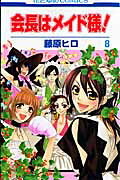
Yu's review of Kaichou wa Maid-sama! — Misaki Ayuzawa is the strict student council president of a recently co-ed school; she secretly works at a maid cafe to support her family; when the most popular boy at school, Usui Takumi, discovers her secret, he keeps it — and keeps showing up at her workplace across 18 volumes.

Romance / Comedy
Yuukan Club
Yuukan Club follows six ultra-wealthy high school students who form the Leisure Club and stumble into mysteries, adventures, and romantic entanglements while maintaining an existence so extravagant it functions as its own genre of comedy.

Romance / Comedy
The Wallflower
Four gorgeous boys must transform a horror-loving recluse into a proper lady — or pay rent for life.

Romance / Comedy
Ultra Maniac
Yu's review of Ultra Maniac — Nina is a witch from the Magic Kingdom studying abroad at a regular Japanese middle school; she is terrible at concealing her magic; Ayu, her only friend who knows her secret, tries to manage the chaos while pursuing her own low-key romance.
Written by
Yu
Manga Enthusiast from Japan
I grew up in Japan and manga literally saved me during a tough time in elementary school. My English isn't perfect, but my love for manga is real — and I want to share it with you.
Disclosure: This post contains affiliate links. As an Amazon Associate, I earn from qualifying purchases at no extra cost to you.