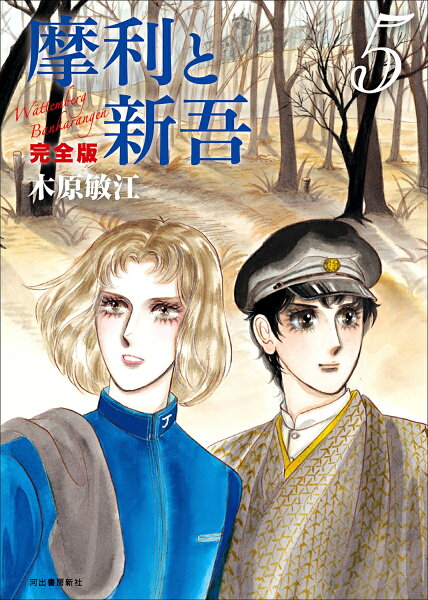
Mari to Shingo Review: The Taisho School Romance That Refused to Simplify What It Felt
by Toshie Kihara
Read the first volume. If it doesn't hook you, put it down. It'll hook you.
Buy Mari to Shingo on Amazon →*Affiliate link — I earn a small commission at no extra cost to you.
The Taisho era had no language for what these two boys felt. The manga doesn't need it.
Quick Take
- Toshie Kihara's 1970s shojo classic — two boys at an elite school, an era that cannot name what passes between them, and 10 volumes that don't try to name it either
- Historical setting used to explore the space between words — friendship, rivalry, love, loyalty exist without clear category
- Beautiful, tragic, and emotionally precise — one of the great works of classic shojo manga
Who Is This Manga For?
- Shojo manga readers who want historical romance with real emotional complexity
- Readers interested in Taisho-era Japan — the setting is carefully rendered and historically grounded
- Anyone who appreciates emotional ambiguity — the series never resolves what Mari and Shingo feel into a single readable category
- Fans of BL-adjacent shojo from the 1970s and 1980s
Content Warnings & Age Rating
Age Rating: T (Teen) Content Warnings: Intense emotional themes. Ambiguous romantic relationships between male characters. Historical period setting with period-appropriate attitudes.
Suitable for teen readers and above.
Yu's Rating
| Category | Score |
|---|---|
| Story Depth | ★★★★★ |
| Art Style | ★★★★☆ |
| Character Development | ★★★★★ |
| Accessibility for Non-Japanese Readers | ★★★☆☆ |
| Reread Value | ★★★★☆ |
Story Overview
Japan, the Taisho era (1912-1926). An elite school where the sons of aristocratic families learn alongside ambitious boys from lower social positions. Mari — full name Fujiwara Marinosuke — is everything such a school produces: beautiful, refined, from a family of consequence. Shingo is his opposite: direct, physical, from the streets, admitted on ability rather than lineage.
Their first encounter is a confrontation. Their relationship develops through confrontation — argument, competition, physical challenge — and through the particular closeness that intense conflict between equals generates. Neither can define what they are to each other, and the Taisho setting provides historical grounding for why definition would be impossible: the language they would need doesn't yet exist in their world.
The school backdrop gives the series structure — dormitory life, academic competitions, the social hierarchies that elite institutions reproduce — but the series' real subject is the bond between Mari and Shingo, observed closely enough that the reader always knows more about it than the characters do.
Characters
Mari (Fujiwara Marinosuke): Aristocratic, beautiful, accustomed to a world that arranges itself around his preferences — and genuinely destabilized by Shingo, who doesn't.
Shingo: The disruptive force from outside the school's social world — his directness and physical confidence are what Mari has never encountered, and cannot dismiss.
Art Style
Kihara's art is classic 1970s shojo at its most refined — elegant figures, expressive emotional panels, the careful costume and setting detail that the Taisho era demands. The character designs make the social distance between Mari and Shingo legible at a glance.
Cultural Context
Mari to Shingo ran in Shojo Comic from 1977 to 1984. It belongs to the tradition of shojo manga that explored intense male relationships without overt romantic categorization — a tradition that ran alongside the emerging BL genre while maintaining a different register.
The Taisho era is a common setting for this kind of story because its historical distance allows emotional exploration that contemporary settings would require to be categorized differently.
What I Love About It
I love that the series trusts the reader to understand what it cannot say.
There are things Mari and Shingo feel that the Taisho setting provides no vocabulary for. Kihara doesn't provide substitute vocabulary. She depicts what they do, what they fail to do, how they look at each other — and leaves the naming to the reader. The restraint is the point. What cannot be named is not diminished; it may be intensified.
What English-Speaking Fans Say
Not known in English-speaking markets. Among readers of classic shojo manga and Japanese readers who grew up with the series, Mari to Shingo is regarded as one of the genre's finest examples of emotional precision in a historical setting.
Memorable Scene ⚠️ Spoiler Warning
A moment of physical proximity — not romantic in any conventional sense — in which both characters become aware simultaneously of something they cannot articulate and would not be able to articulate even if they tried. The scene's power is entirely in what neither character says, and Kihara renders the silence visually with the precision of someone who has thought about exactly what silence looks like.
Similar Manga
| Title | Its Approach | How Mari to Shingo Differs |
|---|---|---|
| Thomas no Shinzo (Heart of Thomas) | Intense male relationships in a European school setting | Japanese Taisho setting with different cultural textures |
| Kaze to Ki no Uta | Explicit romantic relationship between male characters in historical setting | Maintains ambiguity throughout — nothing is named |
| Oniisama e | Intense female relationships in an elite school | Male protagonists, historical period, more physical confrontation |
Reading Order / Where to Start
Volume 1. The relationship is established from the first meeting and builds continuously.
Official English Translation Status
Mari to Shingo has no official English translation.
Pros & Cons
Pros
- Emotional precision that most manga never achieves
- Taisho setting rendered with genuine historical care
- Characters drawn with enough complexity to sustain 10 volumes of close observation
- The restraint is a feature, not a limitation
Cons
- No English translation
- Historical setting requires context
- The ambiguity may frustrate readers who want clear relationship categorization
- Emotional rather than plot-driven — slow for readers who want narrative events
Is Mari to Shingo Worth Reading?
For shojo manga readers who want emotional depth and historical setting, yes — this is among the finest examples of both. For readers who want explicit romance or clear narrative arc, the ambiguity and emotional focus may not match what they came for. But as a work of emotional precision, it is exceptional and genuinely worth seeking out.
Format Comparison
| Format | Notes |
|---|---|
| Physical | Japanese editions available |
| Digital | Available in Japanese |
| Omnibus | Selected collected editions available |
Where to Buy
No English release yet. That just means you find it before everyone else does.
*Affiliate link — I earn a small commission at no extra cost to you.
More Manga You Might Like
Romance / Historical
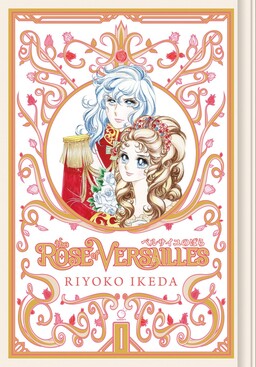
The Rose of Versailles
Yu's review of The Rose of Versailles — Oscar François de Jarjayes is raised by her father as a son and commander of the royal guard; she navigates the court of Louis XVI and Marie Antoinette, torn between duty to the aristocracy and growing awareness of what the common people suffer; as the French Revolution approaches, the world she has served is ending.
Romance
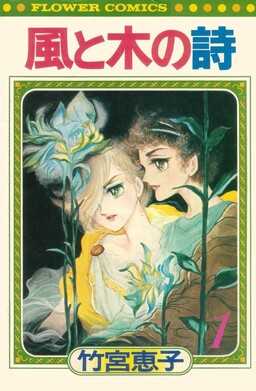
Kaze to Ki no Uta
Yu's review of Kaze to Ki no Uta — set in a 19th century French boarding school, the relationship between Serge, a half-Japanese student with a traumatic past, and Gilbert, a beautiful and sexually promiscuous boy whose behavior conceals something devastating; the manga that essentially created the Boys' Love genre, published between 1976 and 1984.

Romance / Drama
Fruits Basket
Yu's review of Fruits Basket — a girl who has lost everything moves in with a family cursed to transform into animals of the Chinese zodiac, and slowly melts the ice that generations of abuse built around their hearts.
Romance / Historical
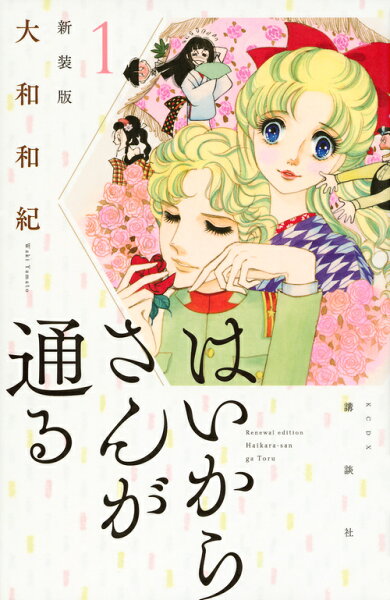
Haikara-san: Here Comes Miss Modern
Haikara-san follows Benio Hanamura, a spirited Taisho-era young woman who defies tradition, loves sake and kendo, and refuses to accept the arranged marriage her father has imposed on her — until she meets her fiancé.
Romance / Drama
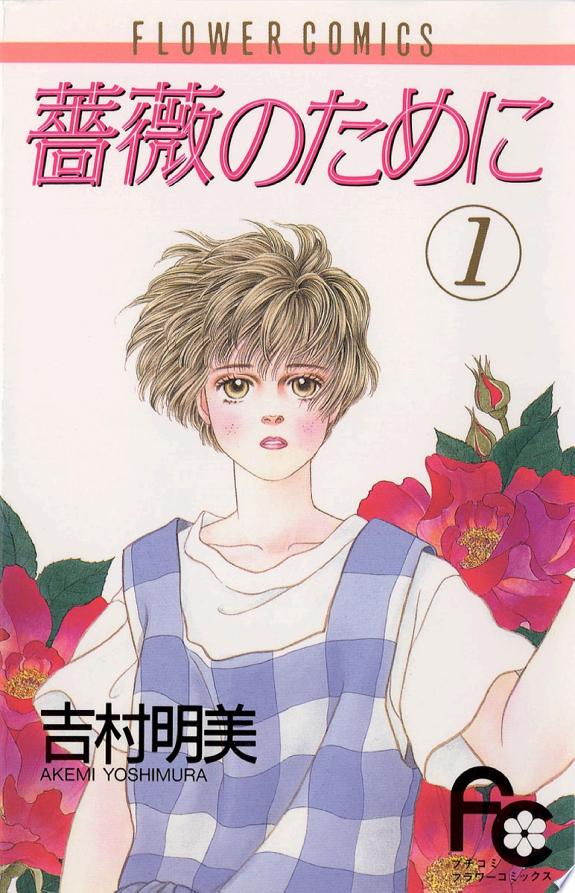
Bara no Tame ni
Bara no Tame ni follows Yuri Makurano, a plain, orphaned girl who learns her actress 'mother' is alive — along with three glamorous half-siblings — and a buried secret about her real parentage. An award-winning Shogakukan shojo drama by Akemi Yoshimura.
Romance / Comedy
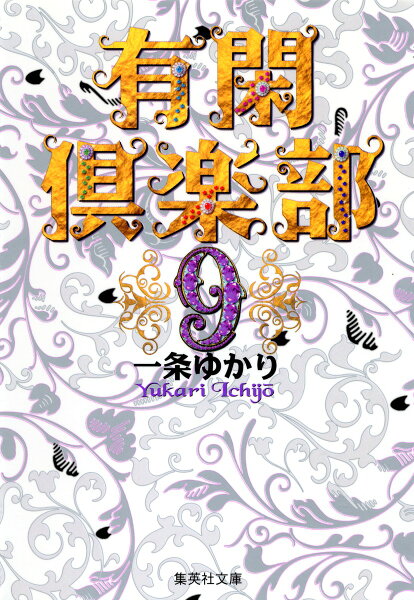
Yuukan Club
Yuukan Club follows six ultra-wealthy high school students who form the Leisure Club and stumble into mysteries, adventures, and romantic entanglements while maintaining an existence so extravagant it functions as its own genre of comedy.
Written by
Yu
Manga Enthusiast from Japan
I grew up in Japan and manga literally saved me during a tough time in elementary school. My English isn't perfect, but my love for manga is real — and I want to share it with you.