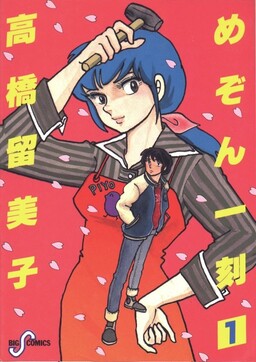
Maison Ikkoku Review: A Ronin Falls in Love With His Boarding House Manager and Spends Years Being Terrible at Showing It
by Rumiko Takahashi
*Affiliate link — I earn a small commission at no extra cost to you.
Quick Take
- Rumiko Takahashi's quietest and most mature romance — a slow build across 15 volumes that earns everything it delivers
- The central tension: Godai loves Kyoko; Kyoko is not over her dead husband; neither of them is good at saying things directly
- A classic of 1980s manga romance and still the standard for slow-burn love stories
Who Is This Manga For?
- Readers who want romance that develops at real speed — across years, not weeks
- Fans of Rumiko Takahashi who want something more grounded than Ranma ½ or Inuyasha
- Anyone who appreciates comedy that comes from character rather than situation
- Readers who can sit with a love story that does not resolve quickly
Content Warnings & Age Rating
Age Rating: T (Teen) Content Warnings: Alcohol use (several boarders drink heavily throughout); mild adult themes; romantic drama involving a widow and her grief
Nothing graphic; the rating is primarily for thematic content.
Yu's Rating
| Category | Score |
|---|---|
| Story Depth | ★★★★★ |
| Art Style | ★★★★☆ |
| Character Development | ★★★★★ |
| Accessibility for Non-Japanese Readers | ★★★★☆ |
| Reread Value | ★★★★★ |
Story Overview
Maison Ikkoku is a dilapidated boarding house in 1980s Tokyo. Yusaku Godai lives there, failing his entrance exams, surrounded by chaotic neighbors who drink and make noise and refuse to let him study. He is about to move out when the new boarding house manager arrives: Kyoko Otonashi, 22 years old, newly widowed, trying to manage a building full of people who are nothing like what she expected.
Godai falls in love immediately. The series then takes 15 volumes to explore what happens when two people who obviously belong together are separated by grief, timing, other people, and their own inability to simply say what they feel.
The comedy comes from the boarding house chaos — the drunk neighbors who misread every situation, the rival suitors who appear at the worst moments, the endless misunderstandings. The emotional core is the specific difficulty of falling in love when one person is still inside a previous love.
Characters
Yusaku Godai — He is a ronin — someone who failed his entrance exams and is preparing to take them again. He is not impressive. He is not successful. He is sincere, fumbling, and deeply in love in ways he cannot express clearly. He grows over 15 volumes into someone who has actually earned the thing he wants.
Kyoko Otonashi — A young widow managing a building that does not run smoothly and a heart that does not close easily. Her grief for her husband is treated seriously — not as an obstacle to be overcome but as a real part of who she is.
Mr. Soichiro — Kyoko's late husband; his presence throughout the series, primarily through Kyoko's references to him and a dog she named after him, is one of manga's most effective uses of an absent character.
Art Style
Takahashi's art in Maison Ikkoku is cleaner and more restrained than her other series — the chaotic visual energy of Ranma ½ gives way to something quieter that fits the material. The seasonal changes — the series runs through multiple years — are used consistently to mark time.
Cultural Context
The ronin system — students who fail university entrance exams and spend one or more additional years studying before retrying — was a significant feature of Japanese education culture in the 1980s. Godai's situation was immediately legible to Japanese readers of the time as a specific kind of failure with a specific kind of social pressure attached to it.
What I Love About It
The seasonal rhythm. Maison Ikkoku uses cherry blossom season, summer festivals, autumn, winter snow — the Japanese seasonal calendar — to mark the passing years in a way that makes the slow burn feel like actual time passing. By the time the seasons have cycled through multiple times, the reader has spent years in Maison Ikkoku alongside Godai.
What English-Speaking Fans Say
Western readers consistently describe Maison Ikkoku as the Rumiko Takahashi series for readers who have outgrown the fighting and magic of her other work. The ending — which I will not summarize — is described as one of manga's most earned romantic conclusions. Readers who have spent 15 volumes with Godai and Kyoko consistently report that it lands with full emotional weight.
Memorable Scene ⚠️ Spoiler Warning
The moment near the end when Godai finally says what he has spent 15 volumes trying to say — simply, directly, without fumbling — and the way it lands is the culmination of everything the series built.
Similar Manga
- Ranma ½ — Same author, more comedic and chaotic
- Honey and Clover — Unrequited love, young adults, similar emotional register
- Nana — Adult romance, complicated feelings, 1980s/2000s comparison
- Touch — Slow burn romance, similar Japanese seasonal setting
Reading Order / Where to Start
Volume 1 — the boarding house and its residents establish immediately.
Official English Translation Status
Viz Media published the complete 15-volume run. All volumes available.
Pros & Cons
Pros
- One of the finest slow-burn romances in manga history
- Both leads grow genuinely over 15 volumes
- The comedy never undermines the emotional seriousness
- Complete in English
Cons
- The slow pace is the point but requires commitment
- Some of the comedy involves characters behaving badly
- The 1980s setting and art style may feel dated to some readers
Format Comparison
| Format | Notes |
|---|---|
| Individual Volumes | Viz; standard |
| Digital | Available |
Where to Buy
Get Maison Ikkoku Vol. 1 on Amazon →
This post contains affiliate links. If you purchase through these links, I may earn a small commission at no extra cost to you. As an Amazon Associate, I earn from qualifying purchases.
*Affiliate link — I earn a small commission at no extra cost to you.
Written by
Yu
Manga Enthusiast from Japan
I grew up in Japan and manga literally saved me during a tough time in elementary school. My English isn't perfect, but my love for manga is real — and I want to share it with you.
Disclosure: This post contains affiliate links. As an Amazon Associate, I earn from qualifying purchases at no extra cost to you.