Loveless Review — A Twelve-Year-Old With Cat Ears Investigates His Brother's Death and Inherits His Brother's Fighter
by Yun Kouga
Read the first volume. If it doesn't hook you, put it down. It'll hook you.
Buy Loveless on Amazon →*Affiliate link — I earn a small commission at no extra cost to you.
I read Loveless during a long depressive episode in my early twenties. I do not recommend reading Loveless during a depressive episode. The manga is a beautiful, complicated, ethically fraught work that asks you to sit with discomfort. It is also one of the most psychologically observed series in modern shoujo, and I am still thinking about it ten years later.
Let me be honest about what this manga is, what it does well, and what it asks of you.
Quick Take
- A psychologically dense supernatural mystery wrapped around an emotionally fraught and ethically contested central relationship
- Yun Kouga's art is exceptional; the writing is observant; the central relationship will be a deal-breaker for many readers
- Age rating: M (Mature) — see dedicated sections below about the age gap and what the manga is actually depicting
What Is the Age Gap in Loveless? Is It a Problem?
Yes, the age gap is the manga's defining controversy. I want to address it directly.
The ages:
- Ritsuka Aoyagi — 12 years old at the start of the manga (in some chapters he ages to 13)
- Soubi Agatsuma — 20 years old at the start of the manga (in later volumes 21–22)
What is the relationship?
- Soubi is initially Ritsuka's "Fighter" — a battle partner within the manga's supernatural world. They share a "name" (Loveless) and form a Sacrifice-Fighter pair
- Soubi shows romantic/emotional interest in Ritsuka from early in the series — verbal expressions of love, requests for kisses, declarations of belonging
- Ritsuka is uncomfortable, confused, and often distressed by Soubi's behavior. The manga does not depict the relationship as healthy
- There is no sexual content between Ritsuka and Soubi. The manga draws a clear line at non-sexual physical contact for them
- The manga itself acknowledges the relationship is problematic. Multiple characters within the story call Soubi out for inappropriate behavior toward Ritsuka
- The narrative complication is that Soubi was psychologically abused by Ritsuka's older brother Seimei before the manga begins — Soubi's behavior toward Ritsuka is partly trauma-driven, partly residual programming from Seimei. This context does not justify the behavior; the manga uses it to make the relationship something the characters must work through, not something they perform happily
How does Western reception respond?
- Most Western reviewers consider the age gap as portrayed deeply uncomfortable. Some consider it disqualifying
- Some readers interpret the manga as a critical examination of an unhealthy bond, with Ritsuka learning across the series to resist Soubi's emotional pressure and assert his own boundaries
- Other readers interpret the manga as romanticizing an inappropriate relationship despite its in-story warnings
- Both readings are defensible from the text
Recommendation:
- Skip this manga if you cannot engage with romantic and emotional content between a 12-year-old and a 20-year-old, regardless of whether the manga depicts it critically or not
- Read with awareness if you can engage with morally complicated material that depicts (rather than endorses) the central relationship. The manga is observant, intelligent, and not a simple romance — but it is also not for everyone
I want to be clear: I am not telling you the manga is "actually okay." I am telling you the manga is complicated, and your response to that complication is a legitimate personal judgment.
What Is the Age Rating?
VIZ Media (the current English publisher) rates the series M (Mature) — 18+. The rating is appropriate.
What's in the manga:
- No on-page sexual content between Ritsuka and Soubi
- Ambiguous romantic and emotional content between a child and an adult (the central concern; see above)
- Psychological abuse themes — Seimei's manipulation of Soubi is depicted across many volumes
- Spell Battle violence — the manga's combat system is verbal-magical rather than physical, but characters do get hurt
- Identity dissociation — Ritsuka's memory gaps and identity uncertainty are sustained themes
- Difficult family content — Ritsuka's mother behaves abusively toward him; this is recurring background
The M rating is the floor. The manga is not graphically violent or sexually explicit. It is emotionally and ethically intense in ways that the rating does not fully convey.
Is Loveless BL?
Loveless is published in a magazine (Monthly Comic Zero Sum) that runs both shounen-ai-coded and non-BL series. The series is generally categorized as shounen-ai (boys' love adjacent) rather than full BL, with the following nuances:
- The central male-male emotional/romantic relationship is the manga's spine
- There is no explicit sexual content
- The "BL" label varies by region and reader; Japanese categorization is closer to "psychological supernatural drama with shounen-ai elements"
- Other relationships in the manga are also queer-coded (multiple male-male and female-female pairs in the supporting cast)
If you searched "Loveless BL": yes, in the broad sense, though it is more accurately "shounen-ai psychological drama with significant age-gap issues."
What Is Loveless About? (Plot Summary)
The manga is set in a Japan where some elements of biology are different. Specifically:
- Children have cat ears and tails as physical markers of virginity/innocence. The ears/tail are lost when the child has their first sexual experience. This is not a euphemism; it is depicted as visible biology
- Names have magical power — every person has a "name" (separate from their birth name) that defines them, can be invoked in combat, and can be "destroyed" in Spell Battles
- Spell Battles are a form of combat where two pairs face each other. Each pair consists of a Sacrifice (who takes the damage) and a Fighter (who deals the damage). The pair shares a single name. They are bound to each other
Ritsuka Aoyagi is twelve. He has cat ears. His older brother Seimei was murdered two years before the manga begins. Ritsuka has memory problems: he knows that he changed dramatically about two years ago — his personality shifted, his memories from before are largely inaccessible — but he doesn't know why or what happened. His mother treats him as if he is "not the real Ritsuka" and physically abuses him when he disappoints her expectations of who her son should be.
Soubi Agatsuma is a twenty-year-old university student. He arrives at Ritsuka's school one day and tells Ritsuka two things: (1) he was Seimei's Fighter, and (2) Seimei left instructions before his death that Soubi should now be Ritsuka's Fighter. Their pair name is Loveless.
The next 12+ volumes follow:
- Ritsuka and Soubi forming a Sacrifice-Fighter pair and fighting other Spell Battle pairs
- Ritsuka investigating who killed Seimei and why
- The gradual reveal of what Seimei was — and what Seimei did to Soubi, to Ritsuka, and to the larger system of named pairs
- Ritsuka growing into his own identity, separately from being Seimei's brother or Soubi's Sacrifice
- The shadowy organization (the Seven Moons / Septimal Moon Academy) behind the pair system
The series has been on indefinite hiatus since 2019. Volume 13 was published in Japanese; volume 14 has been delayed indefinitely. The English release through VIZ has caught up to the published Japanese content (volume 12 is available; volume 13 is pending).
Who Is This Manga For?
- Readers who can engage with morally complicated material depicting (not endorsing) inappropriate relationships
- Psychological drama fans who like identity, memory, and attachment themes
- Yun Kouga fans (Earthian, Gestalt) who want her most sustained work
- Fans of supernatural mystery with deep worldbuilding (Pandora Hearts, 07-Ghost, No. 6)
- Not for: readers who cannot read past the age gap; readers who want healthy romance; readers who need closure (the series is on indefinite hiatus)
Content Warnings & Age Rating
Age Rating: M (Mature) — 18+ Content Warnings: Romantic and emotional content between a 12-year-old and a 20-year-old (no sexual content but pervasive emotional inappropriateness); psychological abuse (Seimei's treatment of Soubi); maternal physical abuse (Ritsuka's mother); identity dissociation; spell-battle violence; some queer-coded relationships across the supporting cast
The age-gap content is the central concern. Other warnings are notable but less defining.
Story Overview
Volumes 1–3 — Setup. Ritsuka meets Soubi. The first Spell Battles. Introduction to the pair system, the Septimal Moon Academy, and the recurring antagonists. Ritsuka's family situation establishes. The Seimei mystery is introduced.
Volumes 4–7 — Deepening. The relationship between Ritsuka and Soubi becomes more emotionally intricate. Other Sacrifice-Fighter pairs are introduced (Zero pairs, Breathless, etc.). The investigation into Seimei's death intensifies. Ritsuka begins to recover small pieces of his missing memory.
Volumes 8–12 — Revelations. The truth about Seimei begins to emerge. The truth about Soubi's history with Seimei emerges in parallel. The institutional structure behind the pair system is exposed. Ritsuka grows into his own agency in ways that complicate his relationship with Soubi.
Volumes 13–14 (Japanese; partially unavailable in English) — The series approaches what would be its endgame, but has been on hiatus since 2019. Resolution is currently unavailable.
Characters
Ritsuka Aoyagi — The protagonist whose specific fragility is the series' most carefully drawn element. Twelve years old at the start, intelligent, observant, traumatized, in an abusive home situation, with memory gaps that make his own identity inaccessible to him. Kouga writes Ritsuka with rare care. He is not a passive victim; he is a child trying to figure out who he is while everyone around him has agendas for who they want him to be.
Soubi Agatsuma — The complicated adult character. Twenty years old, a university student, a Fighter formerly bound to Seimei. Soubi's behavior toward Ritsuka is, as discussed above, the manga's ethical complication. His own history with Seimei (extensive psychological abuse) is the context the manga uses to make him understandable without making him acceptable. Kouga writes Soubi as a person who has been broken and is trying — sometimes failing, sometimes succeeding — to be different than what he was taught to be.
Seimei Aoyagi — The absent brother. Dead before the manga begins. Present in the manga's emotional architecture across every volume. What Seimei actually was — and what he actually did to Soubi, to Ritsuka, and to the larger system — is one of the manga's primary mysteries. The reveals across volumes 8–12 reshape every preceding volume's meaning.
The Zero pairs (Natsuo and Yoji) — A pair of children whose place in the manga's emotional logic is one of the most affecting in the series. Their relationship to Ritsuka develops across volumes.
Yayoi Shioiri and Hawatari Yuiko — Ritsuka's two normal-world friends. Important because they ground Ritsuka in something outside the supernatural plot. The manga's quietest emotional moments often happen with them.
Art Style
Yun Kouga's art is exceptional. The line work is delicate and precise; the panel compositions are visually distinctive; the use of negative space and selective detail communicates emotional weight. Spell Battles are rendered as visible text — the actual words of attacks appear on the page as graphic elements — which is unusual and effective.
Character designs are immediately distinguishable. Soubi's design (long blond hair, glasses, distinctive wardrobe) has become iconic in fan communities. Ritsuka's cat ears and tail are rendered with care — the ears in particular are emotionally expressive across the series.
The art has aged well. The manga has been running since 2002, and Kouga's style has remained consistent.
Cultural Context
Loveless ran in Monthly Comic Zero Sum from 2002 to 2019 (currently on hiatus). The magazine is published by Ichijinsha and runs a mix of josei, shounen-ai-adjacent, and supernatural drama series. Loveless was one of the magazine's flagship works for nearly two decades.
The cat-ears-as-innocence-marker premise is a specific Japanese pop-cultural device. It draws on the kemonomimi (animal-human hybrid) tradition and uses it as visible biology in a way that makes the loss of innocence — sexual, psychological, or both — physically marked. This device has been deployed in many manga but Loveless is one of its most thematically committed users.
The age-gap discourse around Loveless in English-language fan spaces has been ongoing for nearly 20 years. The series was widely loved in early-2000s English manga fandom when standards for what was "okay" were different; the discourse has shifted over time as Western readers have grown more critical of age gaps in BL/shounen-ai. Loveless is now often discussed as a series that ages poorly in some respects while remaining artistically distinguished in others.
A 2005 anime adaptation by J.C.Staff (12 episodes) covers approximately the first 4 volumes. The anime is available in English subtitled/dubbed and is generally considered a faithful but incomplete adaptation.
What I Love About It
Ritsuka's friendship with Yuiko.
I won't say which volume. Across the series, Ritsuka has a classmate named Yuiko — a cheerful, slightly insecure girl who at the start of the manga has a crush on him. Ritsuka tells her, gently but firmly, that he doesn't return her feelings and would prefer to be friends. Yuiko accepts this. They become friends.
What I love is how Kouga writes this friendship across the years. Yuiko does not get reduced to a romantic plot complication. She does not get punished for her initial crush. She does not become a third wheel to the Ritsuka-Soubi relationship. She is just Ritsuka's friend — someone who knows him as a regular twelve-year-old, someone who isn't trying to figure out what Seimei did, someone who exists outside the Spell Battle world. Her function in the manga is to be the proof that Ritsuka has a life that is not consumed by the central plot.
The scenes between Ritsuka and Yuiko are some of the manga's quietest. They eat lunch. They walk home. They worry about each other in normal twelve-year-old ways. These scenes do not advance the supernatural plot. They are the manga's reminder that Ritsuka is, despite everything, still a kid who deserves to have a friend who treats him like a kid.
That is what I think Loveless does at its best. The manga is interested in damaged people doing damaged things to each other inside an abusive system — and it is also interested in the small ordinary connections that keep damaged people from being only their damage. Yuiko is Kouga's argument that even in the middle of this manga, a normal afternoon walk with a friend is real and important.
Ritsuka spends a lot of the manga being unsure who he is. With Yuiko, he doesn't have to know yet. He just gets to be twelve. That's a gift the manga gives him, and gives the reader by extension.
What English-Speaking Fans Say
Loveless has a long and complicated reception history in English-speaking fan communities. The early 2000s reception was almost uniformly positive; the manga was considered a sophisticated, artistic work. The more recent reception — particularly post-2015 — has been more critical, with the age gap and Soubi's behavior receiving more attention as legitimate concerns.
Current consensus: the manga is artistically distinguished, psychologically intelligent, and morally complicated in ways that some readers find generative and others find disqualifying. Both readings are valid. Yun Kouga's craft is universally praised even by readers uncomfortable with the central relationship.
The hiatus is the primary unresolved frustration. The series has not had a regular publication schedule since 2019.
Memorable Scene ⚠️ Spoiler Warning
The first major confrontation between Ritsuka and Seimei (in flashback, or in present-day terms — I'm being deliberately vague about which).
I won't spoil specifics. Somewhere in the middle volumes, the manga gives Ritsuka a sustained scene with Seimei in which Ritsuka — for the first time in the series — directly confronts who his brother actually was. The scene is not action-driven. There is no Spell Battle. There is just Ritsuka, finally able to see Seimei without the protective filter of memory loss and family loyalty, asking the questions he has been unable to ask.
What makes the scene work is what Seimei's responses reveal. Seimei is not a generic villain. His worldview is coherent. His treatment of Soubi, of Ritsuka, of the institutions around them — all of it follows from a specific set of beliefs that Seimei holds without doubt. The scene allows Seimei to be the antagonist while also being a person, which is the harder writing decision.
Ritsuka's response — what he decides about his brother, what he refuses to forgive, what he chooses to do with his own life now that he knows — is the manga's emotional core. The relationship with Soubi is part of what Ritsuka navigates, but it is not the only thing. Ritsuka's own agency is what Loveless is, in the end, about. The manga's title gives him a name. The manga's plot is whether he chooses to become a person separate from the name.
Similar Manga
| Title | Its Approach | How Loveless Differs |
|---|---|---|
| Earthian (Yun Kouga) | Same author's earlier work; supernatural angels with similar emotional intensity | Earthian is shorter and more romantic; Loveless is longer and more psychological |
| Pandora Hearts | Identity themes, supernatural mystery, ambiguous relationships | Pandora Hearts is more action; Loveless is more interior |
| 07-Ghost | Naming and identity themes, supernatural fantasy | 07-Ghost is broader-scope; Loveless is more contained |
| No. 6 | Dystopian fantasy with intense male-male emotional bond | No. 6 has less age complication; Loveless is more morally fraught |
Reading Order / Where to Start
Volume 1. If the age gap content is something you cannot read around: do not start. The first volume establishes the central relationship dynamic.
For Kouga curious readers: read Loveless if you can engage with the central concern; read Earthian first if you can't.
Official English Translation Status
Tokyopop originally published volumes 1–8 in English (2006–2010). VIZ Media (Sublime imprint) continued the series from volume 9. Currently 12 volumes are available in English. The Japanese series is at 13 volumes (with 14 pending due to hiatus). The English release is roughly current with the published Japanese content.
The 2005 anime is available in English subbed/dubbed on streaming platforms.
Pros & Cons
Pros
- Yun Kouga's art is exceptional
- Psychologically sophisticated handling of identity, memory, and attachment
- World-building (Spell Battles, name system) is genuinely original
- Ritsuka's character work is rare and careful in shoujo
- Yuiko and the normal-world friendships are some of the manga's quiet strengths
Cons
- The age gap is significant and will be disqualifying for many readers
- Soubi's behavior toward Ritsuka is uncomfortable across the series
- On indefinite hiatus since 2019; resolution unlikely in the near term
- Ritsuka's family abuse is recurring background content
- The morally complicated central relationship is an acquired taste. It won't land for everyone, especially readers who want clearly healthy romantic dynamics.
Is Loveless Worth Reading?
Honestly: it depends entirely on your relationship to the central concern.
If you can engage with morally complicated material that depicts (rather than endorses) an inappropriate relationship: the manga is artistically distinguished and psychologically intelligent, and the 12 English volumes are a serious work of fiction.
If you cannot read past the 12-and-20 dynamic regardless of context: skip without guilt. Your reaction is legitimate. The manga is not the only good thing in shoujo and your time is finite.
I am not going to pretend either reading is the only correct one.
Format Comparison
| Format | Notes |
|---|---|
| Physical English | Tokyopop (vol 1–8, mostly out of print); VIZ Sublime (vol 9–12, in print) |
| Digital English | Available via VIZ digital and Kindle for the VIZ volumes |
| Japanese | All 13 published volumes available; volume 14 pending |
| Anime (J.C.Staff, 2005) | 12 episodes; covers approximately volumes 1–4 |
Where to Buy
Read the first volume. If it doesn't hook you, put it down. It'll hook you.
This post contains affiliate links. If you purchase through these links, I may earn a small commission at no extra cost to you. As an Amazon Associate, I earn from qualifying purchases.
*Affiliate link — I earn a small commission at no extra cost to you.
More Manga You Might Like
Romance / Drama
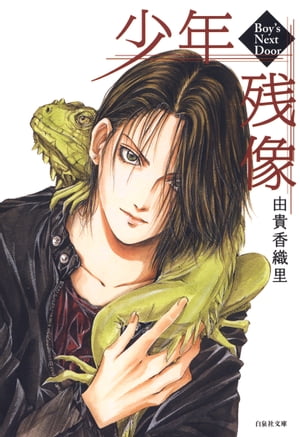
Boys Next Door
A review of Boys Next Door (Shonen Zanzo) — Kaori Yuki's one-volume manga about a teacher who murders male prostitutes and the street boy who blackmails him, then loves him.
Romance / Drama
Video Girl Ai
Yu's review of Video Girl Ai — Yota Moteuchi is heartbroken after the girl he loves confesses her feelings to his best friend; he rents a video from a magical shop and the girl on the tape, Ai Amano, steps out of his television — damaged by his worn VCR, with a personality different from what was intended, and developing real feelings he wasn't supposed to create.
Romance
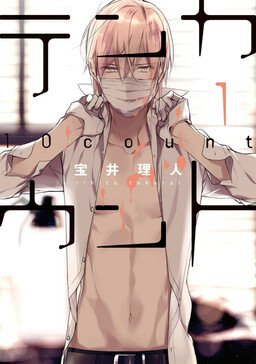
Ten Count
Yu's review of Ten Count — Tadaomi Shirotani, a corporate secretary with mysophobia and OCD, meets Riku Kurose, a therapist who recognizes his condition and offers to help him through a ten-step desensitization process; what develops between them is the series' central moral complication.
Romance
QQ Sweeper
Yu's review of QQ Sweeper — Fumi Nishioka has nowhere to live and loves cleaning; she encounters Kyutaro Horikita, who runs an extermination service that targets psychological 'bugs' — manifestations of trauma and negative emotion that infest the minds and environments of troubled people.

Romance
Yuuna and the Haunted Hot Springs
Yu's review of Yuuna and the Haunted Hot Springs — Kogarashi Fuyuzora is a young psychic who has spent his life being possessed by spirits; when he moves into a cheap hot springs inn, he discovers it is full of supernatural tenants; the ghost Yuuna, whose unresolved feelings keep her tied to the inn, becomes his central concern.
Romance / Comedy
Kaguya-sama: Love Is War
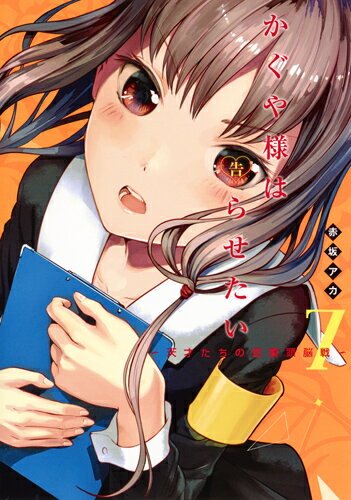
Aka Akasaka's 28-volume romantic comedy (2015–2022) about Miyuki Shirogane and Kaguya Shinomiya, two student council officers at Japan's most elite high school who are both in love and both certain that whoever confesses first loses. Complete in English from VIZ Media.
Written by
Yu
Manga Enthusiast from Japan
I grew up in Japan and manga literally saved me during a tough time in elementary school. My English isn't perfect, but my love for manga is real — and I want to share it with you.
Disclosure: This post contains affiliate links. As an Amazon Associate, I earn from qualifying purchases at no extra cost to you.