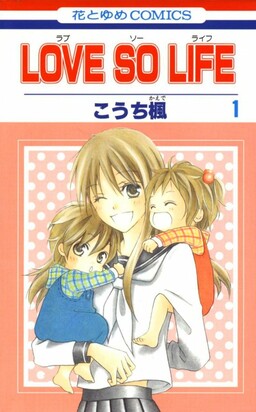
Love So Life Review: A High School Girl Who Loves Children Babysits Twin Toddlers for a TV Newscaster
by Kaede Kouchi
Read the first volume. If it doesn't hook you, put it down. It'll hook you.
Buy Love So Life on Amazon →*Affiliate link — I earn a small commission at no extra cost to you.
Quick Take
- The romance manga where the primary relationship is between Shiharu and the twins — her love for children, her orphanage background, and the specific warmth she creates in their daily life are the series' real center
- The adult romance develops slowly and carefully within the context of actual childcare and domestic life; it does not overwhelm the central focus
- 17 volumes complete; a warm, gentle long-form slice-of-life romance
Who Is This Manga For?
- Readers who want romance manga where children and caregiving are central rather than incidental
- Anyone interested in the slice-of-life detail of childcare depicted with genuine accuracy and warmth
- Fans of slow-burn romance with strong ensemble dynamics
- Readers who want complete manga with a satisfying domestic resolution
Content Warnings & Age Rating
Age Rating: T (Teen) Content Warnings: Shiharu's orphanage backstory and the twins' loss of their mother; age difference between Shiharu and Matsunaga; romantic content appropriate for the rating
The T rating is accurate.
Yu's Rating
| Category | Score |
|---|---|
| Story Depth | ★★★★☆ |
| Art Style | ★★★★☆ |
| Character Development | ★★★★☆ |
| Accessibility for Non-Japanese Readers | ★★★★★ |
| Reread Value | ★★★★☆ |
Story Overview
Shiharu Nakamura grew up in an orphanage. She has always gravitated toward small children — she babysits regularly and finds genuine pleasure in their care. When Matsunaga-san hires her for his twin niece and nephew after the death of their mother (his sister), she steps into a household in grief and makes it warm again.
The twins — Aoi and Akane — are the series' greatest achievement: rendered as actual toddlers with specific personalities, preferences, and developmental stages rather than as a generic cute backdrop. Their relationship with Shiharu is the series' core, and its development over 17 volumes is its most sustained pleasure.
Characters
Shiharu Nakamura — Her quality is specific: she is genuinely good with children not through magical ability but through attention and warmth. Her orphanage background gives her a relationship to the concept of family that shapes how she engages with the Matsunaga household.
The twins — Aoi and Akane change over the series — they develop, acquire language, form preferences, and react to their changed family situation in ways that are accurate to actual child development. The care Kouchi takes with them is the series' most distinctive quality.
Matsunaga — His gradual softening from grief and guardedness into someone who can accept care is the adult character development. His feelings for Shiharu develop within the context of genuine respect for what she provides his family.
Art Style
Kouchi's art is warm and rounded — the twins are adorable without being unrealistic, the domestic spaces feel inhabited, and the emotional moments between characters are handled with gentle expressiveness. The childcare sequences have the specific texture of actual toddler behavior.
Cultural Context
Love So Life draws on the tradition of shoujo manga that uses childcare as both practical content and romantic context — the "heroine interacts with the hero's children" structure is a genre convention, but Kouchi's commitment to realistic child development and to Shiharu's genuine care for the twins gives it unusual depth.
What I Love About It
The chapters devoted entirely to the twins' daily life — their interactions, their development, the specific chaos and warmth of caring for two toddlers simultaneously — are the series' most distinctive content. Kouchi clearly likes children and the text knows it.
What English-Speaking Fans Say
Western readers describe Love So Life as the romance manga they recommend to anyone who wants warmth over drama — the twins and their relationship with Shiharu provide a center that holds even when the adult romance is slow. The complete 17-volume run is consistently described as satisfying.
Memorable Scene ⚠️ Spoiler Warning
The moment when the twins explicitly demonstrate that they consider Shiharu family — in a context where the concept of family has particular weight for her — is the series' most emotionally complete scene.
Similar Manga
- Sweetness and Lightning — Single father and cooking, similar domestic warmth
- Usagi Drop — Child and adult forming family, similar emotional register
- Gakuen Babysitters — Babysitting ensemble, similar focus on child characters
- Shortcake Cake — Found family with romantic element
Reading Order / Where to Start
Volume 1 — Shiharu's introduction to the twins and the household.
Official English Translation Status
Yen Press published all 17 volumes. Complete and available.
Pros & Cons
Pros
- The twins are rendered as genuinely realistic children
- 17 volumes of consistent warmth
- Complete arc with domestic resolution
- Shiharu's childcare competence is depicted with genuine detail
Cons
- The adult romance develops slowly relative to the domestic focus
- Age difference in the romance may concern some readers
- 17 volumes is a significant commitment for the emotional register
Format Comparison
| Format | Notes |
|---|---|
| Individual Volumes | Yen Press; complete |
| Digital | Available |
Where to Buy
Read the first volume. If it doesn't hook you, put it down. It'll hook you.
This post contains affiliate links. If you purchase through these links, I may earn a small commission at no extra cost to you. As an Amazon Associate, I earn from qualifying purchases.
*Affiliate link — I earn a small commission at no extra cost to you.
More Manga You Might Like
Romance / Slice of Life
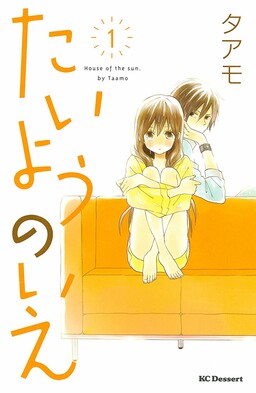
House of the Sun (Taiyou no Ie)
Yu's review of House of the Sun (Taiyou no Ie) — Mao Motomiya, whose home life fell apart when her father remarried, finds herself staying at the house of Hiro, her cheerful childhood friend; his large, warm family gradually becomes the home she didn't know she needed, and the romance that develops is built on that foundation.
Romance / Slice of Life
A Sign of Affection
Yu's review of A Sign of Affection — Yuki is a deaf college student whose world is small by necessity; when a tall stranger at a train station asks her for help and she cannot explain her deafness in time, a classmate named Itsuomi translates — and Itsuomi is curious about Yuki's world in a way no one usually is.

Romance / Drama
I Cannot Reach You
Yu's review of I Cannot Reach You — Kakeru is perfect: good at everything, well-liked, seemingly without needs; his best friend Yamato has been in love with him since childhood but has convinced himself that someone like Kakeru is beyond his reach; the series is about the gap between who Yamato thinks Kakeru is and who Kakeru actually is.

Romance
Your Name (Kimi no Na wa)
Yu's review of Your Name — Taki and Mitsuha swap bodies unpredictably while sleeping; a Tokyo high school boy and a rural shrine maiden from a small mountain town; Ranmaru Kotone's manga adaptation of Makoto Shinkai's film about two people connected across distance, time, and the limits of what they can reach.

Romance
Weathering With You (Tenki no Ko)
Yu's review of Weathering With You — Hodaka runs away from his island home to Tokyo; the city has been raining without end; he meets Hina, a girl with the power to temporarily clear the sky; Nikki Asada's manga adaptation of Makoto Shinkai's film about a boy who has to choose between a person and the world.
Romance / Slice of Life
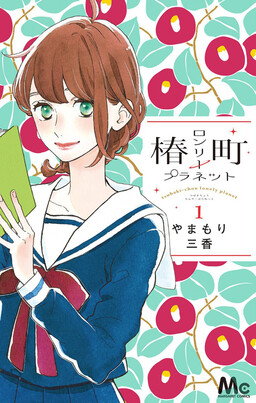
Tsubaki-chou Lonely Planet
Yu's review of Tsubaki-chou Lonely Planet — Fumi Ohara's father's gambling debts leave her without a home; she takes a job as a live-in housekeeper for Akatsuki Kibikino, a young novelist who works from home, has no patience for people, and is completely unprepared for someone like Fumi.
Written by
Yu
Manga Enthusiast from Japan
I grew up in Japan and manga literally saved me during a tough time in elementary school. My English isn't perfect, but my love for manga is real — and I want to share it with you.
Disclosure: This post contains affiliate links. As an Amazon Associate, I earn from qualifying purchases at no extra cost to you.