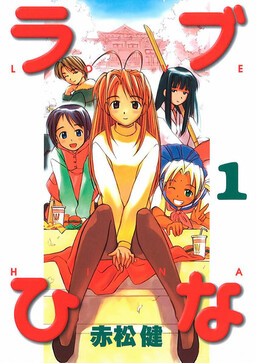
Love Hina Review: A Boy Promised a Girl He Would Get Into Tokyo University — Twenty Years Later, He's Trying
by Ken Akamatsu
Read the first volume. If it doesn't hook you, put it down. It'll hook you.
Buy Love Hina on Amazon →*Affiliate link — I earn a small commission at no extra cost to you.
Quick Take
- The defining harem romantic comedy manga of the 2000s — its structure, character types, and comedic beats established conventions that a generation of subsequent manga followed
- The Keitaro/Naru relationship, despite the chaos, has genuine emotional development that the series commits to across 14 volumes
- 14 volumes complete; essential for understanding the history of the harem romantic comedy genre
Who Is This Manga For?
- Readers who want to understand the foundational harem romantic comedy text
- Anyone who enjoys ensemble romantic comedy where the central relationship is eventually taken seriously
- Fans of manga from the early 2000s that shaped the decade's genre landscape
- Readers who can engage with fanservice-heavy romantic comedy without it overwhelming the genuine content
Content Warnings & Age Rating
Age Rating: T (Teen) Content Warnings: Significant fanservice throughout; slapstick violence directed at Keitaro is the series' primary recurring joke; some nudity in comedic contexts; the childhood promise premise involves a romantic obligation that the series eventually treats with nuance
The T rating reflects fanservice that is more significant than many T-rated manga.
Yu's Rating
| Category | Score |
|---|---|
| Story Depth | ★★★☆☆ |
| Art Style | ★★★★☆ |
| Character Development | ★★★★☆ |
| Accessibility for Non-Japanese Readers | ★★★★★ |
| Reread Value | ★★★☆☆ |
Story Overview
Keitaro Urashima has failed the Tokyo University entrance exam twice. This is embarrassing: he promised a girl he met as a child that they would get into Toudai together. He cannot remember her name or what she looks like. The promise has structured his life.
He arrives to stay at Hinata House — his grandmother's all-girl dormitory — and is accidentally installed as the manager. The residents include Naru Narusegawa (the top student in the dorm, who is also preparing for Toudai, who is also extremely violent toward Keitaro when she misreads situations, which is often), and a varied cast of other residents each with distinct personalities and romantic approaches.
Keitaro's journey — failing the exam again, studying alongside Naru, gradually building genuine connection while being punched across the country — leads to the resolution of both the Toudai question and the childhood promise.
Characters
Keitaro Urashima — His specific persistence — failing repeatedly, getting punched regularly, maintaining both his dream and his feelings — is the series' emotional center. He is not passive; he keeps trying despite constant setbacks.
Naru Narusegawa — Her violence toward Keitaro is the series' primary running gag, but her actual character — intelligent, hardworking, afraid of what she feels — is drawn with more care than the comedy suggests.
Art Style
Akamatsu's art is polished and appealing — the character designs are distinct and the comedic timing is visually effective. The action sequences during Naru's violence are drawn with more energy than required for a joke, suggesting Akamatsu's interest in action that would develop in his subsequent work.
Cultural Context
Love Hina ran in Weekly Shonen Magazine from 1998 to 2001 and was one of the defining manga of the era. It was among the first manga to be heavily marketed internationally and introduced many Western readers to manga in the early days of that market. The harem comedy genre conventions it established — the accident-prone male protagonist, the ensemble of different female archetypes, the childhood promise, the violence as comedic punctuation — influenced manga for the following decade.
What I Love About It
The moments when the series drops the comedy and takes Keitaro and Naru's feelings seriously — when what they feel for each other is visible without the usual layer of misunderstanding. The series earns these moments through the accumulated comedy that surrounds them.
What English-Speaking Fans Say
Western readers who encountered Love Hina in the early 2000s (often through Tokyopop's translation) cite it as the manga that introduced them to the medium. Current readers note that the harem elements date the series, but also that the central relationship has more substance than the genre's reputation suggests. The artwork is praised as holding up better than most manga from its era.
Memorable Scene ⚠️ Spoiler Warning
The moment when the childhood promise is finally resolved — who the girl was, what the promise means now, and what Keitaro and Naru decide to do — is the series' most emotionally complete payoff and the moment that justifies the 14 volumes of comedy preceding it.
Similar Manga
- Negima! Magister Negi Magi — Same author, more elaborate premise, larger ensemble
- Ranma ½ — Martial arts romantic comedy, different structure, same era
- The World God Only Knows — Romance comedy with gaming protagonist, later era
- We Never Learn — Modern harem romantic comedy, more earnest than Love Hina
Reading Order / Where to Start
Volume 1 — Keitaro's arrival at Hinata House and the establishment of the central situation.
Official English Translation Status
Tokyopop's original English edition is no longer in print; check for digital availability or secondary market copies.
Pros & Cons
Pros
- Foundational text for understanding modern romantic comedy manga
- The central relationship has more depth than the genre reputation suggests
- Akamatsu's art is polished and the comedic timing is effective
- Complete with a genuine resolution
Cons
- The fanservice and harem elements reflect their early-2000s context
- The slapstick violence against Keitaro is relentless
- The original English Tokyopop edition is out of print
Format Comparison
| Format | Notes |
|---|---|
| Individual Volumes | Tokyopop (out of print); check digital |
| Digital | Check availability |
Where to Buy
Read the first volume. If it doesn't hook you, put it down. It'll hook you.
This post contains affiliate links. If you purchase through these links, I may earn a small commission at no extra cost to you. As an Amazon Associate, I earn from qualifying purchases.
*Affiliate link — I earn a small commission at no extra cost to you.
More Manga You Might Like
Romance / Comedy
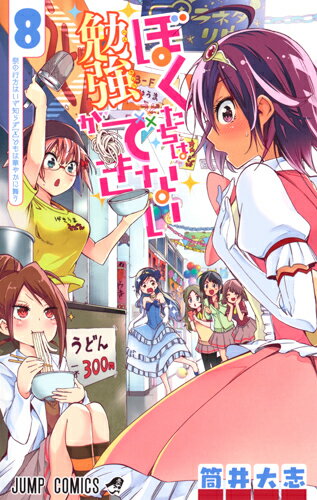
We Never Learn
Yu's review of We Never Learn — a scholarship student agrees to tutor three geniuses, each brilliant in one field but failing in the subjects they want to pursue, while navigating the increasingly complicated feelings everyone develops.

Romance / Comedy
Girlfriend, Girlfriend
Yu's review of Girlfriend, Girlfriend — Naoya Mukai, who has finally started dating his long-time crush Saki, falls in love with a second girl, Nagisa, and proposes that they all date simultaneously; his complete honesty about his feelings collides with everyone's reaction to them in this shamelessly energetic romantic comedy.

Romance
The World God Only Knows
A review of The World God Only Knows — the manga about a legendary galge player who is forced to conquer real girls using dating sim logic to exorcise spirits, with increasingly self-aware results.
Romance / Comedy
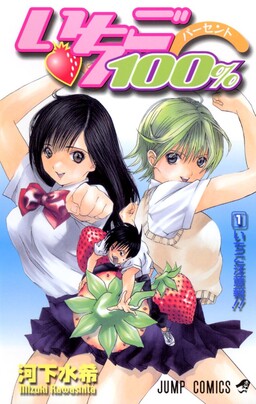
Ichigo 100%
Yu's review of Ichigo 100% — aspiring filmmaker Junpei Manaka accidentally sees a girl with strawberry-print underwear on the school rooftop; his attempt to find her leads him into a four-girl romantic entanglement that spans his entire high school life.
Romance / Comedy
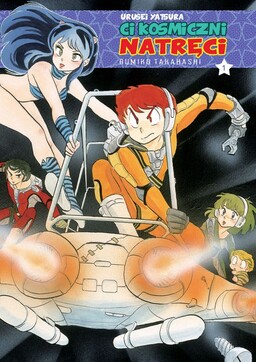
Urusei Yatsura
Yu's review of Urusei Yatsura — Earth is invaded by aliens; a random lottery selects Ataru Moroboshi to compete against the alien princess Lum in a game of tag; he wins by grabbing her horns; his victory declaration is mistaken for a marriage proposal; Lum moves into his house; Ataru continues to chase every other girl he sees while Lum insists on being his wife.
Romance / Comedy
Toradora!
Yu's review of Toradora! — a delinquent-looking boy and a tiny, terrifying girl make a deal to help each other confess to the other's best friend, and discover they had the wrong target all along.
Written by
Yu
Manga Enthusiast from Japan
I grew up in Japan and manga literally saved me during a tough time in elementary school. My English isn't perfect, but my love for manga is real — and I want to share it with you.
Disclosure: This post contains affiliate links. As an Amazon Associate, I earn from qualifying purchases at no extra cost to you.