
Love and Lies Review: In a Japan Where the Government Assigns Your Spouse, a Boy Loves Someone He Cannot Choose
by Musawo
Read the first volume. If it doesn't hook you, put it down. It'll hook you.
Buy Love and Lies on Amazon →*Affiliate link — I earn a small commission at no extra cost to you.
Quick Take
- A romance built on an unusual dystopian premise — government-assigned marriages — that uses the science fiction element to generate genuine romantic dilemmas rather than as backdrop
- The triangle between Yukari, Misaki, and Lilina is handled with more emotional honesty than most romance manga manage, and no character is reduced to an obstacle
- 10 volumes complete; a dystopian romance that delivers consistent drama without losing its characters' humanity
Who Is This Manga For?
- Readers who want romance with a speculative fiction premise that actually generates story
- Anyone interested in arranged marriage themes handled with genuine moral complexity
- Fans of romantic triangles where all parties are sympathetically drawn
- Readers who want complete 10-volume drama with full resolution
Content Warnings & Age Rating
Age Rating: T (Teen) Content Warnings: Government-assigned relationships and their emotional consequences; romantic conflict involving three parties; the premise involves state control of personal relationships
A T rating appropriate for teen readers comfortable with romantic drama.
Yu's Rating
| Category | Score |
|---|---|
| Story Depth | ★★★★☆ |
| Art Style | ★★★★☆ |
| Character Development | ★★★★★ |
| Accessibility for Non-Japanese Readers | ★★★★☆ |
| Reread Value | ★★★★☆ |
Story Overview
In an alternate Japan, low birth rates have led the government to implement a system: at age 16, every citizen receives a "red notice" assigning them their designated marriage partner, calculated by algorithm for genetic and compatibility optimization. The system has a near-perfect track record. Most people accept their assigned partner.
Yukari Nejima has been in love with Misaki Tazumi since childhood. Just before his own red notice arrives, he confesses to her. She responds — and then his notice names a different girl, Lilina Sanada.
Yukari is now in a position the system didn't account for: in love with someone he chose, assigned to someone he didn't, while both girls are present in his life and neither situation is simple.
Characters
Yukari Nejima — A protagonist whose genuine love for Misaki is not diminished by his growing feelings for Lilina, and whose moral discomfort with the system's control over his life grows throughout the series. His character development is the story's spine.
Misaki Tazumi — The girl Yukari chose — her own feelings and her own government assignment create a situation as complicated as Yukari's, and her characterization is sympathetic throughout.
Lilina Sanada — The government's choice — not a villain, not a foil, but a person with her own history and her own desires who the series treats with the same care as its protagonist's first love.
Art Style
Musawo's art has a clean, emotional shojo-influenced style even in a seinen publication — character expressions carry the emotional weight of a series that is primarily about faces processing difficult feelings. The character designs are attractive and distinct within the three-way central dynamic.
Cultural Context
Japan's demographic challenges — declining birth rates, aging population — are a genuine ongoing social concern that gives the "government assigns marriages" premise specific resonance. Love and Lies uses this real anxiety as the foundation of its speculative premise.
What I Love About It
The series refuses to let the triangle resolve the easy way — by making one girl obviously wrong for Yukari or by reducing Lilina to an obstacle. She is as real as Misaki, and the series acknowledges that the system's choice might not be arbitrary even when it feels like a violation. That moral complexity sustains the drama.
What English-Speaking Fans Say
Western readers describe Love and Lies as one of the more emotionally honest romantic triangles in manga — the speculative premise is used to create a situation where the usual genre conventions (obvious right answer, rivals who exist only to lose) are genuinely disrupted. The resolution is controversial but consistent with the series' moral framework.
Memorable Scene ⚠️ Spoiler Warning
The chapter where Yukari confronts the system's designers with the specific emotional cost of their optimization — and their response, which is neither dismissive nor entirely wrong — is the series' most direct engagement with the speculative premise's moral implications.
Similar Manga
- Nisekoi — Romantic triangle played for comedy, lighter treatment
- Your Lie in April — Romantic drama with genuine emotional stakes
- Orange — Romance with fate/intervention elements, similar emotional weight
- Kare Kano — Romantic drama with social observation
Reading Order / Where to Start
Volume 1 — The system, Yukari's confession, and his government notice all arrive within the opening chapters.
Official English Translation Status
Kodansha Comics published all 10 volumes. Complete and available.
Pros & Cons
Pros
- Dystopian premise generates genuine moral complexity
- All three central characters are sympathetically drawn
- Complete run with full thematic resolution
- The system's logic is internally consistent and interesting
Cons
- The resolution divides readers who wanted a clearer emotional answer
- 10 volumes with ongoing triangle drama requires tolerance for sustained conflict
- The speculative premise requires acceptance of its alternate Japan
Format Comparison
| Format | Notes |
|---|---|
| Individual Volumes | Kodansha Comics; complete |
| Digital | Available |
Where to Buy
Read the first volume. If it doesn't hook you, put it down. It'll hook you.
This post contains affiliate links. If you purchase through these links, I may earn a small commission at no extra cost to you. As an Amazon Associate, I earn from qualifying purchases.
*Affiliate link — I earn a small commission at no extra cost to you.
More Manga You Might Like

Romance / Drama
From Now On We Begin Ethics
Yu's review of From Now On We Begin Ethics — Takayanagi Ayumu is a high school ethics teacher who delivers textbook morality without personal investment; Skye is a half-Japanese transfer student who challenges him to engage honestly with the subjects he teaches; the relationship is academic and then something more complicated.

Romance / Slice of Life
House of the Sun (Taiyou no Ie)
Yu's review of House of the Sun (Taiyou no Ie) — Mao Motomiya, whose home life fell apart when her father remarried, finds herself staying at the house of Hiro, her cheerful childhood friend; his large, warm family gradually becomes the home she didn't know she needed, and the romance that develops is built on that foundation.
Romance / Slice of Life
A Sign of Affection
Yu's review of A Sign of Affection — Yuki is a deaf college student whose world is small by necessity; when a tall stranger at a train station asks her for help and she cannot explain her deafness in time, a classmate named Itsuomi translates — and Itsuomi is curious about Yuki's world in a way no one usually is.
Romance / Drama
Perfect World
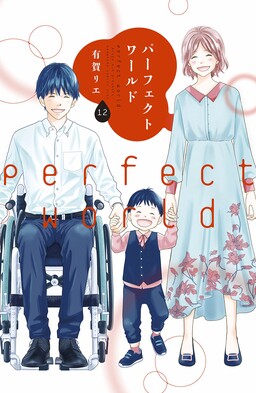
Yu's review of Perfect World — Tsugumi Kawana reconnects with her high school crush Itsuki Ayukawa, now an architect who uses a wheelchair after a spinal cord injury; the manga follows their relationship with honest attention to the practical, emotional, and social dimensions of disability in a romantic relationship.

Romance / Drama
Girl Friends
Yu's review of Girl Friends — Mari Kumakura is a quiet, bookish girl with no real friends; Akko Oohashi is pretty, popular, and inexplicably interested in her; their friendship grows into something more complicated than either of them has words for, which is the point.

Romance / Comedy
Yuri Is My Job!
Yu's review of Yuri Is My Job! — Hime Shiraki's entire identity is performing perfect femininity for public approval; working at Liebe Girls Academy café requires her to act out romantic yuri relationships with her coworkers for customers; her assigned partner Mitsuki hates her genuinely, and Hime begins to develop feelings that are not performance.
Written by
Yu
Manga Enthusiast from Japan
I grew up in Japan and manga literally saved me during a tough time in elementary school. My English isn't perfect, but my love for manga is real — and I want to share it with you.
Disclosure: This post contains affiliate links. As an Amazon Associate, I earn from qualifying purchases at no extra cost to you.