
Living-Room Matsunaga-san Review: A High School Girl Moves Into a Boarding House and Falls for the Cool Older Resident
by Keiko Iwashita
Read the first volume. If it doesn't hook you, put it down. It'll hook you.
Buy Living-Room Matsunaga-san on Amazon →*Affiliate link — I earn a small commission at no extra cost to you.
Quick Take
- A boarding house with charismatic adult residents, a high school girl protagonist, and a romance that handles the age difference with more care than the setup suggests
- Warm ensemble comedy alongside the central romance; the house itself is a character
- 10 volumes, complete, with an ending that takes the relationship seriously
Who Is This Manga For?
- Readers who want warmth-forward romance manga with ensemble comedy
- Fans of boarding house settings as a romance backdrop
- Anyone who likes a romance where the adult characters are competent and kind rather than mysterious
- Readers who want complete, low-stakes romance with appealing character dynamics
Content Warnings & Age Rating
Age Rating: T (Teen) Content Warnings: Age-gap romance (the female protagonist is a high school student and Matsunaga is an adult); the relationship is depicted responsibly
The age difference is addressed in the narrative. The relationship does not progress physically while Meeko is a minor.
Yu's Rating
| Category | Score |
|---|---|
| Story Depth | ★★★☆☆ |
| Art Style | ★★★★☆ |
| Character Development | ★★★★☆ |
| Accessibility for Non-Japanese Readers | ★★★★★ |
| Reread Value | ★★★☆☆ |
Story Overview
Meeko Noguchi moves into the Fujii Boarding House, run by her uncle, when she moves to Tokyo for high school. The house is unusual — multiple adults share the space, cooking together and living communally.
Matsunaga-san is one of the residents. He's a freelance designer, cool and slightly standoffish on the surface, who gives Meeko a hard time. She falls for him. He is aware of the problem this represents.
The series is partly ensemble comedy — the other residents each have distinct personalities and relationships with Meeko — and partly a slow, careful romance that is honest about what the age difference means in practical terms.
Characters
Meeko Noguchi — Cheerful, direct, and genuinely good at adapting to the unusual boarding house world. Her crush on Matsunaga develops through real interaction rather than fantasy.
Matsunaga — Cool exterior, genuinely kind interior, completely aware of the situation he is in. His restraint is presented as the correct response to his position, not as emotional withholding.
The other residents — Each has a distinct personality and their own relationship with the house; the ensemble scenes are the series' comedy foundation.
Art Style
Iwashita's art is warm and appealing — the boarding house is drawn as a lived-in space, character designs are distinctive, and the expression work during emotional moments is well-handled. The style suits the comfortable tone of the material.
Cultural Context
The boarding house setting draws on a specific Japanese tradition of shared living spaces popular in urban areas — sharehouse culture — which provides a naturalistic backdrop for characters of different ages sharing a domestic space. The setting's inherent community makes the romance feel more gradual and observed than a typical school romance.
What I Love About It
The house itself. Boarding house manga works when the setting is a character, and Living-Room Matsunaga-san earns that. The communal meals, the shared chores, the residents knowing each other's habits — the specific warmth of a shared domestic space — make the romance feel grounded in something real.
What English-Speaking Fans Say
Western readers recommend Living-Room Matsunaga-san as a low-stakes comfort romance with an appealing ensemble. The age gap handling is generally considered more careful than typical shojo. The complete nature (10 volumes) makes it a safe recommendation for readers wary of committing to ongoing series.
Memorable Scene ⚠️ Spoiler Warning
The chapter where Matsunaga first clearly acknowledges his feelings — not to Meeko, but to himself, visibly, in a way the reader sees — is the series' quiet turning point. Iwashita handles the timing well.
Similar Manga
- Shortcake Cake — Boarding house setting, similar warmth
- Daytime Shooting Star — Similar age dynamic handled responsibly
- The World Is Still Beautiful — Age dynamic in political fantasy setting
- Wotakoi — Adult romance in shared-space setting
Reading Order / Where to Start
Volume 1 — the boarding house ensemble establishes quickly.
Official English Translation Status
Kodansha USA published the complete 10-volume series. All volumes available.
Pros & Cons
Pros
- 10 volumes, complete
- Boarding house ensemble adds warmth beyond the central romance
- Age difference handled responsibly
- The ending takes the relationship's timeline seriously
Cons
- Age-gap premise requires reader comfort
- Lower stakes than most romance manga — not for readers wanting drama
- Some secondary characters underdeveloped relative to the ensemble promise
Format Comparison
| Format | Notes |
|---|---|
| Individual Volumes | Kodansha USA; standard |
| Digital | Available |
Where to Buy
Read the first volume. If it doesn't hook you, put it down. It'll hook you.
This post contains affiliate links. If you purchase through these links, I may earn a small commission at no extra cost to you. As an Amazon Associate, I earn from qualifying purchases.
*Affiliate link — I earn a small commission at no extra cost to you.
More Manga You Might Like

Romance / Comedy
Takane & Hana
Yu's review of Takane and Hana — sixteen-year-old Hana Nonomura attends an omiai in her sister's place as a prank; the man waiting is Takane Saibara, heir to a corporate empire, who has rejected every previous meeting; Hana argues with him immediately; he finds her refreshing and wants to see her again.

Romance
Shortcake Cake
Yu's review of Shortcake Cake — Ten Serizawa moves into a boarding house to avoid the long commute to school, finds herself living alongside four boys, and falls into a story about two of them who are opposites and what that means for who she becomes.

Romance
P to JK
P to JK follows Kako, a high school girl who accidentally marries Kohei, a police officer, after a night of mistaken identity — a Bessatsu Margaret romance that took its age-gap premise seriously enough to work through its implications.
Romance / Slice of Life
House of the Sun (Taiyou no Ie)
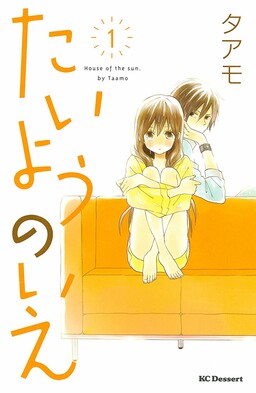
Yu's review of House of the Sun (Taiyou no Ie) — Mao Motomiya, whose home life fell apart when her father remarried, finds herself staying at the house of Hiro, her cheerful childhood friend; his large, warm family gradually becomes the home she didn't know she needed, and the romance that develops is built on that foundation.

Romance / Drama
Sand Chronicles
Yu's review of Sand Chronicles — Ann Uekusa moves from Tokyo to rural Shimane after her parents' separation; her mother's death by suicide shapes everything that follows; the series follows Ann from childhood through adulthood with unflinching attention to grief, depression, and the slow work of becoming a whole person.

Romance / Drama
Orange
Yu's review of Orange — on the first day of high school, Naho receives a letter from herself ten years in the future, listing the regrets she has about a classmate named Kakeru, and warning her to save him before it's too late.
Written by
Yu
Manga Enthusiast from Japan
I grew up in Japan and manga literally saved me during a tough time in elementary school. My English isn't perfect, but my love for manga is real — and I want to share it with you.
Disclosure: This post contains affiliate links. As an Amazon Associate, I earn from qualifying purchases at no extra cost to you.