
Papa no Iukoto wo Kikinasai! Review: The Romantic Comedy That Accidentally Became a Family Drama
by Soren Takasago (art), Yousuke Tomizawa (story)
Read the first volume. If it doesn't hook you, put it down. It'll hook you.
Buy Papa no Iukoto wo Kikinasai! on Amazon →*Affiliate link — I earn a small commission at no extra cost to you.
College freshman. Three nieces aged 14, 10, and 3. Missing parents. Very small apartment. The romantic comedy part is almost beside the point.
Quick Take
- A light novel adaptation about a college student suddenly raising three nieces — which is more emotionally grounded than the harem setup implies
- The family drama is more interesting than the romance
- 10 complete volumes in English — a full story
Who Is This Manga For?
- Readers who can look past the harem premise for the family drama underneath
- Light novel adaptation fans who want a complete story
- People interested in "unexpected family" scenarios in manga form
- Anyone who finds the domestic dimension of comedy manga more interesting than the romantic competition
Content Warnings & Age Rating
Age Rating: T (Teen) Content Warnings: Harem elements, fan service, implied parental loss, domestic hardship
The age dynamics require awareness. The family drama is handled more sensitively than the cover implies.
Yu's Rating
| Category | Score |
|---|---|
| Story Depth | ★★★☆☆ |
| Art Style | ★★★★☆ |
| Character Development | ★★★☆☆ |
| Accessibility for Non-Japanese Readers | ★★★★☆ |
| Reread Value | ★★★☆☆ |
Story Overview
Yuuta Segawa is a college freshman who lives alone in a small Tokyo apartment. His older sister and her husband go missing in a plane accident. Yuuta is suddenly responsible for their three daughters: Sora (14, by a previous relationship), Miu (10), and Hina (3).
He can't afford to put them in care. He won't. He takes all three into his apartment, rearranges his life, and figures out how to raise three children while attending college.
The "harem" element comes from Sora's complicated feelings toward her uncle — feelings she has because she's 14 and processing enormous grief and displacement. The manga handles this with more care than the premise suggests, treating Sora's attachment as something that needs to be understood rather than encouraged.
The series follows Yuuta's daily management of the situation: the financial pressure, the domestic logistics, his college friends trying to help, and the gradual building of a functional family unit in an extremely improbable circumstance.
Characters
Yuuta Segawa — More competent than most harem protagonists because he has to be — there are children depending on him and he takes that seriously. His genuine care for all three girls is the series' best quality.
Sora Takanashi — The most complex character. Her feelings for Yuuta are real in the way that 14-year-old feelings are real — intense and honest and ultimately not what she thinks they are. Her arc is about grief as much as romance.
Miu Takanashi — The 10-year-old, smart and observant in ways that occasionally complicate the situation more than Yuuta expects.
Hina Takanashi — Three years old and extremely demanding. The most functional comic relief.
Art Style
Takasago's art is clean and warm. Character designs are distinct and expressive. The domestic setting — the small apartment, the daily routines — is rendered with the specific detail that makes a cramped space feel inhabited. The fan service is present but the domestic warmth is the primary visual register.
Cultural Context
The "suddenly responsible for younger relatives" scenario appears in Japanese fiction often enough to be a recognizable trope, drawing on cultural anxieties around family obligation and the specific weight of kinship responsibility in Japanese social context. Yuuta's choice — to keep the girls together rather than separate them into institutional care — is framed as both emotionally obvious and materially difficult in ways that reflect actual social reality.
The college setting specifically grounds the story in the contrast between peer-group life and sudden domestic responsibility — a transition that Japanese college culture (dorms, clubs, part-time work) makes especially visible.
What I Love About It
Hina. The three-year-old. Her specific toddler logic — the demands, the confusion, the absolute sincerity — is the series at its most accurate and most warm. The scenes where Yuuta navigates Hina's needs are where the manga is just a story about caring for a child, without any romantic overlay, and those scenes are consistently the best ones.
What English-Speaking Fans Say
Mixed. The family drama elements are praised; the harem elements and Sora's age are consistent concerns. Readers who focused on the domestic-drama dimension found it rewarding; readers who expected standard harem comedy found it awkward. The complete 10-volume run is cited as a virtue for those who commit to it.
Memorable Scene ⚠️ Spoiler Warning
The scene where Hina asks, with complete toddler sincerity, when her parents are coming back — and Yuuta has to find an answer that is honest at a three-year-old's level — is the scene that makes the whole premise land as something more than premise. He fumbles it. Then he does better. That's the series.
Similar Manga
| Title | Its Approach | How Papa no Iukoto Differs |
|---|---|---|
| Usagi Drop | Single man raising an unexpected child | Usagi Drop is more quiet and focused; Papa no Iukoto has more comedy and ensemble |
| Aishiteruze Baby | Teenage boy suddenly caring for young cousin | Very similar premise; both emphasize domestic responsibility over romance |
| My Girl | Single father raising his daughter | My Girl is more emotionally focused; Papa no Iukoto has more comedy structure |
Reading Order / Where to Start
Volume 1, straight through. The domestic-crisis setup is established immediately and the series builds from there.
Official English Translation Status
Seven Seas Entertainment published all 10 volumes in English. Complete and available.
Pros & Cons
Pros
- Complete 10-volume story with satisfying resolution
- The family drama is more genuine than the harem premise suggests
- Hina is one of the best toddler characters in manga
- Yuuta's competence and genuine care make him an unusually functional protagonist
Cons
- Sora's age and feelings for Yuuta require the reader to navigate uncomfortable territory
- The harem structure feels like it's working against the family drama
- Fan service creates tonal inconsistency with the more serious emotional content
- Not memorable outside readers specifically seeking this type of story
Is Papa no Iukoto wo Kikinasai! Worth Reading?
For readers focused on the family drama dimension — yes, accepting the awkward harem overlay. For readers primarily interested in the romantic comedy — there are cleaner examples of both.
Format Comparison
| Format | Pros | Cons |
|---|---|---|
| Physical | Complete 10-volume set available | — |
| Digital | Convenient | — |
| Omnibus | No omnibus available | — |
Where to Buy
Read the first volume. If it doesn't hook you, put it down. It'll hook you.
This post contains affiliate links. If you purchase through these links, I may earn a small commission at no extra cost to you. As an Amazon Associate, I earn from qualifying purchases.
*Affiliate link — I earn a small commission at no extra cost to you.
More Manga You Might Like
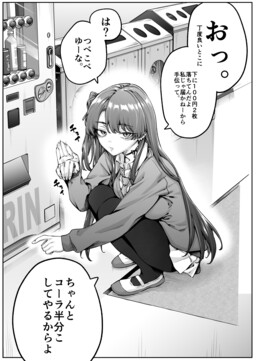
Romance / Slice of Life
A Sign of Affection
Yu's review of A Sign of Affection — Yuki is a deaf college student whose world is small by necessity; when a tall stranger at a train station asks her for help and she cannot explain her deafness in time, a classmate named Itsuomi translates — and Itsuomi is curious about Yuki's world in a way no one usually is.
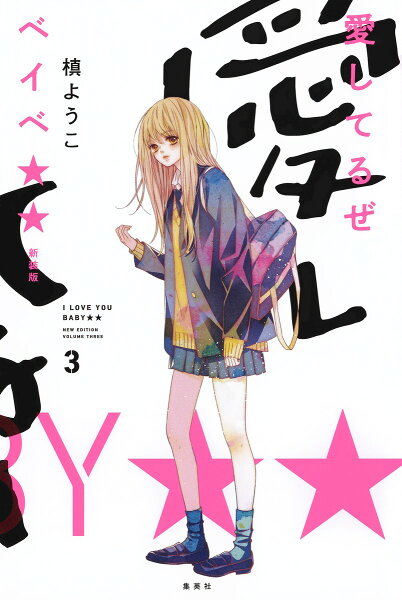
Romance / Slice of Life
Aishiteruze Baby
Yu's review of Aishiteruze Baby — high school playboy Kippei has to raise his abandoned 5-year-old cousin Yuzuyu, and a quiet, hurting classmate named Kokoro watches him become someone worth loving.
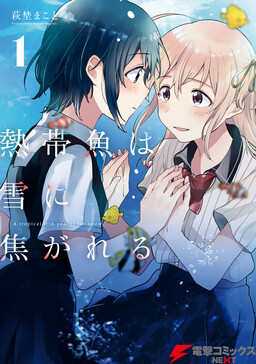
Romance / Slice of Life
A Tropical Fish Yearns for Snow
Yu's review of A Tropical Fish Yearns for Snow — Konatsu Amano moves to a new town after her father is transferred abroad; she joins her new school's aquarium club, which has only one other member: Koyuki Honami, a capable and quietly withdrawn girl who runs it alone; their friendship becomes something more specific as they teach each other about themselves.
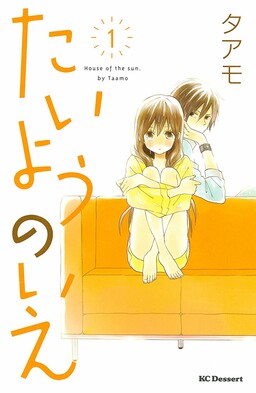
Romance / Slice of Life
House of the Sun (Taiyou no Ie)
Yu's review of House of the Sun (Taiyou no Ie) — Mao Motomiya, whose home life fell apart when her father remarried, finds herself staying at the house of Hiro, her cheerful childhood friend; his large, warm family gradually becomes the home she didn't know she needed, and the romance that develops is built on that foundation.
Romance / Slice of Life
Happy-Go-Lucky Days
A review of Happy-Go-Lucky Days by Wandering Son's Takako Shimura — a collection of short BL stories about love found in everyday moments.
Romance / Slice of Life
My Dress-Up Darling
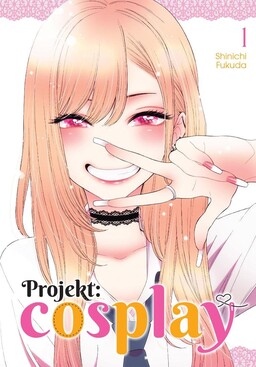
Yu's review of My Dress-Up Darling — Wakana Gojo is a quiet boy learning to make traditional hina dolls who believes his interests make him weird; Marin Kitagawa is an outgoing, beautiful girl who wants to cosplay as characters from eroge games she loves; she asks Wakana to make her costumes; the series follows their collaboration and the relationship that develops.
Written by
Yu
Manga Enthusiast from Japan
I grew up in Japan and manga literally saved me during a tough time in elementary school. My English isn't perfect, but my love for manga is real — and I want to share it with you.
Disclosure: This post contains affiliate links. As an Amazon Associate, I earn from qualifying purchases at no extra cost to you.