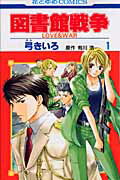
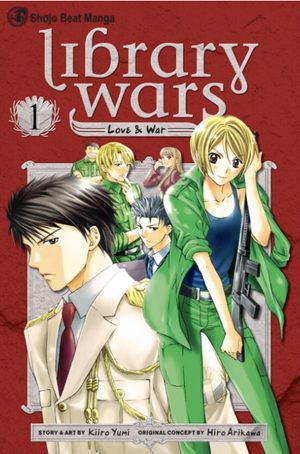
Library Wars: Love & War Review: When Protecting Books Becomes an Act of Love
by Kiiro Yumi (art), Hiro Arikawa (story)
Read the first volume. If it doesn't hook you, put it down. It'll hook you.
Buy Library Wars: Love & War on Amazon →*Affiliate link — I earn a small commission at no extra cost to you.
Quick Take
- A workplace romance wrapped inside a fight for freedom of expression — genuinely unique premise
- Iku Kasahara is one of the most physically and emotionally vivid shoujo heroines I've encountered
- The romantic tension between Iku and Dojo is slow-burn done right
Who Is This Manga For?
- Romance manga fans who want more substance than the usual school setting
- Action fans who don't mind their explosions punctuated with feelings
- Anyone interested in censorship themes — the story touches on press freedom in ways that resonate globally
- Readers who love competent heroines who can carry their weight and then some
Content Warnings & Age Rating
Age Rating: T (Teen) Content Warnings: Mild action, military conflict, themes of censorship
Safe for most teen readers and up. Violence is present but not graphic.
Yu's Rating
| Category | Score |
|---|---|
| Story Depth | ★★★★☆ |
| Art Style | ★★★★☆ |
| Character Development | ★★★★★ |
| Accessibility for Non-Japanese Readers | ★★★★☆ |
| Reread Value | ★★★☆☆ |
Story Overview
In a near-future Japan, the government has established the Media Betterment Committee — a military-style organization that raids libraries, bookstores, and publishers to confiscate materials deemed "harmful." In response, libraries formed the Library Task Force, a defense unit that fights to protect freedom of expression under the Library Freedom Act.
Iku Kasahara joins the Task Force inspired by a memory from her childhood: a Task Force soldier who protected a book she wanted from government raiders. She never forgot that moment of someone risking themselves for the right to read.
What she doesn't know is that her demanding, seemingly cold superior officer Atsushi Dojo was that very soldier.
As Iku trains and proves herself in an institution that dismissed female soldiers, she and Dojo circle each other — arguing, competing, gradually understanding — while the conflict between the Library Task Force and the Media Betterment Committee escalates around them.
Characters
Iku Kasahara: Tall, physically capable, emotionally earnest, and deeply stubborn. Iku is a rare type of shoujo heroine — she doesn't need to be rescued (though she appreciates it sometimes). Her emotional intelligence grows steadily throughout the series, and watching her become someone worthy of the ideal she was inspired by is deeply satisfying.
Atsushi Dojo: Short, strict, and quietly devoted. Dojo's interactions with Iku are tense precisely because he sees exactly who she is and can't stop himself from caring. His eventual emotional opening is earned through fifteen volumes of careful restraint.
Hikaru Tezuka: Iku's fellow trainee, formal and rule-oriented. He provides good contrast and his own storyline develops meaningfully.
Asako Shibazaki: Iku's best friend and dormmate — sharp, observant, and genuinely funny. She sees the Iku-Dojo dynamic clearly and provides wonderful comic relief.
Art Style
Kiiro Yumi's art is expressive and dynamic, balancing action sequences with tender quiet moments. The characters are drawn distinctively — Iku's physical presence (taller than most of her colleagues, physically powerful) is always apparent in how she moves through panels. Dojo's shorter stature is drawn with care, never played for cheap laughs, and his authority comes through body language rather than size.
The action sequences are surprisingly well-executed for a romance manga — the raid scenes feel urgent and believable within the world's logic.
Cultural Context
The premise draws on real tensions in Japanese media history. Japan has a long tradition of debates over press freedom and government control of information, going back to wartime censorship. The Library Freedom Act that appears in the story is inspired by Japan's real 1954 Library Freedom Declaration.
For English-speaking readers, the themes translate powerfully. The fight between libraries representing freedom of information and a government body representing control resonates in any era.
What I Love About It
I came to this manga expecting a romance and got an argument for why stories matter.
There's a moment early on where a young girl is trying to buy a book that the Media Betterment Committee wants to confiscate. Iku's memory of being that girl — wanting a story, having it threatened, being protected by someone who believed books were worth fighting for — is the emotional core of everything that follows.
That idea stayed with me: someone chose to protect a stranger's right to read, and that choice shaped an entire life. It made me think about why I read manga, why stories mattered to me as a lonely kid. Iku's motivation is deeply personal to me even though her circumstances are fictional.
The romance is also exactly my type. Dojo and Iku don't fall in love quickly or easily. They earn it, through disagreement and respect and the slow recognition that this person sees you clearly and stays anyway.
What English-Speaking Fans Say
English-speaking readers frequently highlight Iku as a standout protagonist — her combination of physical competence and emotional vulnerability is unusual in the genre. Reviews commonly mention being surprised by how much the action and political themes enhance rather than distract from the romance.
Some readers find the pacing in the middle volumes slow, and a few find Dojo's initial coldness frustrating before his character is more fully revealed. But the payoff in later volumes is consistently praised.
The series has a strong reputation as a gateway manga — something that introduces romance readers to action manga and vice versa.
Memorable Scene ⚠️ Spoiler Warning
The revelation that Dojo was Iku's childhood protector — and the chapter where Iku finally understands this — is the emotional climax of the series. The way Kiiro Yumi stages the flashback, the recognition, and Dojo's response to being discovered is masterfully constructed. He's been watching her train toward the ideal he inspired, while carrying his own feelings silently. The scene where he finally speaks about it was the moment I put the volume down and just sat with it for a while.
Similar Manga
- Skip Beat!: Another workplace-flavored romance with a heroine proving herself in a demanding profession
- Fullmetal Alchemist: Military setting, freedom vs. control themes, strong female supporting characters
- Ouran High School Host Club: Lighter in tone but similarly features a heroine who subverts the typical passive role
Reading Order / Where to Start
Start from Volume 1 — the story builds steadily and the character dynamics need context to land properly. The side stories (collected in separate volumes) expand on secondary characters and are worth reading after the main series.
Official English Translation Status
Viz Media published all 15 volumes of the main series in English. Translation is natural and reads well. Physical volumes may be harder to find new but are available used and in digital format.
Pros & Cons
Pros
- Genuinely unique premise that earns its action scenes
- Slow-burn romance with real emotional payoff
- Strong, active heroine who grows substantially
- Themes about freedom of information that feel relevant and urgent
Cons
- Middle volumes slow down noticeably
- The political conflict sometimes overshadows the romance
- 15 volumes is a significant time commitment
Format Comparison
| Format | Notes |
|---|---|
| Physical | 15 standard volumes; worth collecting |
| Digital | Kindle available; great for long series |
| Omnibus | Not available in omnibus |
Where to Buy
Read the first volume. If it doesn't hook you, put it down. It'll hook you.
This post contains affiliate links. If you purchase through these links, I may earn a small commission at no extra cost to you. As an Amazon Associate, I earn from qualifying purchases.
*Affiliate link — I earn a small commission at no extra cost to you.
More Manga You Might Like
Romance / Action
Library Wars: Love & War
Yu's review of Library Wars: Love & War — in a Japan where the government censors books and an armed Library Defense Force protects the freedom to read, Kasahara Iku joins the LDF to find the prince who saved her favorite book — and discovers her commanding officer is more than she expected.
Romance / Comedy
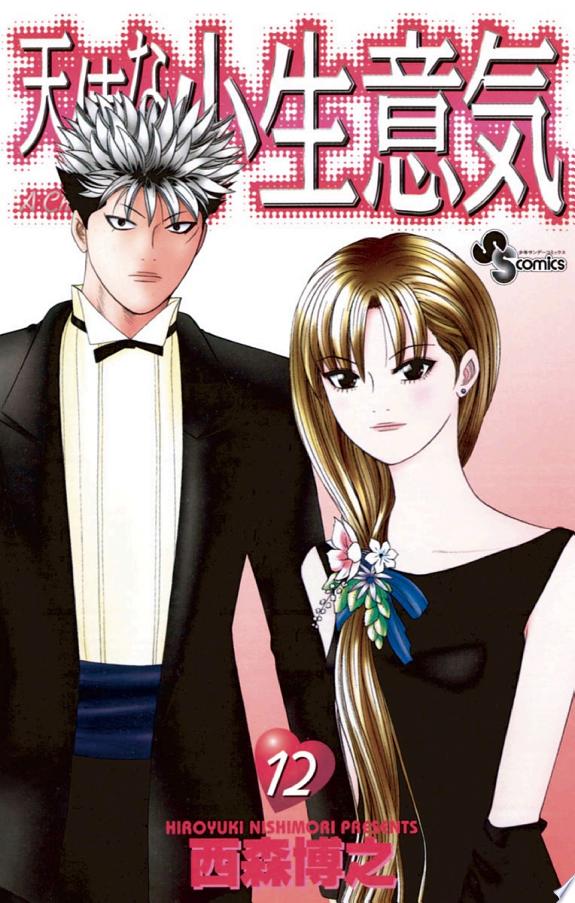
Tenshi Na Konamaiki
Yu's review of Tenshi Na Konamaiki — a boy who was transformed into a girl by a genie as a child has grown up strong, fierce, and determined to find a way to transform back, but life keeps getting complicated.

Romance / Sci-Fi
Heaven's Lost Property
Yu's review of Heaven's Lost Property — Tomoki Sakurai is a boy who just wants to live a peaceful life; when an Angeloid named Ikaros falls from the sky and pledges absolute loyalty to him as her master, his peaceful life ends; the series develops from harem comedy into genuine science fiction about the nature of Angeloids and the world they come from.
Romance / Fantasy
The Queen's Knight
Yu's review of The Queen's Knight — a Korean manhwa about a girl transported to a fantasy medieval kingdom who must train as a knight while navigating court politics and complicated feelings.
Romance
QQ Sweeper
Yu's review of QQ Sweeper — Fumi Nishioka has nowhere to live and loves cleaning; she encounters Kyutaro Horikita, who runs an extermination service that targets psychological 'bugs' — manifestations of trauma and negative emotion that infest the minds and environments of troubled people.
Romance / Action
Kamikaze Kaitou Jeanne
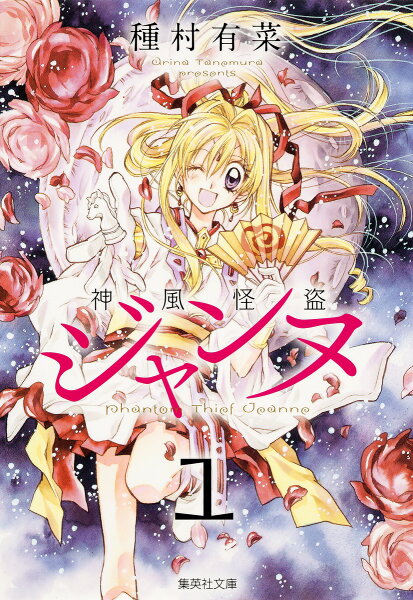
Yu's review of Kamikaze Kaitou Jeanne — a high school gymnast by day, phantom thief by night, she steals artworks possessed by demons on a divine mission as the reincarnation of Joan of Arc.
Written by
Yu
Manga Enthusiast from Japan
I grew up in Japan and manga literally saved me during a tough time in elementary school. My English isn't perfect, but my love for manga is real — and I want to share it with you.
Disclosure: This post contains affiliate links. As an Amazon Associate, I earn from qualifying purchases at no extra cost to you.