
Last Game Review: He's Been Chasing Her Since Elementary School and She Still Hasn't Noticed
by Shinobu Amano
Read the first volume. If it doesn't hook you, put it down. It'll hook you.
Buy Last Game on Amazon →*Affiliate link — I earn a small commission at no extra cost to you.
Quick Take
- A ten-year rivalry finally becomes a romance — told almost entirely from the oblivious side of the equation
- Last Game's comedy comes from Yanagi's absolute failure to make Kujou notice him despite doing everything right for years
- 10 volumes complete; compact and satisfying
Who Is This Manga For?
- Readers who want short, complete romance manga with consistent comedy
- Fans of childhood-to-adulthood romance that pays off
- Anyone who enjoys oblivious heroines and well-meaning heroes who cannot communicate
- Readers looking for a 10-volume romantic comedy that doesn't overstay its welcome
Content Warnings & Age Rating
Age Rating: T (Teen) Content Warnings: None
Light, cheerful, appropriate for all readers.
Yu's Rating
| Category | Score |
|---|---|
| Story Depth | ★★★☆☆ |
| Art Style | ★★★★☆ |
| Character Development | ★★★★☆ |
| Accessibility for Non-Japanese Readers | ★★★★★ |
| Reread Value | ★★★☆☆ |
Story Overview
In elementary school, Yanagi Naoto — first in everything: grades, sports, everything — was outperformed by a transfer student, Kujou Mikoto, who arrived with nothing and worked her way past him naturally. He has been competing with her ever since, across school years, subjects, and sports, and has never definitively beaten her.
In university, they are in the same class again. Yanagi has figured out what he could not name before: he has been in love with Kujou for ten years. He wants to win the last game — this time the prize is her.
The problem: Kujou is almost entirely unaware that there is a game at all.
Characters
Kujou Mikoto — Not stupid, not unobservant — specific. Her focus is elsewhere, consistently. She is practical, kind in a matter-of-fact way, and genuinely does not register romantic signals because they are not in her active attention. Her obliviousness is character-based rather than plot-convenient.
Yanagi Naoto — He knows exactly what he wants and is constitutionally unable to simply say it. His plans to make Kujou notice him are elaborate, well-executed, and perpetually understood by her as something other than what he intended. The comedy of his situation is that he is clever everywhere except the one place it would matter.
Supporting cast — The friends who can see what is happening and the mutual exasperation at watching the obvious take this long to resolve provide the series' consistent secondary comedy.
Art Style
Amano's art is clean and expressive — character faces carry the comedy effectively, and Yanagi's specific expressions of frustrated determination are the series' most consistent visual element. The university setting gives the art a slightly more adult register than high school romance manga.
Cultural Context
Last Game operates in the tradition of Japanese university romance manga — a genre distinct from high school romance in its adult setting but similar in its concern with the moment when people are finally free to be honest about things they have been carrying. The university setting allows for characters who are old enough to know what they want but not yet confident enough to say it.
What I Love About It
The scene where Yanagi prepares something elaborate and personal for Kujou — something that required him to actually pay attention to her specific preferences — and she accepts it and thanks him politely and goes home. His expression after she leaves contains the entire series. He did everything right and she is still Kujou.
What English-Speaking Fans Say
Western readers describe Last Game as a compact, highly efficient romantic comedy that delivers its premise without waste. The 10-volume length is specifically praised — the series knows exactly how much space it needs and uses it without padding. The ending satisfies readers who have been waiting for Yanagi's ten-year project to finally land.
Memorable Scene ⚠️ Spoiler Warning
The first moment Kujou sees Yanagi differently — not dramatically, just a slight shift in how she responds to something he does — is the series' most carefully placed beat, because it comes late enough that the reader has stopped expecting it.
Similar Manga
- My Little Monster — School romance, oblivious protagonist
- Kimi ni Todoke — Slow romantic development, misunderstanding as obstacle
- Toradora — Rivals becoming something else, character-based comedy
- Nisekoi — Long-running romantic comedy, multiple competitors
Reading Order / Where to Start
Volume 1 — the backstory establishes in the first chapter and the university plot begins immediately.
Official English Translation Status
Viz Media published the complete 10-volume run. All volumes available.
Pros & Cons
Pros
- 10 volumes — complete and exactly the right length
- The comedy is consistent and character-based throughout
- The ending delivers what the series has been building
- Both leads are distinct and genuinely developed
Cons
- Kujou's obliviousness can frustrate readers who want faster development
- The plot is thin outside the central romance
- Limited side character development
Format Comparison
| Format | Notes |
|---|---|
| Individual Volumes | Viz; standard |
| Digital | Available |
Where to Buy
Read the first volume. If it doesn't hook you, put it down. It'll hook you.
This post contains affiliate links. If you purchase through these links, I may earn a small commission at no extra cost to you. As an Amazon Associate, I earn from qualifying purchases.
*Affiliate link — I earn a small commission at no extra cost to you.
More Manga You Might Like

Romance / Comedy
Kaichou wa Maid-sama!
Yu's review of Kaichou wa Maid-sama! — Misaki Ayuzawa is the strict student council president of a recently co-ed school; she secretly works at a maid cafe to support her family; when the most popular boy at school, Usui Takumi, discovers her secret, he keeps it — and keeps showing up at her workplace across 18 volumes.

Romance / Comedy
Ouran High School Host Club
Yu's review of Ouran High School Host Club — a scholarship student at an elite school accidentally breaks a vase and must join the Host Club to pay off the debt, in a manga that satirizes shojo tropes while being genuinely charming.
Romance / Comedy
My Little Monster
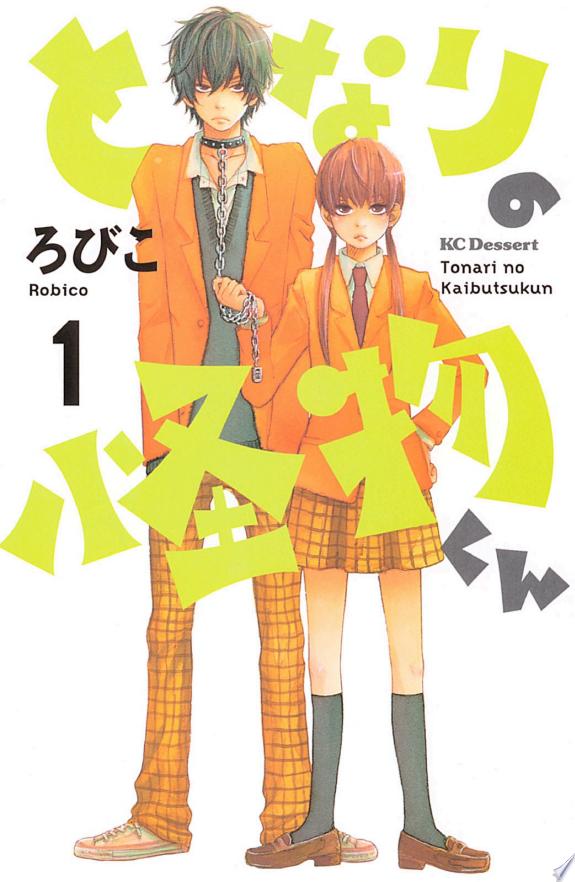
Yu's review of My Little Monster — a studious girl focused entirely on grades is disrupted when she is asked to deliver notes to a classmate who stopped coming to school, a boy who fights constantly and has no idea how human interaction works.

Romance / Comedy
High School Debut
Yu's review of High School Debut — a sporty, enthusiastic girl who has never had a boyfriend asks the school's most popular and romantically experienced boy to coach her on how to get a boyfriend, but he falls for her instead.

Romance / Comedy
Boarding School Juliet
Yu's review of Boarding School Juliet — at Dahlia Academy two rival nations share a campus through the Black Dog and White Cat dorms, and Black Dog leader Romio Inuzuka and White Cat leader Juliet Persia fall in love in chapter one, then spend 16 volumes trying to keep it secret long enough to change the world that would tear them apart.

Romance / Comedy
Kaguya-sama: Love Is War
Aka Akasaka's 28-volume romantic comedy (2015–2022) about Miyuki Shirogane and Kaguya Shinomiya, two student council officers at Japan's most elite high school who are both in love and both certain that whoever confesses first loses. Complete in English from VIZ Media.
Written by
Yu
Manga Enthusiast from Japan
I grew up in Japan and manga literally saved me during a tough time in elementary school. My English isn't perfect, but my love for manga is real — and I want to share it with you.
Disclosure: This post contains affiliate links. As an Amazon Associate, I earn from qualifying purchases at no extra cost to you.