
La Corda d'Oro Review: A Non-Musical Student at a Music School Is Chosen by a Fairy to Compete in a Violin Concours
by Yuki Kure
Read the first volume. If it doesn't hook you, put it down. It'll hook you.
Buy La Corda d'Oro on Amazon →*Affiliate link — I earn a small commission at no extra cost to you.
Quick Take
- The classical music setting is depicted with genuine care — the concours performances are not just backdrop but actual content with emotional weight
- The reverse harem structure gives readers multiple distinct romantic options without forcing a single resolution
- 17 volumes complete; one of Viz's stronger reverse harem romance titles
Who Is This Manga For?
- Readers who want reverse harem romance with genuine musical depth
- Anyone interested in classical violin and concours competition as romance backdrop
- Fans of shojo romance with ensemble male cast and fairy tale elements
- Readers looking for complete longer-form reverse harem
Content Warnings & Age Rating
Age Rating: T (Teen) Content Warnings: Reverse harem romantic dynamics; magical fairy premise; classical music competition pressure
T rating — gentle content appropriate for most readers.
Yu's Rating
| Category | Score |
|---|---|
| Story Depth | ★★★★☆ |
| Art Style | ★★★★☆ |
| Character Development | ★★★★☆ |
| Accessibility for Non-Japanese Readers | ★★★★☆ |
| Reread Value | ★★★☆☆ |
Story Overview
Seisou Academy divides its students between the music department — serious musicians who have trained for years — and the general education department. Kahoko Hino is in the general department and can barely play a note.
A fairy named Lili appears to her and gives her a magical violin. The violin produces beautiful music automatically for whoever plays it. Lili enters Kahoko in the school's annual music concours, where she will compete against dedicated musicians who have spent their lives practicing.
The five male competitors — each with a distinct musical personality and backstory — gradually notice Kahoko not just as an unlikely competitor but as a person. The magical violin complicates everything: Kahoko knows her music is borrowed, not earned, and this shapes her relationship with competition and with the people around her.
Characters
Kahoko Hino — A protagonist whose position as an unqualified person in a qualified field is the series' central tension; her genuine effort to deserve what the magic gives her is her most compelling quality.
The five competitors — Each with distinct personality, musical style, and relationship dynamic: the intense prodigy, the relaxed second-year, the cold upperclassman, the gentle cellist, the shy younger student.
Lili — The fairy whose intervention is never fully explained and whose perspective on what Kahoko's participation means provides the series' magical framing.
Art Style
Kure's art is elegant — the concert and performance scenes have visual dynamism that suggests music through composition, and the character designs are distinctive enough that the ensemble male cast is easily differentiated.
Cultural Context
La Corda d'Oro ran in LaLa from 2003 to 2010. The series draws from the tradition of classical music education in Japan, where violin concours competitions are a real institutional form. The fairy tale overlay creates a magical realism that softens the competitiveness of the musical setting.
What I Love About It
Kahoko's relationship with the magic. She knows the violin is doing something she cannot do herself. This awareness — that she is representing borrowed capability — drives her to actually learn, to earn something beyond what Lili gave her. The series takes this ethical problem seriously across its length.
What English-Speaking Fans Say
Western readers describe La Corda d'Oro as the strongest music-themed reverse harem in English — specifically noted for the classical music content being genuinely educational and interesting, for the male cast being well-differentiated rather than interchangeable, and for Kahoko's character development being more substantial than typical reverse harem protagonists. Recommended for readers who want romance with genuine subject matter depth.
Memorable Scene ⚠️ Spoiler Warning
The moment when Kahoko performs without the magic — when she plays with her actual ability, however imperfect — and receives real response from someone who knows what genuine effort sounds like is the series' most emotionally honest scene.
Similar Manga
- Ouran High School Host Club — Reverse harem with similar school setting and ensemble male cast
- Fruits Basket — Shojo with similar magical element and character relationship depth
- Anonymous Noise — Music-themed romance with similar emotional weight
- Kono Oto Tomare — Music competition romance without the harem element
Reading Order / Where to Start
Volume 1 — Lili's appearance, the magical violin, and Kahoko's entrance into the concours establish everything.
Official English Translation Status
Viz Media published the complete English series. All 17 volumes available.
Pros & Cons
Pros
- Classical music content is genuinely interesting
- Male cast is well-differentiated
- Kahoko's ethical relationship with the magic is compelling
- Complete in 17 volumes
Cons
- Reverse harem resolution is deliberately ambiguous
- Magic premise requires initial buy-in
- Long run requires commitment
Format Comparison
| Format | Notes |
|---|---|
| Individual Volumes | Viz Media; complete series |
| Digital | Available |
Where to Buy
Read the first volume. If it doesn't hook you, put it down. It'll hook you.
This post contains affiliate links. If you purchase through these links, I may earn a small commission at no extra cost to you. As an Amazon Associate, I earn from qualifying purchases.
*Affiliate link — I earn a small commission at no extra cost to you.
More Manga You Might Like
Romance
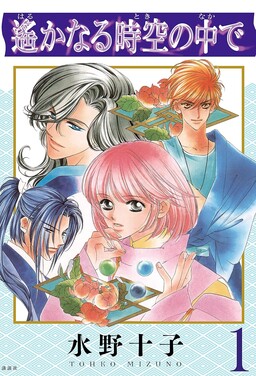
Haruka: Beyond the Stream of Time
Yu's review of Haruka: Beyond the Stream of Time — Akane Motomiya is transported to Heian-era Kyoto along with two classmates; she is the Ryujin no Miko (Dragon God Priestess) who must save this world from demons; eight Hachiyou warriors are assigned to her protection; Tohko Mizuno's historical fantasy reverse harem romance.
Romance / Comedy
My Love Mix-Up!
Yu's review of My Love Mix-Up! — Aoki has a crush on his classmate Hashimoto; he borrows her eraser and notices it says 'Ida' on it, which he assumes means she likes their classmate Ida; when Ida catches him looking at the eraser, he assumes Aoki likes him; Aoki, rather than correct this misunderstanding, goes along with it — and discovers his feelings are more complicated than he thought.
Romance
Ultra Romantic
Yu's review of Ultra Romantic — Tsurezure Ito is so shy his face literally overheats when flustered; Rika Yakumo is so direct she'll say anything she's thinking; together they are trying to figure out their feelings; Bolze's Jump romance comedy about two extremes finding each other.
Romance
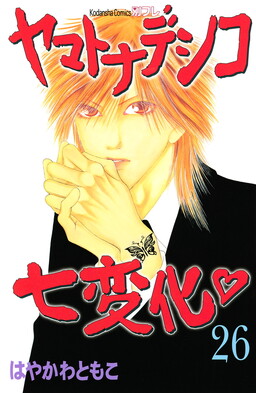
The Wallflower
Yu's review of The Wallflower — four beautiful high school boys are given free rent in exchange for transforming Sunako Nakahara, a girl obsessed with horror and darkness, into a lady; she resists; nobody wins; Tomoko Hayakawa's long-running shoujo comedy about the impossibility of changing someone fundamentally.
Romance
Taisho Otome Fairy Tale
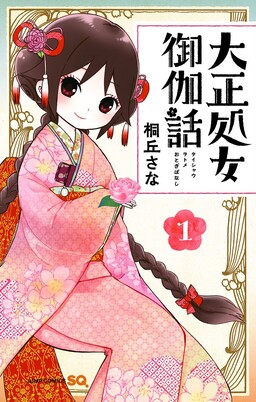
Yu's review of Taisho Otome Fairy Tale — Tamahiko Shima is a sickly, bitter young man exiled to the countryside after an accident; his father sends Yuzuki Tachibana as a bride without asking; she is cheerful, capable, and changes his life; Sana Kirioka's Taisho era romance about someone who stopped hoping being given reason to hope.
Romance
The Story of Saiunkoku
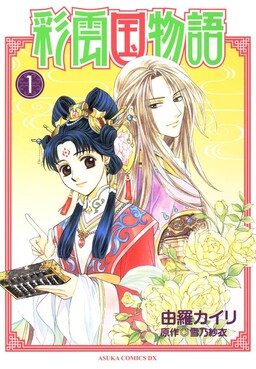
Yu's review of The Story of Saiunkoku — Shuurei Hong is a noblewoman in a historical Chinese-inspired kingdom who wants to become a government official, but women are barred from the civil service; the Emperor Ryuuki asks her to teach him responsibility; Sai Yukino's historical fantasy about a woman who refuses to be excluded from the world she's qualified for.
Written by
Yu
Manga Enthusiast from Japan
I grew up in Japan and manga literally saved me during a tough time in elementary school. My English isn't perfect, but my love for manga is real — and I want to share it with you.
Disclosure: This post contains affiliate links. As an Amazon Associate, I earn from qualifying purchases at no extra cost to you.