
Kitchen Princess Review: An Orphan Girl Searches for the Boy Who Saved Her by Becoming the Best Cook at Her School
by Miyuki Kobayashi / Natsumi Ando
Read the first volume. If it doesn't hook you, put it down. It'll hook you.
Buy Kitchen Princess on Amazon →*Affiliate link — I earn a small commission at no extra cost to you.
Quick Take
- A food-romance hybrid that uses cooking as emotional language effectively — Najika's connection to people through food is the series' most genuine element
- Ando's art handles both the food and the character moments with care
- 10 volumes complete in English; pleasant complete romance with food as central content
Who Is This Manga For?
- Readers who want food manga with a strong romantic through-line
- Anyone interested in cooking as emotional expression in shojo romance
- Fans of Nakayoshi shojo with school settings and food themes
- Readers looking for complete all-ages romance with warmth
Content Warnings & Age Rating
Age Rating: All Ages Content Warnings: Orphan backstory with some sadness; school romantic competition; food and cooking as central content; some emotional difficulty in later volumes
All ages — genuinely appropriate for any reader, with some emotional weight in later volumes.
Yu's Rating
| Category | Score |
|---|---|
| Story Depth | ★★★☆☆ |
| Art Style | ★★★★☆ |
| Character Development | ★★★☆☆ |
| Accessibility for Non-Japanese Readers | ★★★★★ |
| Reread Value | ★★★☆☆ |
Story Overview
Najika Kazami is an orphan who learned to cook. The best cooking she ever tasted was from a boy who saved her from choking when she was young and gave her flan — smooth, sweet, made with care. She has been looking for him ever since, and food is how she thinks about the search.
A clue leads her to Seika Academy, a prestigious school in Tokyo. She enrolls, discovers the school has an elite culinary focus, and begins connecting with the students through her cooking. There are two brothers — Daichi and Sora Kitazawa — one of whom may be her Flan Prince.
The series follows Najika's school life, her cooking competitions and challenges, and the development of her relationships with the Kitazawa brothers. The food is the series' language for connection — what Najika makes expresses what she feels, and what others make tells her who they are.
Characters
Najika Kazami — A protagonist whose warmth with food is more developed than her other character dimensions; her cooking is her genuine self-expression, and the series treats this seriously.
Daichi and Sora Kitazawa — Brothers whose different personalities and different relationships to food create the series' central romantic complication.
Art Style
Ando's art has the clean, appealing quality that Nakayoshi shojo required — expressive character designs, food illustrated with genuine care and visual appeal, emotional moments handled clearly. The cooking sequences specifically benefit from the art's ability to make food look beautiful.
Cultural Context
Kitchen Princess ran from 2004 to 2007 in Nakayoshi, part of the magazine's tradition of romance with specialty content (sports, cooking, music). The food-as-emotional-language tradition in Japanese manga and culture is long-established; Kitchen Princess applies it to a school romance format appropriate for Nakayoshi's readership.
What I Love About It
The series takes Najika's cooking seriously rather than using it as scenery for the romance. When she makes something for someone, it is an act of attention and care that the narrative treats with appropriate weight. The flan that began her search — and what it represented to a lonely child — is the series' emotional foundation and the series is honest about this.
What English-Speaking Fans Say
Western readers describe Kitchen Princess as a sweet complete food romance — specifically noted for the cooking being taken seriously rather than merely decorative, for Ando's food illustrations being genuinely appealing, and for the series being appropriately short for its premise. Recommended for food manga readers who want romance alongside the cooking content.
Memorable Scene ⚠️ Spoiler Warning
The moment when the identity of the Flan Prince is revealed — and what this means for everything Najika has been working toward — carries emotional weight that the series earns through its patient setup.
Similar Manga
- Food Wars — Cooking as competitive content in school setting
- Sweetness and Lightning — Food as emotional care in different context
- What Did You Eat Yesterday? — Food and relationship in adult setting
- Sugar Sugar Rune — Nakayoshi magical girl romance in similar visual register
Reading Order / Where to Start
Volume 1 — Najika's background, her transfer to Seika Academy, and the beginning of her search establish the premise immediately.
Official English Translation Status
Del Rey Manga published the complete English series. All 10 volumes available.
Pros & Cons
Pros
- Cooking taken seriously as emotional language
- Ando's food illustrations are genuinely appealing
- Complete in 10 volumes
- All ages rating with genuine warmth
Cons
- Romantic complication resolved through narrative convenience
- Character depth outside cooking is limited
- Some readers may find the drama uneven
Format Comparison
| Format | Notes |
|---|---|
| Individual Volumes | Del Rey; complete series available |
| Digital | Limited availability |
Where to Buy
Read the first volume. If it doesn't hook you, put it down. It'll hook you.
This post contains affiliate links. If you purchase through these links, I may earn a small commission at no extra cost to you. As an Amazon Associate, I earn from qualifying purchases.
*Affiliate link — I earn a small commission at no extra cost to you.
More Manga You Might Like
Romance / Slice of Life
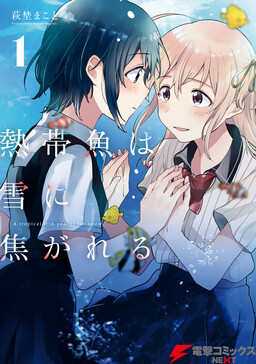
A Tropical Fish Yearns for Snow
Yu's review of A Tropical Fish Yearns for Snow — Konatsu Amano moves to a new town after her father is transferred abroad; she joins her new school's aquarium club, which has only one other member: Koyuki Honami, a capable and quietly withdrawn girl who runs it alone; their friendship becomes something more specific as they teach each other about themselves.

Romance / Slice of Life
Love in Focus
Yu's review of Love in Focus — Mako moves to a new city after her grandfather's death and joins the photography club; she keeps encountering and photographing Kei, a boy from a different school who seems to appear wherever she points her camera; what starts as coincidence becomes something deliberate.

Romance / Slice of Life
Horimiya
Yu's review of Horimiya — the popular girl hides her domestic home life, the quiet boy hides his piercings and tattoos, and when they accidentally discover each other's real selves, something begins.

Romance / Magical Girl
Kamichama Karin
Yu's review of Kamichama Karin — Karin Hanazono is an ordinary girl with poor grades and no special qualities; her deceased mother's ring turns out to be capable of transforming her into a goddess-vessel; she meets Kazune Kujyou, who has a similar ability, and the two become entangled in a conflict over divine power.

Romance / Comedy
Kaguya-sama: Love Is War
Aka Akasaka's 28-volume romantic comedy (2015–2022) about Miyuki Shirogane and Kaguya Shinomiya, two student council officers at Japan's most elite high school who are both in love and both certain that whoever confesses first loses. Complete in English from VIZ Media.

Romance / Comedy
Toradora!
Yu's review of Toradora! — a delinquent-looking boy and a tiny, terrifying girl make a deal to help each other confess to the other's best friend, and discover they had the wrong target all along.
Written by
Yu
Manga Enthusiast from Japan
I grew up in Japan and manga literally saved me during a tough time in elementary school. My English isn't perfect, but my love for manga is real — and I want to share it with you.
Disclosure: This post contains affiliate links. As an Amazon Associate, I earn from qualifying purchases at no extra cost to you.