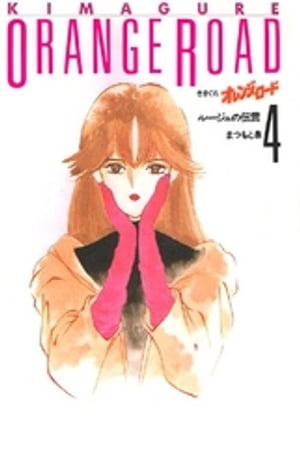
Kimagure Orange Road Review: The Love Triangle That Made You Choose and Then Made You Question Your Choice
by Izumi Matsumoto
Read the first volume. If it doesn't hook you, put it down. It'll hook you.
Buy Kimagure Orange Road on Amazon →*Affiliate link — I earn a small commission at no extra cost to you.
He could move objects with his mind and still couldn't decide between two girls.
Quick Take
- Izumi Matsumoto's defining romantic triangle — Kyosuke, Madoka (mysterious, cool), and Hikaru (devoted, energetic) across 18 volumes
- The psychic powers are real but almost beside the point — the series is about the emotional paralysis of loving one person while being loved by another
- One of the great 1980s Jump romances — influenced anime aesthetics and romantic comedy structure for a decade
Who Is This Manga For?
- Romantic comedy fans who want genuine emotional complexity alongside the comedy
- Readers curious about 1980s manga aesthetics — this series defined what that era looked like
- Anyone who has been in an unresolvable romantic situation and wanted a manga that understood that
- Fans of the original anime who want to experience the source material
Content Warnings & Age Rating
Age Rating: T (Teen) Content Warnings: Romantic rivalry, psychic powers used comedically, mild fanservice. Nothing graphic.
Suitable for teen readers.
Yu's Rating
| Category | Score |
|---|---|
| Story Depth | ★★★★☆ |
| Art Style | ★★★★☆ |
| Character Development | ★★★★☆ |
| Accessibility for Non-Japanese Readers | ★★★★☆ |
| Reread Value | ★★★★☆ |
Story Overview
Kyosuke Kasuga transfers to a new town with his family — they move frequently because the Kasuga family's psychic abilities tend to cause problems when they're too long in one place. On his first day, he sees Madoka Ayukawa on a stairway and falls immediately.
Madoka has a reputation: cool, untouchable, rumored to be dangerous. The rumors are wrong, but she maintains the distance deliberately, and Kyosuke's task — sustained across the entire series — is to understand what's underneath it.
The complication arrives in the form of Hikaru Hiyama, Madoka's best friend: loud, enthusiastic, directly in love with Kyosuke, and impossible to dislike. Hikaru's love for Kyosuke is genuine and total. His inability to return it honestly — because his heart is with Madoka — is the series' primary source of both comedy and pain.
The psychic powers serve as plot engine and comedy device but never become the series' subject. The subject is always the triangle: the impossible position of being loved by someone you cannot love back, while the person you love remains at a careful distance.
Characters
Kyosuke Kasuga: A protagonist whose defining quality is indecisiveness — not because he doesn't know what he wants, but because acting on it would hurt someone he also cares about.
Madoka Ayukawa: The object of Kyosuke's love, but also a fully realized character — her coolness has reasons, and the series takes its time revealing them.
Hikaru Hiyama: The series' emotional challenge — her love for Kyosuke is so genuine and so persistent that dismissing it feels wrong, and the series refuses to let Kyosuke or the reader dismiss it easily.
Art Style
Matsumoto's art is 1980s Jump at its warmest — soft lines, expressive faces, the kind of character design that made Madoka and Hikaru iconic separately from the story. The art aged well; the character designs remain appealing rather than dated.
Cultural Context
Kimagure Orange Road ran in Weekly Shonen Jump from 1984 to 1987. The anime adaptation (1987-1988) became enormously influential on the romantic comedy genre, and the aesthetic — particularly Madoka's visual design — became reference points for years afterward.
The series represents a shift in shonen romantic comedy toward genuine emotional complexity rather than simple wish fulfillment. Kyosuke doesn't get both girls. He doesn't get a consequence-free resolution. He has to choose.
What I Love About It
I love that Hikaru is written with enough humanity that her heartbreak matters.
Romantic triangles often have a designated loser — a secondary character who exists to be gracefully removed. Hikaru doesn't feel like that. Her love for Kyosuke is treated as real, her eventual pain is treated as real, and the series doesn't minimize what it cost her. That honesty makes the resolution feel earned rather than convenient.
What English-Speaking Fans Say
Known among fans of 1980s anime and manga. The series and its anime adaptation have cult followings among readers who discovered it through fansubs or vintage tape circulation. Recognized as a foundational text of the shonen romantic comedy genre and as a major influence on anime aesthetic of the late 1980s.
Memorable Scene ⚠️ Spoiler Warning
The scene when Madoka finally admits — not in words but in action — that she has been waiting for Kyosuke to choose her. The scene works because it arrives after enough narrative delay that the reader has genuinely started to doubt whether Madoka wanted to be chosen at all.
Similar Manga
| Title | Its Approach | How Kimagure Orange Road Differs |
|---|---|---|
| Video Girl Ai | Single-object romance with supernatural intervention | Love triangle rather than single pursuit — the second girl is not lesser |
| Maison Ikkoku | Slow-burn adult romance with obstacles | Earlier, lighter tone with psychic element and younger characters |
| Touch | Baseball and romance intertwined with tragedy | Orange Road is lighter — less tragedy, more sustained indecision |
Reading Order / Where to Start
Volume 1. The triangle is established immediately and every subsequent volume builds on it.
Official English Translation Status
Kimagure Orange Road has no official English translation.
Pros & Cons
Pros
- Madoka and Hikaru are both fully realized characters — not one lead and one substitute
- The psychic element adds comedy without dominating
- Matsumoto's art has aged gracefully
- The emotional complexity is genuine — the series doesn't pretend the resolution is painless
Cons
- No English translation
- Kyosuke's indecisiveness may frustrate readers who want the protagonist to act
- 18 volumes for what is essentially a sustained emotional dilemma
- The resolution satisfies some readers and frustrates others — preferences vary
Is Kimagure Orange Road Worth Reading?
For romantic comedy fans and readers of 1980s manga, yes — this is the foundational text of its genre and holds up as both historical document and engaging story. For readers who want fast resolution or minimal romantic frustration, the extended triangle may test patience. But as a sustained portrait of romantic paralysis, it's one of the best.
Format Comparison
| Format | Notes |
|---|---|
| Physical | Japanese editions available |
| Digital | Available in Japanese |
| Omnibus | Selected collected editions available |
Where to Buy
No English release yet. That just means you find it before everyone else does.
*Affiliate link — I earn a small commission at no extra cost to you.
More Manga You Might Like
Romance / Comedy
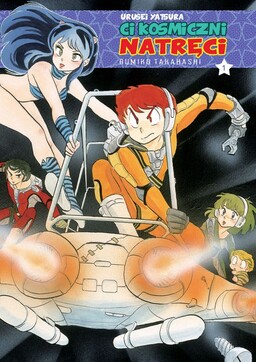
Urusei Yatsura
Yu's review of Urusei Yatsura — Earth is invaded by aliens; a random lottery selects Ataru Moroboshi to compete against the alien princess Lum in a game of tag; he wins by grabbing her horns; his victory declaration is mistaken for a marriage proposal; Lum moves into his house; Ataru continues to chase every other girl he sees while Lum insists on being his wife.
Romance / Comedy
Toradora!
Yu's review of Toradora! — a delinquent-looking boy and a tiny, terrifying girl make a deal to help each other confess to the other's best friend, and discover they had the wrong target all along.
Romance / Comedy
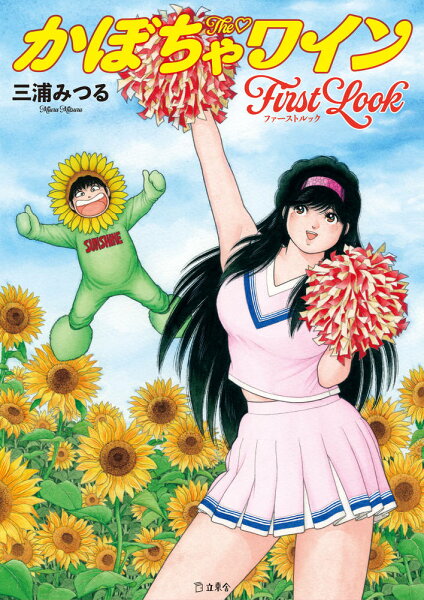
The Pumpkin Wine
The Pumpkin Wine follows the romantic misadventures of a short, ordinary boy in love with an extraordinarily tall, beautiful girl — a high school romance comedy built entirely on the comedy of that contrast and the genuine sweetness underneath it.

Sports / Romance
Jajabako Groomin UP!
Jajabako Groomin UP! follows Yuu Kasugano, a city boy who comes to work at a horse ranch and falls into the world of horse grooming — and into the orbit of the ranch owner's daughter, a tomboyish girl named Chizuru whose relationship with horses is more natural than her relationship with people.

Romance / Comedy
Stop!! Hibari-kun!
Stop!! Hibari-kun! follows Kosaku Umetsu, who moves in with his parents' friends after being orphaned — a yakuza-connected family with four daughters, except that the eldest, Hibari, is biologically male and presents as female, a fact that Kosaku cannot get past and cannot stop thinking about.

Romance / Comedy
Yuukan Club
Yuukan Club follows six ultra-wealthy high school students who form the Leisure Club and stumble into mysteries, adventures, and romantic entanglements while maintaining an existence so extravagant it functions as its own genre of comedy.
Written by
Yu
Manga Enthusiast from Japan
I grew up in Japan and manga literally saved me during a tough time in elementary school. My English isn't perfect, but my love for manga is real — and I want to share it with you.